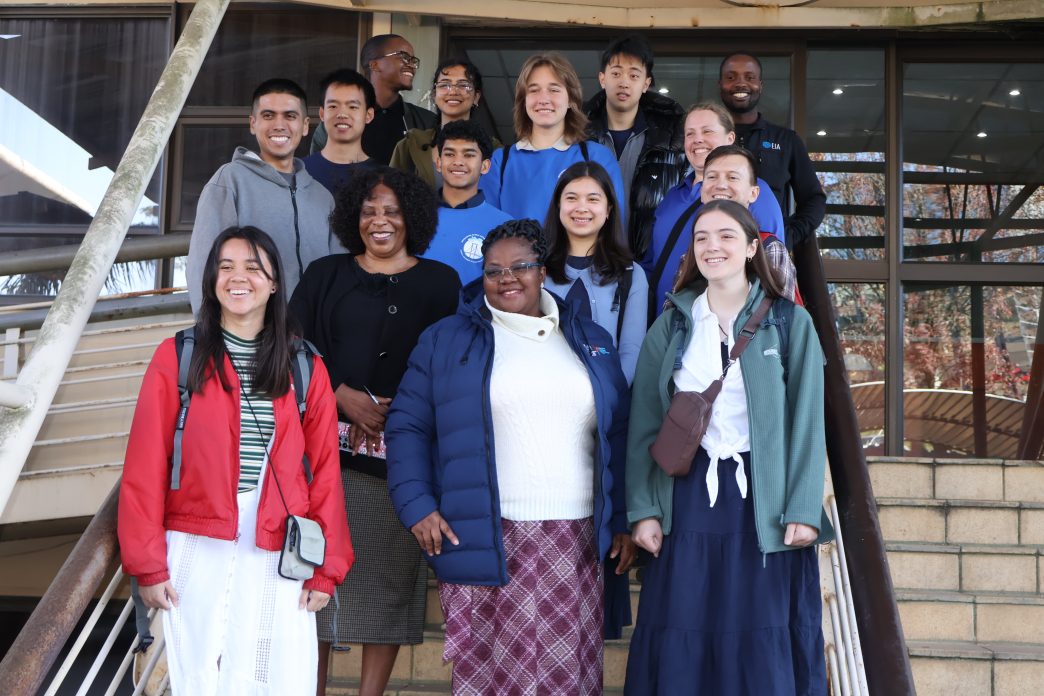
The Ministry of Economic Planning and Development has officially received a high-level international delegation of engineering students from China, the United States and Japan to commence a major rural water infrastructure project in the Lubombo region.
The students, operating under the global non-profit organization Engineers in Action (EIA) Water, Sanitation and Hygiene (WASH) programme, have been deployed to Manyovu within the Siphofaneni constituency.
The multi-national team is tasked with constructing decentralized water supply schemes designed to provide immediate relief to drought-prone communities and local public schools. 
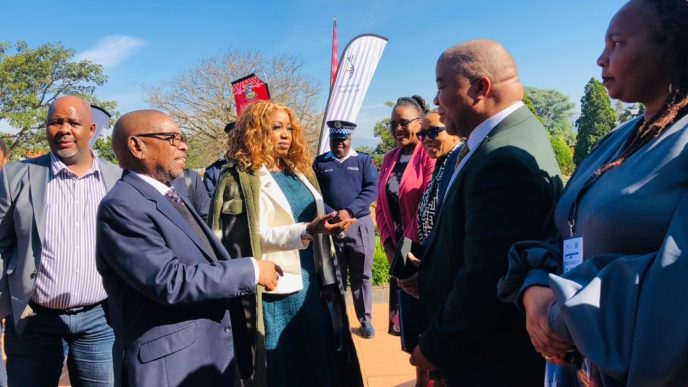
During an official welcoming brief, Economic Planning and Development Principal Secretary Thabsile Mlangeni commended the expanded collaboration with EIA,
an organization that previously built its reputation in Eswatini through the successful delivery of suspended footbridges in structurally isolated rural zones.
“On behalf of the Government of Eswatini and the Ministry of Economic Planning and Development in particular, we welcome you,” Mlangeni stated in her address to the engineers.
“We have had a very good and long relationship with the Engineers in Action doing bridges until we added the Water and Sanitation programme.
We are excited because the work you will be doing will benefit communities.”
Mlangeni acknowledged the systemic challenges the kingdom of Eswatini faces regarding utility coverage, pointing out that while infrastructure has advanced in certain sectors, water security remains a critical national priority.
“We still have a long way to go in ensuring that everyone has access to clean water. Your contribution to the community of Siphofaneni is welcome,” Mlangeni added.
According to the Principal Secretary, Eswatini exhibits a significant disparity between its grid electrification success and its potable water network expansion.
While national energy distribution strategies have achieved an impressive electrification rate of nearly 90%, rural water access metrics continue to fall short of national development benchmarks.
“The Ministry of Economic Planning and Development is treating the Manyovu intervention as part of a targeted macro-development framework,” mentioned Mlangeni.
She further stated that the policy prioritizes closing utility deficits in marginalized areas to prevent regional economic stagnation.
“As the Ministry of Economic Planning and Development, we are pushing development that does not leave anyone behind,” Mlangeni explained.
“The rural communities have needs which have not been met, which you are contributing to meeting and targeting schools in as much as clean water is concerned.
We are focusing on young people, who need to be taken good care of.”
“In as much as it is winter, there are fewer rains and there is much time to get a lot of work done,” the Principal Secretary noted, urging the team to maintain a rapid operational pace.
To facilitate local cooperation and ensure smooth community-level integration, the visiting technicians undertook preliminary SiSwati language and cultural orientation prior to arriving in the country.
Ministry officials anticipate that this baseline communication skill will significantly improve on-site collaboration with Manyovu residents, who are slated to provide community-led labour and logistical assistance.
According to the Principal Secretary, the Manyovu water scheme aligns with Eswatini’s broader commitment to the United Nations Sustainable Development Goals (SDGs), specifically Goal 6,
which mandates clean water and sanitation for all. “The government maintains a strict target for universal water access across all four regions of the kingdom by the year 2030,” Mlangeni stated.
“We hope that by 2030, with your assistance, we would have moved to full access meeting our target, and we are hoping the WASH programme will continue to expand and move fast, same as the bridges programme,” urged Mlangeni.