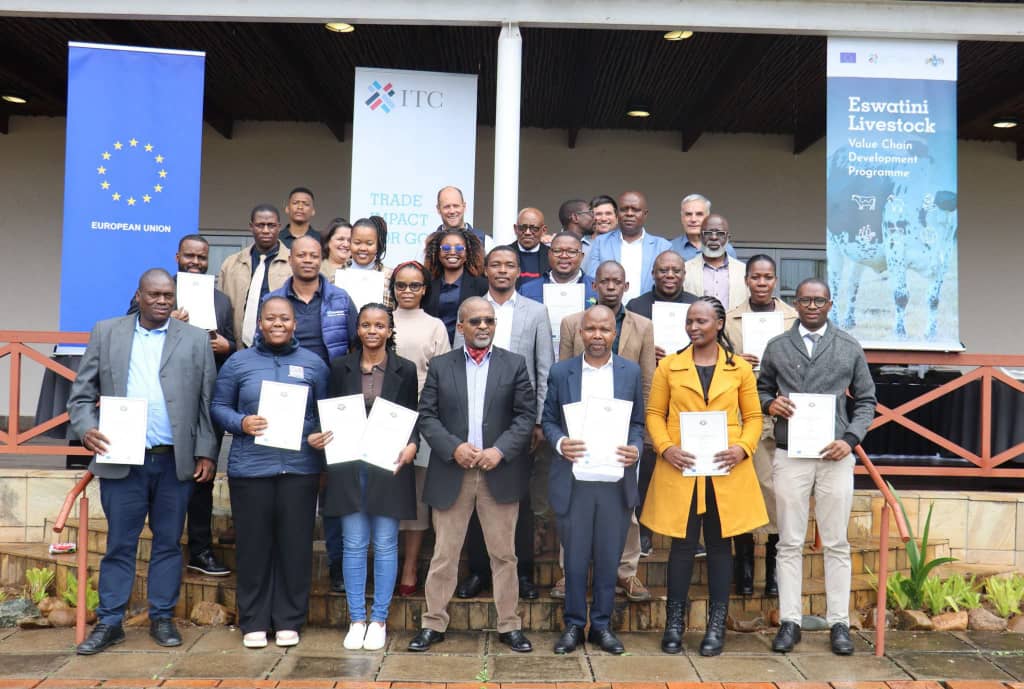
Eswatini has strengthened its livestock sector with the certification of 23 professionals in carcass classification and meat grading, marking a key milestone towards the establishment of a national meat grading system.
The newly qualified experts, drawn from government institutions, municipalities, standards bodies, abattoirs and butcheries, have completed specialised training aimed at improving quality assurance, food safety and transparency across the meat value chain.
The programme is part of the Eswatini Livestock Value Chain Development Programme, supported by the European Union and implemented in partnership with the International Trade Centre, the Ministry of Agriculture and the South African Meat Industry Company. 
Officials say the initiative is expected to lay the foundation for a standardised national system that will guide how meat is assessed, priced and traded, benefiting producers, processors, traders and consumers.
Speaking at the certificate handover ceremony, EU Programme Officer Bhekani Magongo said a transparent grading system would strengthen consumer confidence and improve fairness in the market, while also enhancing Eswatini’s competitiveness beyond its borders.
He added that a consistent grading framework would open up new investment opportunities and support the country’s efforts to expand access to regional and international markets.
Director of Livestock Services in the Ministry of Agriculture, Luyanda Khumalo, said the initiative would help improve pricing based on quality and boost the performance of the beef industry.
He urged the graduates to uphold professionalism and integrity, noting that they now carry responsibility under national veterinary and public health standards.
Principal Environmental Health Officer Milton Lokothwayo highlighted the public health benefits of the programme, saying it would help reduce foodborne illnesses and improve consumer trust in meat products.
He stressed that accurate inspections and grading decisions would play a critical role in safeguarding public health and ensuring a reliable food system.
The training programme was also adapted after the outbreak of foot-and-mouth disease disrupted local slaughter operations, with practical sessions relocated to abattoirs in South Africa to ensure participants gained hands-on experience.
Among the graduates, Matsapha Town Council Environmental Health Officer Yamkelo Madi emerged as the top performer, achieving record-high results in the assessment.
With Eswatini moving towards implementing a formal meat grading system, the newly certified professionals are expected to play a central role in strengthening standards, improving accountability and supporting the country’s ambition to become more competitive in the livestock trade sector.