




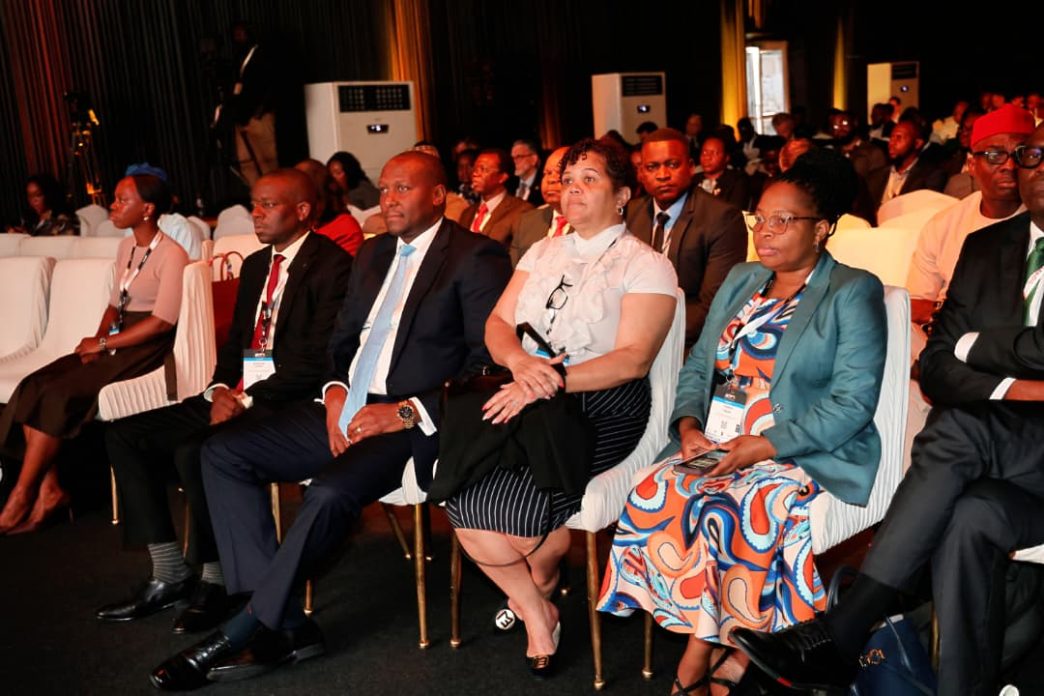
Prime Minister Russell Dlamini has called for a fundamental shift in Africa’s approach to energy development, urging the continent to prioritise African ownership of resources, capital, technology and enterprises.
Speaking at the Africa Oil Week (AOW) Energy Summit in Accra, Ghana, under the theme
“The Era of Indigenous Operators: Technology, Capital and the Future of African Energy Leadership”, Dlamini said Africa could no longer remain a participant in an energy narrative largely shaped elsewhere. 
He said the continent’s approach should be guided by the principle of “Our People first, Africa first, Africa for Africans”.
“This is not isolationism. It is simply what every government owes its people,” Dlamini said.
He argued that sovereignty should extend beyond control of territory to include the ability to feed, power and finance African economies, process natural resources and retain more of the value they generate.
“Sovereignty must mean more than jurisdiction over territory. It must extend to the capacity to feed ourselves, to power ourselves and to finance ourselves,” he said.
Dlamini said African energy operators continued to compete against structural disadvantages, including costly capital, imported technology and constrained balance sheets.
“We cannot proclaim an era of indigenous operators while leaving in place the very architecture that consigns African enterprise to junior status,” he said.
He called for transparent local-content regimes, improved access to capital and markets, technology acquisition and strategic public procurement to help build competitive African companies.
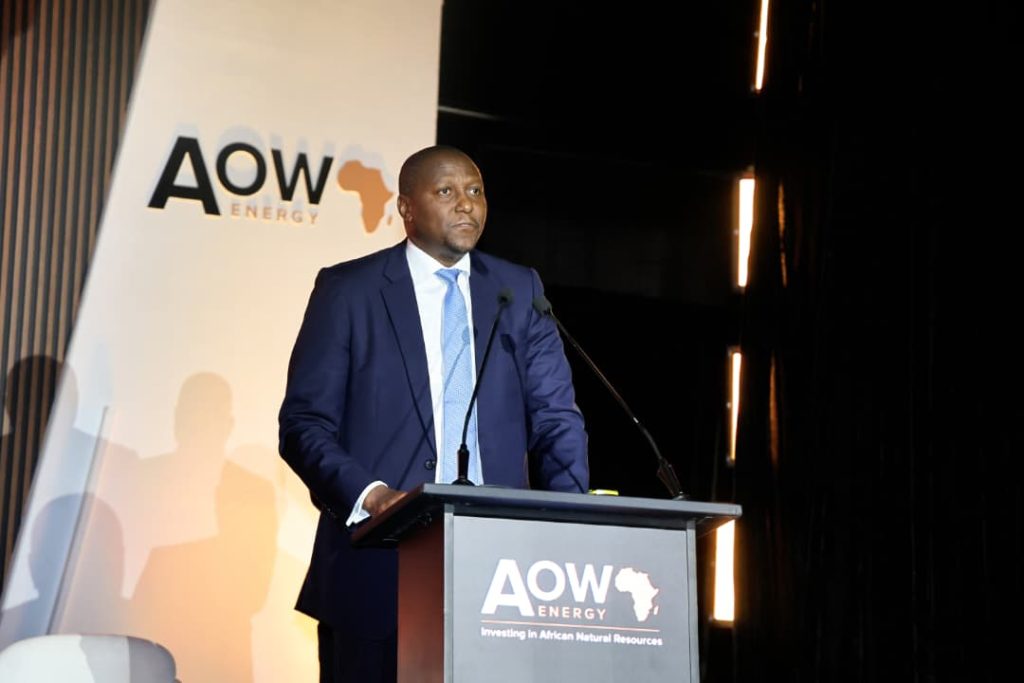
“The State must identify strategic opportunities, eliminate structural barriers and where warranted, commit public capital to de-risk priority investment and crowd-in private capital,” he said.
Dlamini also called for African financial institutions and investors to play a greater role in financing the continent’s development.
He said pension funds, sovereign wealth funds, development finance institutions and capital markets should mobilise African savings through blended finance, infrastructure bonds, credit enhancement, sovereign guarantees and deeper local-currency markets.
“African capital must increasingly finance African development, and African development must in turn grow African capital,” he said.
Technology, he said, was equally important, warning that capital without knowledge would simply reproduce dependency.
“Capital without technology merely finances dependency,” Dlamini said.
He called for major investments to deliver technology transfer, skills development, research partnerships and local manufacturing.
“Every major investment must leave behind more than infrastructure; it must leave knowledge,” he said.
The PM linked energy development to industrialisation, saying Africa must stop exporting raw materials while importing processed goods and machinery.
“We can no longer export minerals and import machinery, export commodities and import processed goods. We must beneficiate, refine and manufacture,” he said. “Energy policy must serve industrial policy.”
On the energy transition, Dlamini said Africa should adopt a pragmatic approach that recognises both the need to address climate change and the continued strategic importance of oil, gas and coal.
“The choice is not between fossil fuels or renewables. It is the intelligent use of today’s resources to finance tomorrow’s systems,” he said.
He said fossil-fuel revenues should be directed towards renewable energy, industrial infrastructure and African enterprises.
“That revenue must become capital for transformation, not purely for consumption,” he said. Dlamini also urged Africa to demand climate justice while preparing to develop independently.
He said African enterprise and expertise should no longer require external validation before being considered credible. “We must move from participation to ownership. From extraction to beneficiation. From dependency to capability,” he said.
The Prime Minister said these principles were reflected in Eswatini’s energy strategy, with the country targeting more than 1,000 megawatts of domestic generation capacity by 2030.
Eswatini currently generates about 30 per cent of its electricity needs, with access standing at approximately 88 per cent.
The planned generation mix includes hydropower, biomass cogeneration, clean coal technologies and utility-scale solar with storage.
Dlamini said Eswatini also intends to move from being a consumer to a contributor through the Southern African Power Pool.


