Eswatini’s sugar industry already generates 107 megawatts from bagasse and could be the anchor for a new energy economy that ends blackouts, cuts imports and keeps value at home.
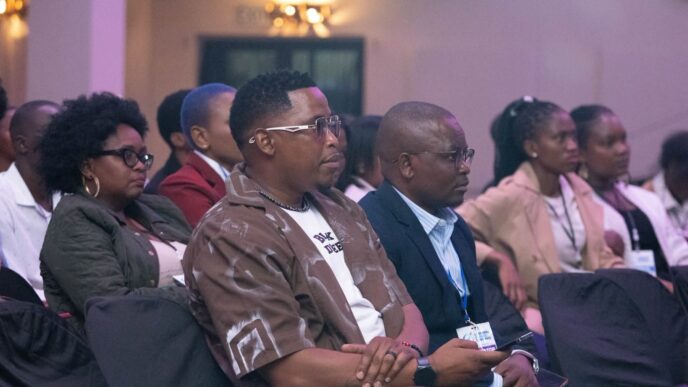
That was the message from UN Resident Coordinator to Eswatini, George Wachira, when he addressed Business Eswatini’s Annual General Meeting at Royal Villas on Friday, under the theme ‘Navigating a World in Flux: Building Resilience and Retaining Value.’
Wachira said sugar long treated as an export crop is now an energy crop and its 107MW cogeneration base proves Eswatini can produce its own predictable power. 
He said energy security is economic security and no industry can grow at scale without reliable and affordable electricity.
He said solar is now the cheapest source of new power in the world and together with bagasse and storage, it gives businesses a chance to be both producer and customer.
“Eswatini already has a base to build on,” he said, pointing to the 107 megawatts already operating in the sugar belt.
He said what is needed now is a clear framework for independent power producers and access to concessional climate finance so that industrial estates and large users can pool demand for solar, storage and cogeneration.
Wachira linked sugar to a much bigger story. He said Africa loses about $88.6 billion every year through illicit financial flows, mainly trade mispricing, while African pension savings that should fund local factories and farms are invested abroad.
He said the continent has for too long exported raw materials cheaply and imported finished goods expensively exported raw sugar and imported confectionery, exported cane and imported ethanol expertise, exported data and imported technology.
The UN Office of the Special Advisor for Africa, he said, calls this the triple paradox, rich in resources yet in fiscal distress, rich in energy sources yet short of energy, and rich in agricultural land yet food insecure.
For Eswatini, Wachira said, that means using sugar to show how retaining value works.
He said sugar can power the Energy Resilience Compact, one of four co-investment deals the UN Country Team is proposing to Business Eswatini.
The compact would pool demand from industrial estates and large users for solar, bagasse cogeneration and storage, backed by climate finance.
The other three, he said, also draw from the sugar lesson. The Food Systems and Water Compact would link smallholders to agro-processors through outgrower schemes, climate-smart irrigation and harvest-linked finance, a model the sugar industry already understands, including local procurement for school feeding.
The Skills and Future of Work Compact would see industry co-design and co-finance curricula, apprenticeships and digital and AI skills with TVET colleges, because, he said, education, health and skills are not social spending but the highest-return investment.
The fourth, the Digital and Data Compact, would invest in connectivity, digital payments and data systems to cut the cost of doing business, especially for small and medium enterprises.
Wachira said sugar also exposes Eswatini’s other weak spot, which is knowledge.
He said Africa contributes only 1 per cent to global research because it does not own the patents, industrial software and metallurgy expertise to run advanced refineries.
It must import the expertise to process what it grows and mines.
Wachira said the AfCFTA market of more than a billion people is now the market sugar and other value-added products should target.
Diversifying beyond the largest neighbour, he said, is insurance, not separation.
He said the UN brings catalytic and climate finance, risk-sharing, standards and convening power, while business brings market know-how, and invited business to sit down to test the model.
He closed with optimism, citing the entrepreneurial spirit in the room.
“Together, to rephrase Oliver Wendell Holmes, we will find the simplicity on the other side of this complexity,” he said.