
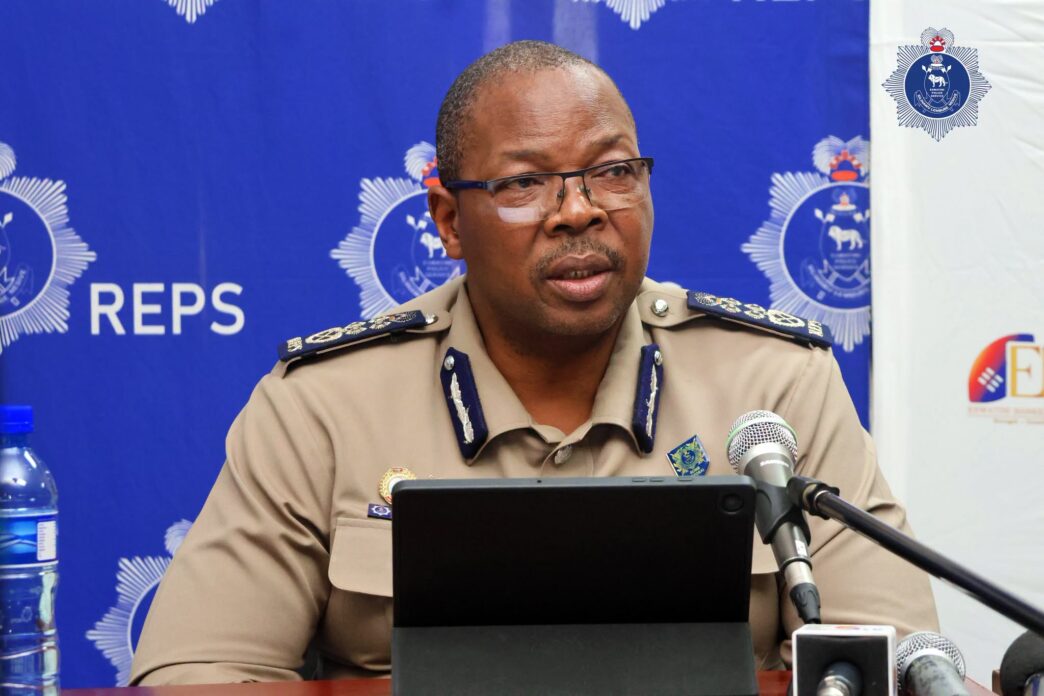
The Royal Eswatini Police Service (REPS) National Commissioner (NatCom) Vusi Manoma Masango has urged emaSwati to report fraud cases and not feel embarrassed or blaming themselves.
Masango made the passionate plea during the launch of the International Fraud Awareness at the Police Headquarters on Tuesday morning.
“It is both an honour and a privilege to join you on this important occasion as we mark the 2026 International Fraud Awareness Month. I wish to express my sincere appreciation to the Bankers Association for convening this media briefing and for providing a platform through which we can collectively strengthen public awareness about fraud and financial crimes.
The theme for this year’s campaign, “Tivikele – Stay Safe Online. Think Before You Click. Verify Before You Trust,” is particularly relevant to the times in which we live.
It speaks directly to a reality that many of our people are experiencing: while technology has made our lives easier, it has also created new opportunities for criminals to exploit unsuspecting individuals, businesses and institutions,” Masango said.
Masango said fraud is no longer simply a financial crime but it is a threat to livelihoods, family stability, business confidence and national economic security.

“Behind every fraud statistic is a human story. It may be a pensioner who loses their lifetime savings after receiving a deceptive telephone call, a young person who falls victim to an online investment scheme, a business that loses its working capital through business email compromise, or a family whose financial plans are destroyed by a fraudulent transaction. These are not merely figures in police records. They are people whose trust has been abused and whose dignity and financial security have been affected.
It is for this reason that fraud prevention must be approached not only as a law enforcement responsibility, but also as a collective social responsibility,” he added.
Masango said the Royal Eswatini Police Service remains committed to its constitutional and institutional mandate of preventing, investigating and combating fraud and other financial crimes.
“Our responsibility goes beyond receiving reports and arresting suspects. We must be proactive in identifying emerging criminal trends, investigating complex financial transactions, tracing proceeds of crime, gathering intelligence, disrupting criminal networks and working with relevant stakeholders to ensure that perpetrators are brought before the courts of law.
We recognise that financial crimes have become increasingly sophisticated. Criminals are no longer confined by geographical boundaries. A fraudster may operate from another country, use digital platforms to approach a victim in Eswatini, manipulate banking systems and move stolen funds through several accounts within minutes,” he said.
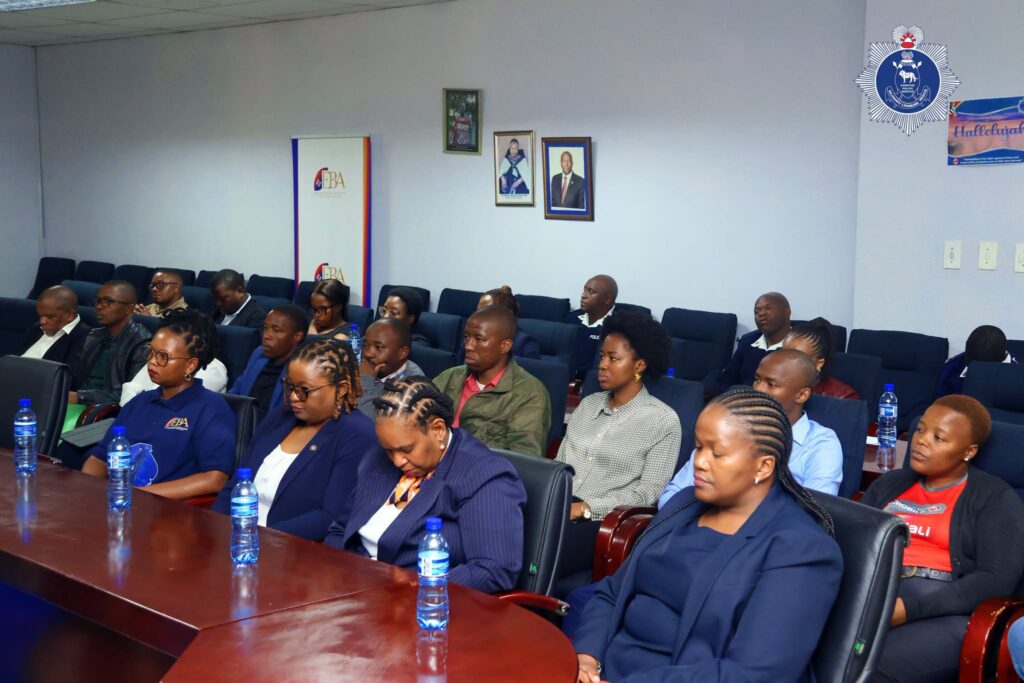
Masango added: This reality requires us to continuously strengthen our investigative capabilities, technological competencies and partnerships with financial institutions and other law enforcement agencies.
We must also appreciate that prevention is far better than cure.
Recovering stolen money is not always possible, particularly where funds are transferred through multiple accounts or moved across international borders. Consequently, public education, early reporting and effective preventive measures remain among our most important weapons,”
Masango said for the period 1 October 2025 to 30 September 2026, the Service recorded a total of 1,404 reported financial crime cases.
“The actual financial value associated with these reported cases stood at E110,248,879.90, while the potential financial value was recorded at approximately E1,122,528.61. For comparative purposes, during the preceding period, from October 2024 to September 2025, the Service recorded 1,832 reported financial crime cases, with an actual financial value of E267,249,271.20.
A comparison of these figures reflects a decrease of 428 reported cases, representing approximately 23.4 percent,” he noted.