… ‘Today’s workers must be replaced by tomorrow’s’ – PM
Stories by Sinikiwe Shongwe
Prime Minister Russell Dlamini has called for healthy and sustainable fertility levels in Eswatini, warning that continued declines in birth rates could eventually leave the country with a shrinking workforce and an ageing population, threatening its long-term economic growth.
He said while the decline in fertility over the past four decades reflected significant demographic changes, the country needed to ensure that the population remained sufficiently renewed to sustain economic activity and development across generations. Dlamini made the remarks on Wednesday when officially opening the inaugural Eswatini National Population and Development Summit at Esibayeni Lodge, held under the theme, “Eswatini’s 40-Year Demographic Transition and Emerging Issues for Sustainable Development (1986–2026).”
He revealed that Eswatini’s fertility rate had declined from an average of six children per woman in 1986 to 3.2, marking a significant shift in the country’s population structure. During the same period, the population had grown from 681,059 to an estimated 1,232,154. The Prime Minister said the country needed to pay attention to the long-term implications of declining fertility, noting that a sustained reduction in births could eventually result in fewer young people entering the workforce as the existing population aged.
He cautioned that the demographic dividend, which comes from having a larger proportion of working-age people, was not permanent and required deliberate measures to sustain it.
“Today’s workers must be replaced by tomorrow’s,” he said, explaining that several countries had experienced shrinking workforces and stalled economic growth after fertility levels fell too far.
Dlamini said Eswatini’s objective should not simply be to increase the number of births but to promote healthy, planned and sustainable fertility, where families were able to have the children they desired and raise them in environments that supported their wellbeing. He emphasised that achieving this required stronger maternal and child healthcare services, support for young families and an economy in which raising children was affordable.
The Prime Minister’s remarks come at a time when the country is also grappling with significant socio-economic challenges, including poverty and unemployment. He revealed that 53.5 per cent of emaSwati lived below the poverty line, while youth unemployment stood at 52.2 per cent. He said having a large working-age population could only benefit the country if people were educated, healthy and employed, highlighting the importance of investing in human capital alongside population sustainability.
He further identified education as a critical investment, calling for every child to be retained in school through secondary level and for skills development to be aligned with the needs of the economy. Dlamini also stressed the importance of population research in guiding decisions on healthcare, education and other essential services, saying the country could not afford to plan on assumptions.
He said the 2027 Population and Housing Census would be central to understanding the country’s changing population dynamics and informing future development priorities. The two-day summit brought together policymakers, academics, development partners and civil society representatives to reflect on four decades of demographic transition and consider emerging population issues affecting Eswatini’s development.
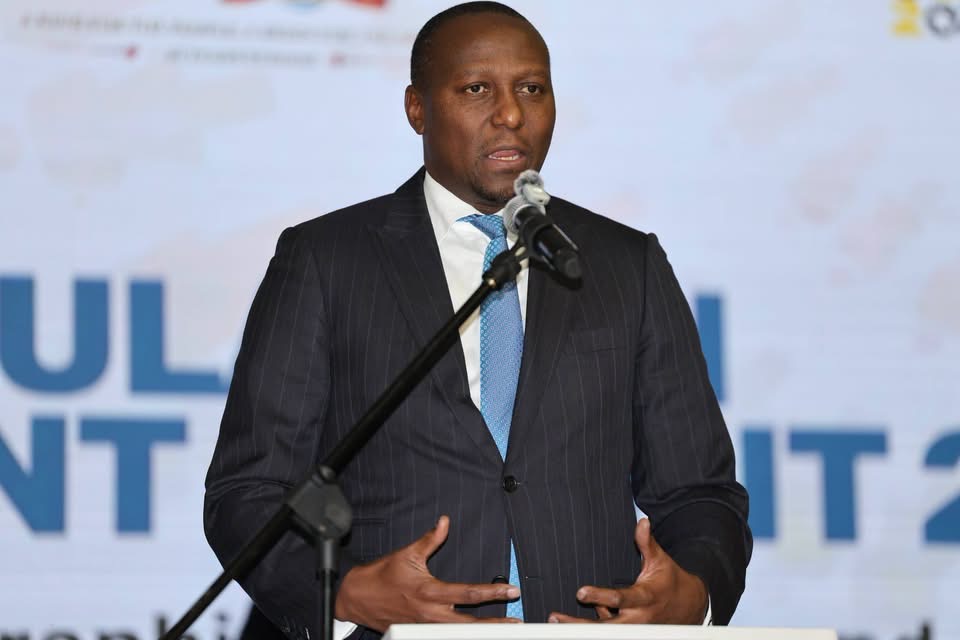
Prime Minister Russell Dlamini making remarks
Add a Comment
Keep Up to Date with the Most Important News