The SADC Parliamentary Forum has tabled a set of administrative and policy reforms dealing with staffing, funding, cooperation with the SADC Secretariat, dress code, gender balance and cost-sharing, as it prepares for transformation into a full SADC Parliament.
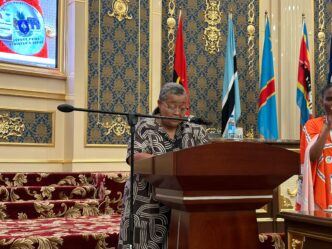
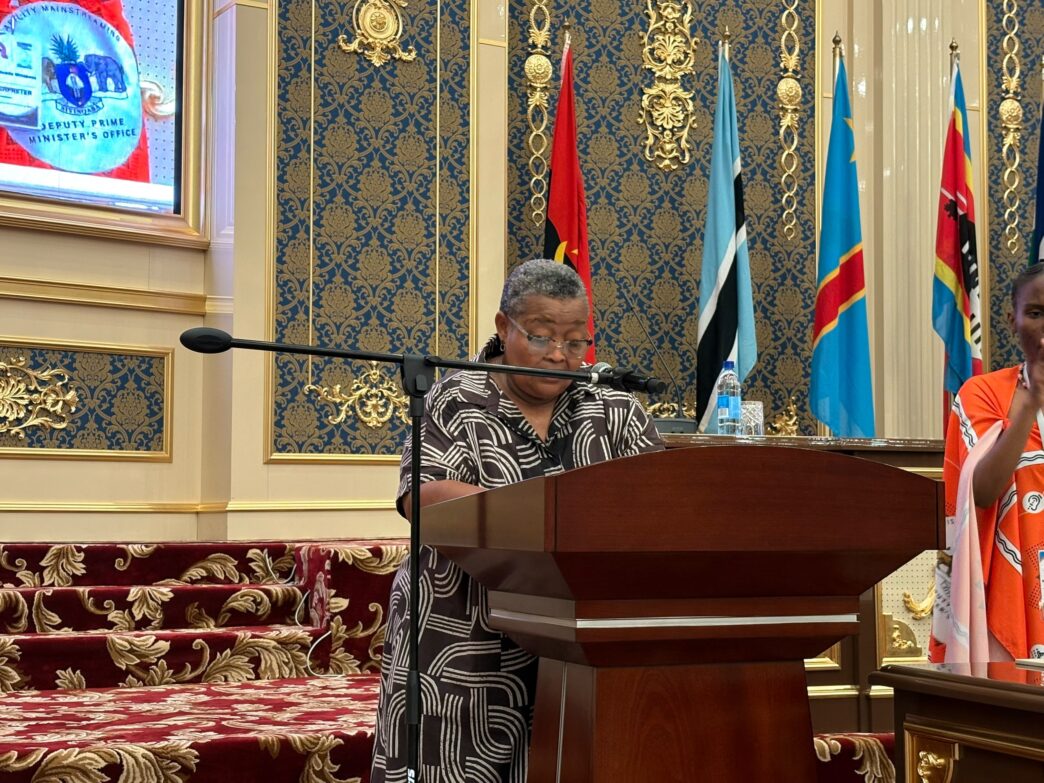
The proposals were contained in the Report of the Executive Committee on Policy and Administrative Matters, presented to the 59th Plenary Assembly by outgoing Vice President Sylvia Lucas-Izaks from South Africa.
Lucas-Izaks said the report was aimed at keeping reforms collective, accountable and on course. She moved for its adoption and the motion was seconded by Speaker Sameer Sulemani.
Lucas-Izaks said the Executive Committee proposed that member parliaments be invited to indicate availability of staff for secondment to the Forum, including one full-time and one part-time placement, or a remote secondment, to meet approved needs. Special support may also be sought where necessary.
“Deployments would depend on written agreements and confirmed funding. The Secretariat would oversee implementation within approved resources and report to the Plenary Assembly on readiness, employment costs and remaining capability gaps,” said Lucas-Izaks.
The proposed organogram was attached to the report, subject to job design, job evaluation and costing.
The report updated members on cooperation between the Forum and the SADC Secretariat.
On 29 January 2026, SADC Executive Secretary Elias Magosimet met the Secretary General of the SADC Parliamentary Forum at the Forum headquarters in Windhoek. The Secretary General was accompanied by Boemo Mungandi, Director of Finance and Corporate Services, while Magosi was accompanied by the Director of Policy Planning and Resource Mobilisation, Dr Mubita Masi.
The meeting focused on strengthening cooperation between the two institutions and promoting greater citizen engagement in regional integration. Magosi reaffirmed SADC’s commitment to the transformation of the Forum into a parliament.
“The engagement also underlined the importance of collaboration on citizen participation, domestication and implementation of SADC instruments and resource mobilisation,” said Lucas-Izaks.
The Executive Committee approved that the Executive Secretary be allowed to write directly to member parliaments requesting an opportunity to address them on regional integration, cooperation between the SADC Secretariat and the Forum, and the role of national parliaments in implementing SADC decisions and instruments. 
The engagements would address the regional integration agenda, the role of national parliaments in ratification, domestication and implementation of protocols and other legal instruments and the transformation of the Forum into a SADC Parliament.
“The report stressed that this is a funding restriction, not a change to Seychelles’ membership or its right to participate,” said Lucas-Izaks.
The Executive Committee was also asked to present a predictable contribution review mechanism and a financing assessment separating once-off from recurring costs, with any contribution adjustment returning to the Plenary Assembly for approval. It must report to the 60th Plenary Assembly on implementation, participation constraints and financial effects.
On leadership, the Executive Committee recommended that the Plenary Assembly mandate the Human Resources and Capacity Development Sub-Committee, with the Legal Sub-Committee, to review the rotation arrangement and submit legally sound options that preserve equitable geographical participation, give all official linguistic constituencies a fair and timely opportunity to nominate, and exclude automatic entitlement or exclusion based on language or nationality.
The options are to be reported to the 60th Plenary Assembly for decision by the competent approving organ.
The Executive Committee recommended that the Plenary Assembly consider the report and its recommendations, provide policy direction, adopt resolutions within its mandate, with those approved taking effect from approval, and request the Executive Committee to report to the 60th Plenary Assembly on implementation.