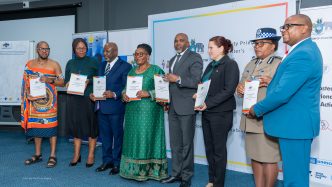
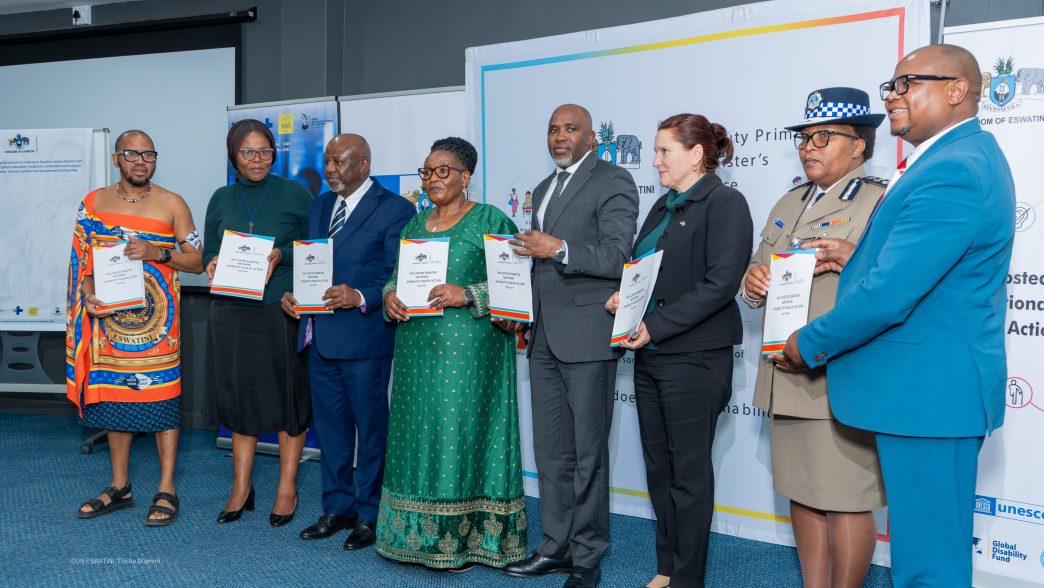
The Deputy Prime Minister, Thulisile Dladla, has called for the creation of equal opportunities for people living with disabilities.
She said this during the launch of the National Framework for Inclusive Communities for Children with Disabilities and the Eswatini National Disability Action Plan at the United Nations House on Thursday.
“There is nothing accidental about today’s joint launch. 
The decision to launch the Costed National Disability Plan of Action alongside the Young Heroes–Imbita Project is deliberate.
It reflects our commitment to a systems-thinking approach, which recognises that sustainable disability inclusion cannot be achieved through fragmented interventions or isolated institutions, but only through a well-coordinated and holistic approach to problem-solving,” she said.
Dladla also thanked the United Nations Educational, Scientific and Cultural Organisation (UNESCO) and Young Heroes for their contributions to the national initiative.
“On behalf of His Majesty’s Government, I extend our sincere appreciation to every partner who has made this day possible.
Allow me to pay particular tribute to UNESCO for its steadfast technical leadership in advancing inclusive education and disability mainstreaming;
to the Global Disability Fund for its confidence in Eswatini’s vision and its investment in our inclusive future; and to the entire UN family, including the United Nations World Food Programme (WFP) and the United Nations Children’s Fund (UNICEF),” she said.
Dladla further revealed that the programme will empower people living with disabilities across several sectors.
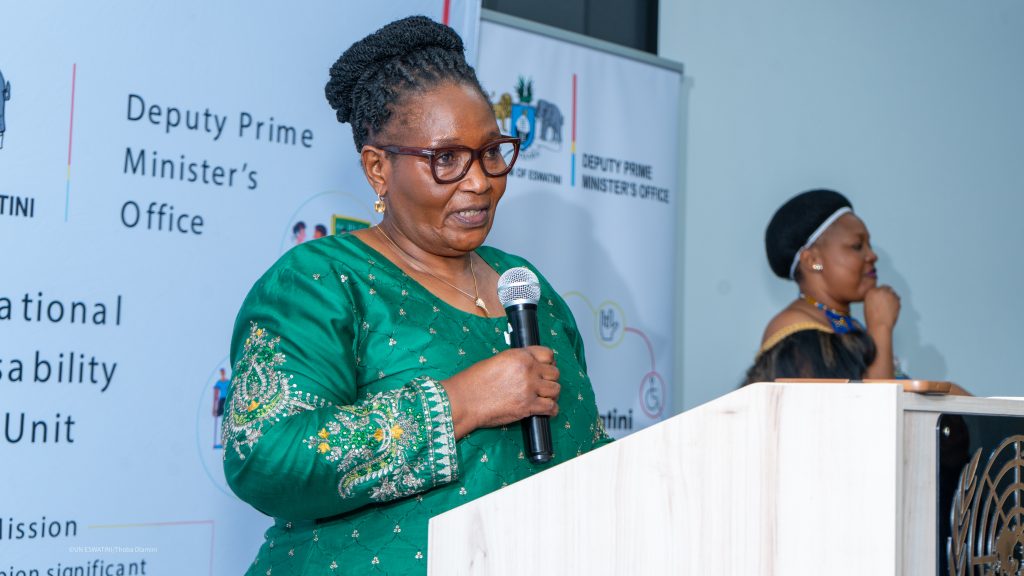
“We are not launching a document, nor are we ticking a box. We are launching a national implementation framework.
For too long, governments across the world have adopted disability policies with noble aspirations, but no clear means to finance them.
Today, Eswatini breaks from that pattern. We launch a fully costed National Disability Plan of Action, a practical roadmap for implementation, accountability and resource mobilisation.
This costed plan identifies strategic investments across every critical area of national life: coordination, advocacy, inclusive education, health and rehabilitation, employment, social protection, accessible infrastructure, emergency preparedness, sports and culture, and universal accessibility,” she said.
Dladla also thanked the German Consulate in Eswatini for funding the initiative.
“We are grateful for Germany’s support for the programme over a period of two years, and it will play a key role in improving the lives of people with disabilities in the country,” she said.
German Consulate representative Liesel Töpfer said they were pleased to be part of the joint national initiative.
“We are pleased to be part of the national programme and strongly believe that it will play a key role in improving the lives of people with disabilities in Eswatini.
We commend the Eswatini Government for its role in the programme,” she said.
The event was attended by guests from several organisations, including the Federation of Organisations of the Disabled in Swaziland (FODSWA).
UN welcomes national disability programme
The United Nations has welcomed the launch of the National Framework for Inclusive Communities for Children with Disabilities and the Eswatini National Disability Action Plan.
This was revealed by the United Nations Resident Coordinator during the launch held on Thursday.
“I am honoured to join you today as we launch the Costed Eswatini National Disability Action Plan and the Young Heroes Project on Creating Inclusive Communities for Children with Disabilities in Eswatini.
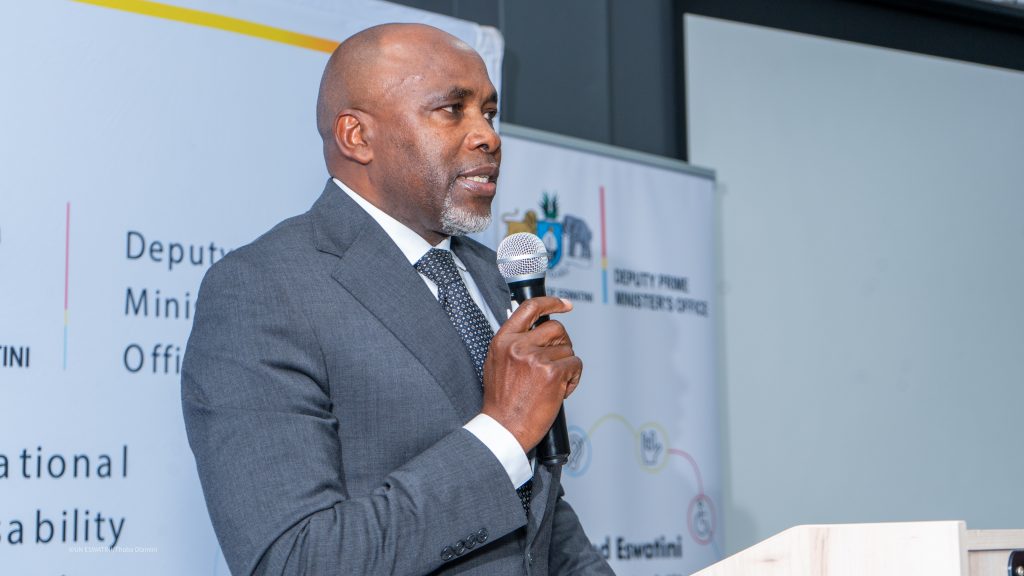
This double launch reminds us that, first, we have to deliberately plan for and invest in disability inclusion. We must pay particular attention to children with disabilities from the early stages of their development to increase the chances of shaping their lives for the better,” he said.
Wachira also said the initiative would improve the lives of people with disabilities.
“The Costed Plan enhances our ability to create opportunities for adults with disabilities to participate fully in education,
employment and national development, while the Young Heroes project draws our attention to our obligation to ensure and safeguard the inclusion of children with disabilities throughout their lives, enabling them to learn and thrive in society,” he said.
He also thanked the Deputy Prime Minister’s Office for supporting the initiative.
“I thank the Deputy Prime Minister’s Office for convening us today and commend the Government of the Kingdom of Eswatini for the progress that has been made in advancing the inclusion, dignity and rights of persons with disabilities.
I also thank UNESCO and the Global Disability Fund Multi-Partner Trust Fund and its contributing partners for supporting the development of this plan and advancing disability rights in Eswatini,” he said.
In conclusion, Wachira said they were proud to be part of the two initiatives.
“We are proud to have supported the development of the Costed National Disability Action Plan and remain committed to its implementation.
Through the United Nations Sustainable Development Cooperation Framework 2026–2030, disability inclusion is integrated across our work, reflecting the principle that inclusion must be embedded across all areas of national development.”
Other guests included Abdul Rahman Lamin, Head of Social and Human Sciences at the UNESCO Regional Office for Southern Africa (ROSA). Lamin commended the Government and its partners for their contribution to the initiative.