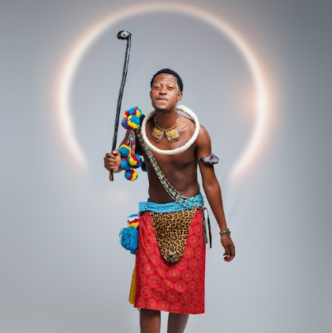
For Eswatini artist Sancheziey, hearing his song Siyabonga Gogo on South Africa’s Metro FM was more than a career milestone.
It was, in his words, a moment that made him realise that a story born from Eswatini could travel far beyond the country’s borders.
The song, which pays tribute to grandmothers and the role they play in families and communities, recently made its Metro FM debut, giving the artist a platform on one of South Africa’s biggest radio stations.
Sancheziey said hearing his own voice on Metro FM was an emotional experience that brought back memories of the journey, sacrifices and people who supported his dream.
“It was one of those moments where words almost fail you. Hearing ‘Siyabonga Gogo’ on Metro FM was bigger than just hearing my song on the radio – it felt like hearing a piece of Eswatini being welcomed into a much bigger space,” he said.
He said the moment made him reflect on the uncertainty that often accompanies an artistic journey, particularly the times when he had to continue believing in his dream without knowing whether it would eventually pay off. 
“I felt proud, humbled and deeply grateful. But more than anything, it reminded me that our stories can travel.
You can come from a small kingdom and still create something that speaks to a much bigger world,” Sancheziey said.
Siyabonga Gogo was not conceived simply as another song, but as a musical expression of gratitude to the women who have quietly shaped generations.
Sancheziey said the idea was inspired by the desire to acknowledge grandmothers, whom he described as storytellers, teachers, protectors and keepers of tradition.
For Sancheziey, the word “Gogo” carries a much deeper meaning within African families.
He explained that the song was built around the question of what would happen if people stopped waiting for special occasions before expressing gratitude to those who had shaped their lives.
That question ultimately became Siyabonga Gogo, his way of thanking the women who raised, prayed for, guided and gave roots to generations.
He added that the character represents the grandmother who wakes before everyone else, carries the family through difficult seasons and passes history from one generation to the next.
“Gogo represents our roots, our memory and our identity. That is why the song carries such a strong emotional weight.
I wasn’t just singing about a grandmother. I was singing about the people and values that built us,” he said.
The Metro FM debut has also shifted Sancheziey’s perspective on what his music can achieve.
He believes the exposure has reinforced the importance of remaining authentic rather than changing his sound to fit into a bigger market. “Metro FM has expanded my vision.
There is something powerful about seeing a song that is deeply rooted in Swati culture reach a platform of that magnitude.
It tells me that authenticity is not a limitation; it can actually be your passport to the world,” he said.
Sancheziey said his ambition is not merely to become known in Eswatini and South Africa, but to introduce audiences across Africa and beyond to Swati stories and sounds.
“I don’t want to make music that sounds like everyone else just to fit into a bigger market. I want to take my identity with me,” he said.
“The goal is not to leave Eswatini behind. The goal is to take Eswatini with me.”
The response to Siyabonga Gogo has further convinced Sancheziey that audiences connect most strongly with music that tells honest and relatable stories.
He said listeners have connected with the song because it reminds them of their own grandmothers, childhoods, upbringing and, in some cases, loved ones they have lost.
“It has taught me that authenticity still matters. People don’t necessarily connect with a song because it is perfect. They connect because they feel something,” he said.
For him, the true measure of the song’s impact is not simply how many people listen to it, but what it inspires them to do.
“If one song can make someone call their grandmother, remember their childhood or simply say ‘thank you’ to someone they love, then that song has already done something meaningful,” Sancheziey said.
Reflecting on his younger self, Sancheziey said he would remind the aspiring artist that dreams can take time to become visible.
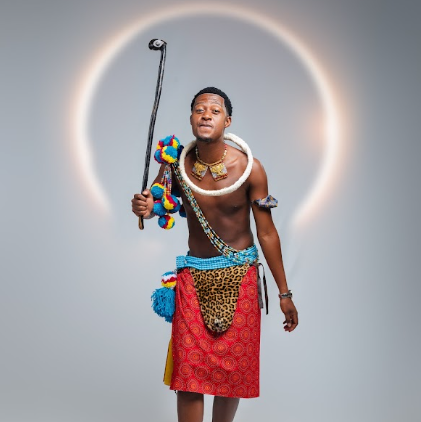
“I would tell him, ‘Don’t give up on the version of yourself that nobody else can see yet,’” he said.
He acknowledged that the journey had included rejection, uncertainty, empty rooms and late nights, but said those experiences were part of the preparation for bigger opportunities.
“And then I’d tell him, ‘One day, a song that comes from your heart and from your culture will play on Metro FM,’” he said.
While Siyabonga Gogo has introduced Sancheziey to a wider audience, the artist said there is much more for listeners to discover.
His album, uMntfwana weLive, released in August, features songs including Utawuva Ngengoma, Halala and Emakamelwi, among others.
Sancheziey said the album showcases different sides of his artistry, combining emotion, culture, energy and different sounds.
“While ‘Siyabonga Gogo’ may have introduced me to a bigger audience, uMntfwana weLive is where I want people to really get to know Sancheziey, the artist, the storyteller and the Swati cultural voice,” he said.
He encouraged those who discovered him through Siyabonga Gogo to explore the full album. “Siyabonga Gogo is only one chapter; there is a whole story waiting for you in uMntfwana weLive,” he said.