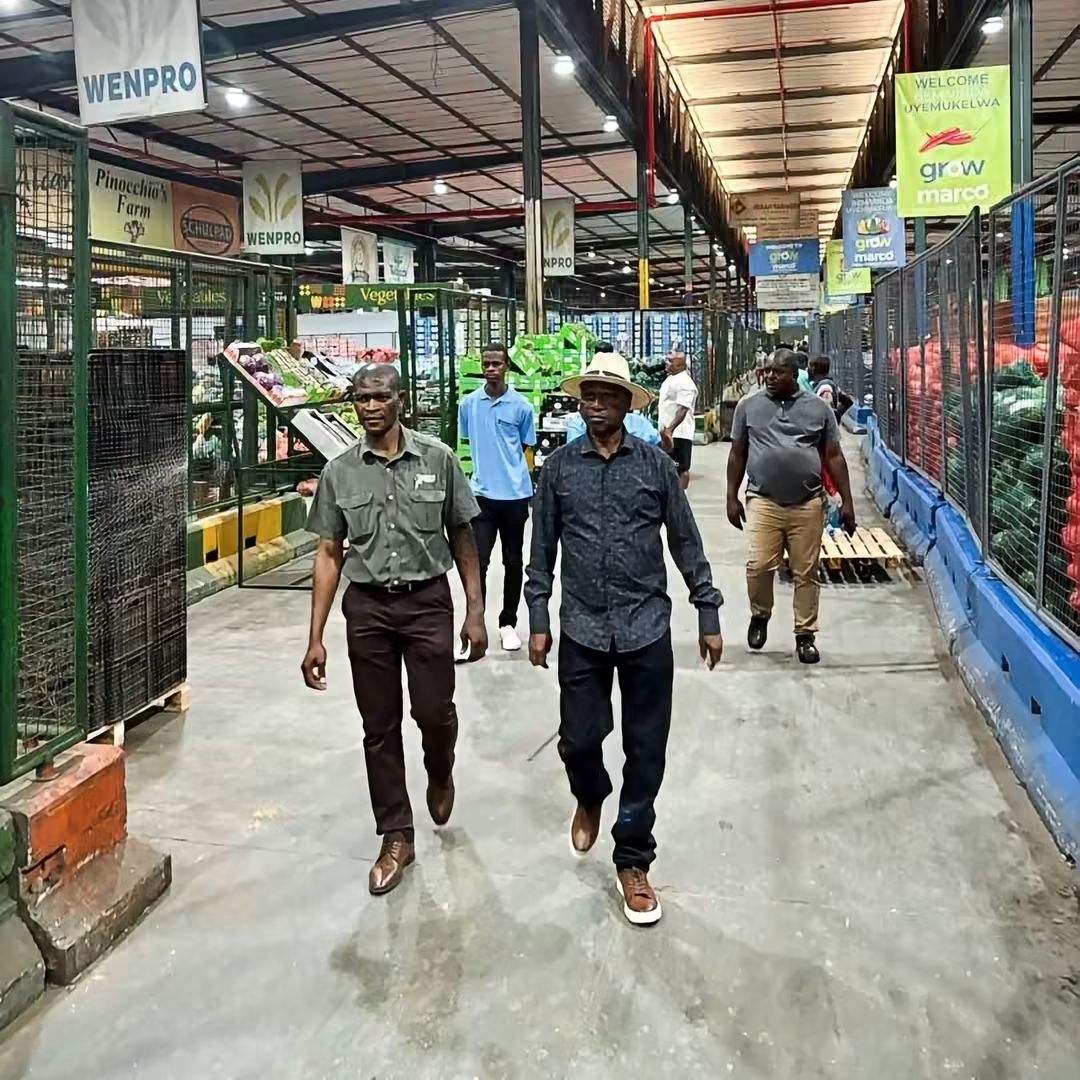
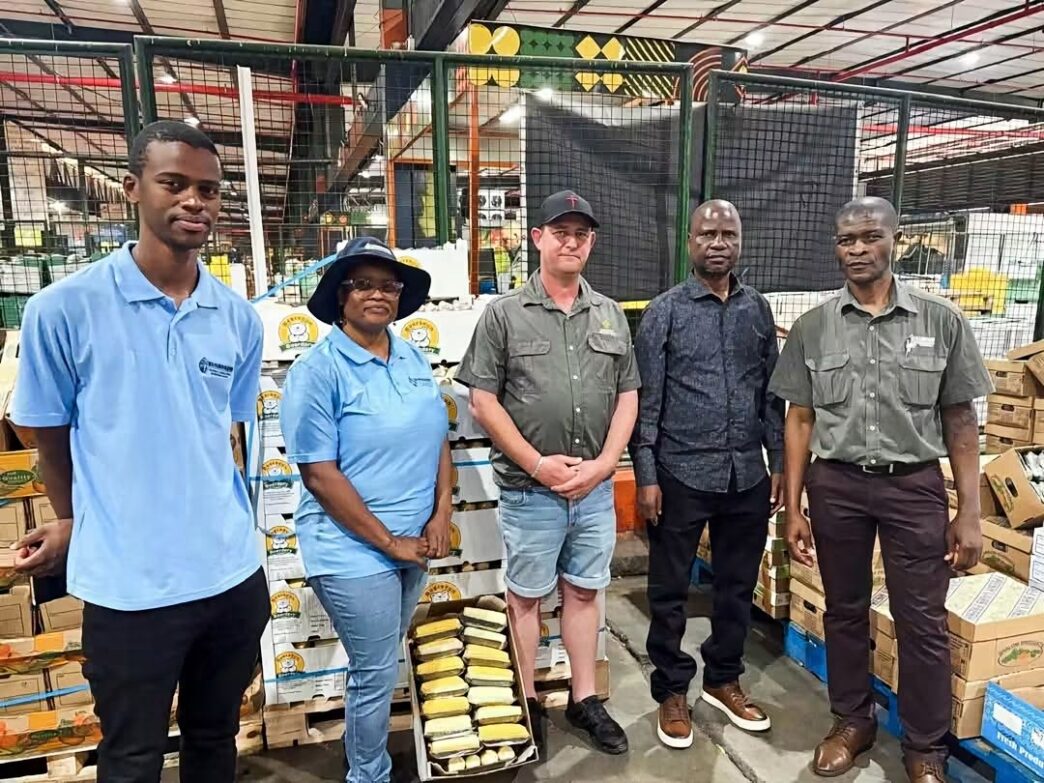
The Minister for Agriculture, Mandla Tshawuka, accompanied by NAMBoard Chief Executive Officer, Bhekizwe Maziya, undertook a two-day visit to Tshwane Market and Johannesburg Market in South Africa to engage with existing and potential market agents to explore new opportunities for Eswatini farmers.
The engagements provided an opportunity to strengthen existing relationships, establish new partnerships, understand market requirements and identify opportunities for expanding market access for Eswatini farmers.
Through these engagements, government says it continues to pursue strategic market linkages that connect local farmers to wider markets, strengthen the horticultural value chain and create sustainable growth for Eswatini’s agricultural sector.
The visit was focused on market access, a central challenge for Eswatini’s agricultural sector. Access to wider markets determines whether farmers can sell what they produce, at what price, and on a sustainable basis.
For Eswatini farmers, expanded market access means an opportunity to move beyond limited local outlets and connect to buyers in larger markets. Wider markets provide more buyers, more consistent demand, and greater opportunity for farmers to plan production with confidence that their produce will find a market.
The engagements in Tshwane and Johannesburg were aimed at building those connections. By engaging directly with market agents, the delegation sought to strengthen the relationships that facilitate trade and to establish new partnerships that can open additional market channels for Eswatini produce.
Market agents play a key role in linking farmers to buyers. Strengthening existing relationships with agents therefore provides continuity for farmers who are already supplying markets, while establishing new partnerships creates additional options and reduces dependence on a single market channel.
Understanding market requirements was another central purpose of the visit. Market requirements determine what buyers expect in terms of produce, supply and quality. By understanding those requirements, Eswatini farmers and institutions supporting them can better align production to what the market demands.
Identifying opportunities for expanding market access was also a key outcome sought from the engagements. New opportunities can provide farmers with additional market outlets, increase competition among buyers and improve the prospects for sustainable sales.
The visit reflects the government’s focus on strategic market linkages. Strategic linkages connect local farmers to wider markets in a planned and coordinated manner, rather than leaving farmers to seek markets on their own.
Such linkages are intended to benefit the horticultural value chain. The horticultural value chain covers production, harvesting, handling, transport, marketing and sale. Strengthening the value chain means improving the systems that move produce from farms to markets, so that farmers can benefit from their production.
When the value chain is strengthened, farmers are better positioned to supply markets consistently and the agricultural sector is better positioned to grow.
The engagements are also intended to contribute to sustainable growth for Eswatini’s agricultural sector. Sustainable growth means growth that can be maintained over time, based on reliable markets, stable partnerships and continued production.