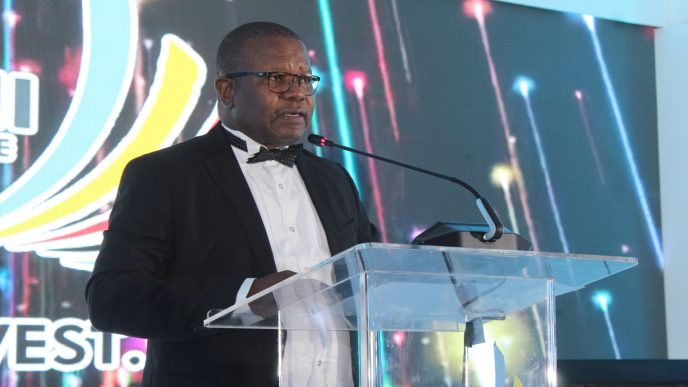
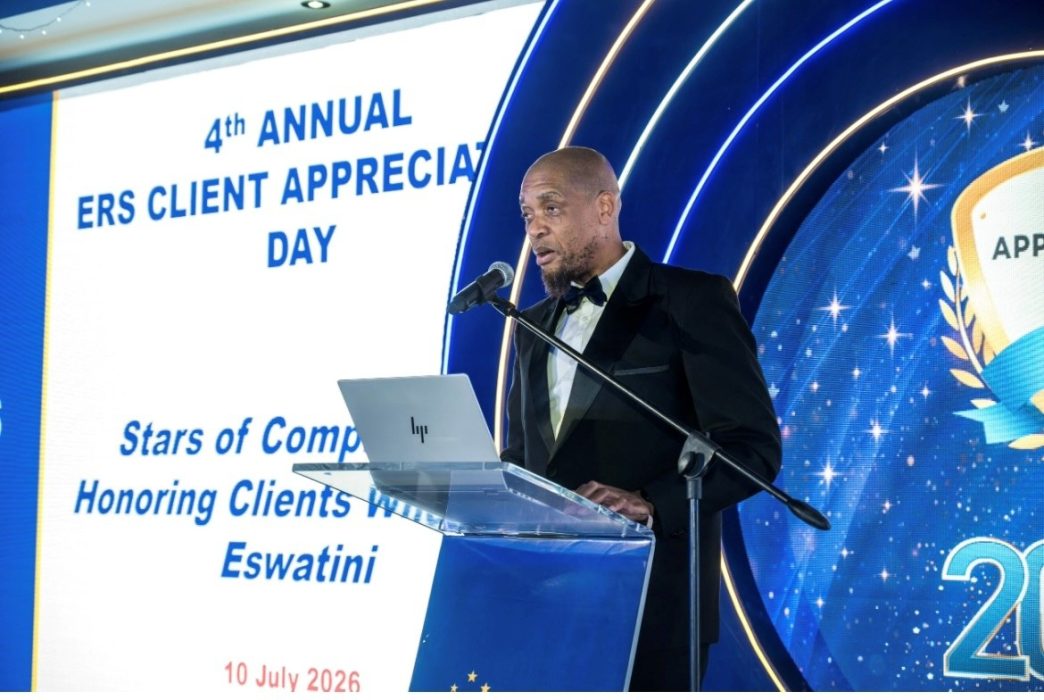
Smiling ear-to-ear and beaming with pride, Eswatini Revenue Service (ERS) Commissioner General Brightwell Nkambule proudly declared that his organisation has now achieved a remarkable 72 per cent in voluntary compliance and now aiming for 100 per cent.
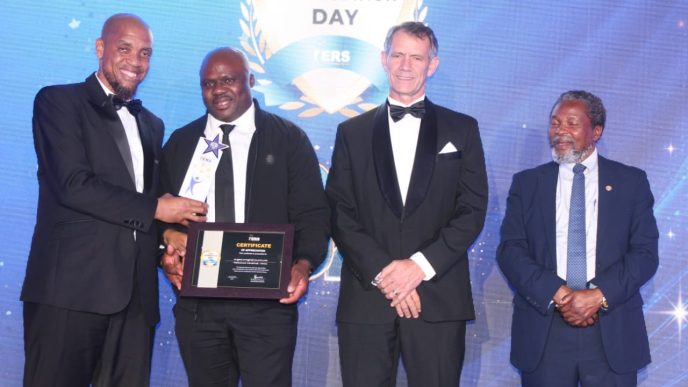
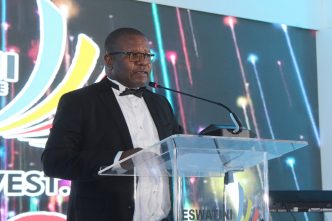
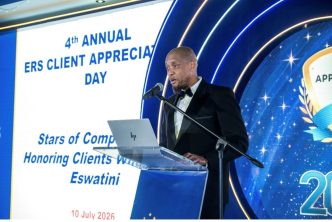
Addressing the guests during the 4th Annual Clients Appreciation Day held under the theme, “Stars of Compliance: Honouring Clients Who Build Eswatini,” at Happy Valley on Friday, Nkambule said the voluntary compliance rate has increased from approximately 62 per cent in 2019/20 to more than 72 per cent in 2025/26.
“This progress is encouraging, but it also reminds us that there remains significant work to be done. Our vision remains ambitious and clear: 100 per cent voluntary compliance for a better Kingdom of Eswatini. 
We know that this vision cannot be achieved by ERS working alone. It requires the participation of Government, Parliament, businesses, professional bodies, financial institutions, the media, development partners and every individual taxpayer,” Nkambule said.
Nkambule said this year marks an important milestone in the life of the Eswatini Revenue Service as the organisation has now completed 15 years of operations, having commenced operations in January 2011.
“The progress achieved during this period is a story not only about the ERS, but also about the taxpayers, traders, Government institutions and partners who have walked this journey with us.
Over the period, domestic revenue has become increasingly important as a source of national financing, particularly as receipts from the Southern African Customs Union remain subject to considerable fluctuations.
This growth has enabled Eswatini to reduce its vulnerability to external revenue movements and strengthen its capacity to finance national priorities from resources mobilised within our own economy,” Nkambule said.
Nkambule added: “We are conscious, however, that revenue collection is both a science and an art.
Jean-Baptiste Colbert famously observed that the art of taxation is to collect the greatest possible amount with the least possible resistance.
In the modern revenue administration, this means designing systems that make it easier for taxpayers to comply and progressively more difficult to remain outside the system.
It means combining good legislation, data, technology and risk management, the science of taxation, with taxpayer education, empathy, partnership and exceptional service, the art of taxation,”
He stated that at ERS, they have deliberately moved away from viewing taxpayers merely as people from whom revenue must be collected.
“We regard taxpayers and traders as clients and partners in the development of our country. Our objective is not simply to enforce compliance.
It is to create an environment in which compliance becomes the easiest and most natural choice.
That is why taxpayer education remains central to our approach. Through outreach programmes, stakeholder engagements, digital platforms and initiatives such as Bafundzise, we are taking tax information closer to businesses, communities and individual taxpayers,” he added.
Nkambule said they have also invested significantly in improving the client experience.
“Over the past six years, the ERS Net Promoter Score has risen from below 10 per cent to approximately 83 per cent.
This improvement is important because it reflects growing confidence among our clients in the service they receive from the ERS.
We do not take this trust for granted. We know that every unanswered telephone call, every delayed refund, every inconsistent decision and every difficult interaction can weaken it.
We therefore remain committed to listening, learning and continuously improving,” Nkambule said.
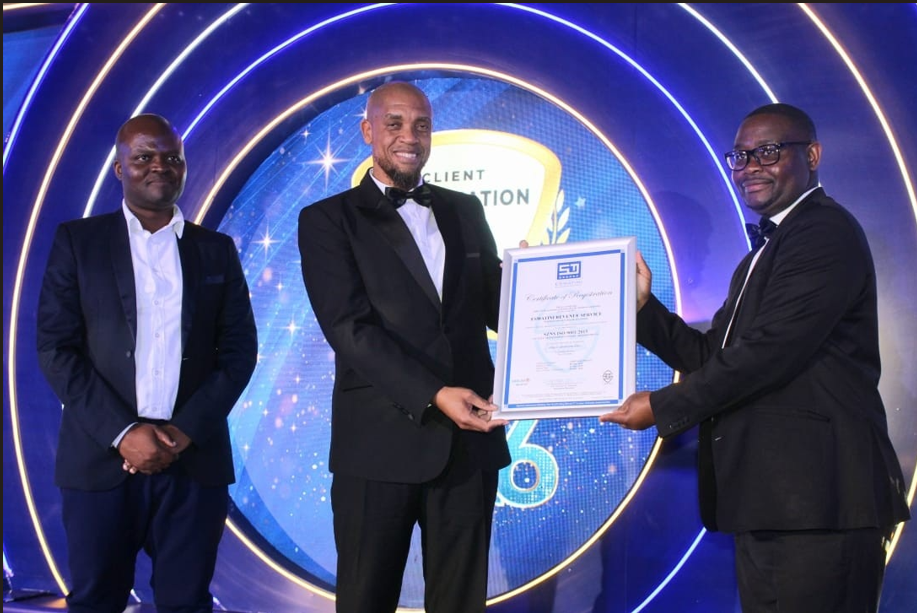
He further stated that the attainment of ISO 9001:2015 certification was another important step in the organisation’s journey and confirmed its commitment to building consistent, accountable and client-centred processes.
“It is not a destination, but a discipline that must now become visible in every interaction with our clients. As we increase revenue mobilisation, we must also ensure that the cost of collection remains efficient.
Over the past decade, the ERS cost-to-revenue ratio has declined from above 5 per cent to approximately 4 per cent.
At the same time, the domestic tax-to-GDP ratio has increased from about 13.4 per cent to approximately 16.5 per cent,” he added.
Nkambule said these improvements indicate that Eswatini is becoming more effective in mobilising revenue from its economy.
“However, efficiency cannot be measured only by how much revenue we collect. It must also be assessed by how fairly, transparently and professionally that revenue is collected.
Honest businesses should not be placed at a competitive disadvantage by those who under-declare, conceal transactions or deliberately remain outside the tax system.
Fair taxation requires that everyone contributes the correct amount, at the correct time, in accordance with the law,” he noted.