
Entrepreneurs have been urged to embrace artificial intelligence (AI) as a tool for growing their businesses while ensuring that the technology does not take over their ideas, identity or direction.
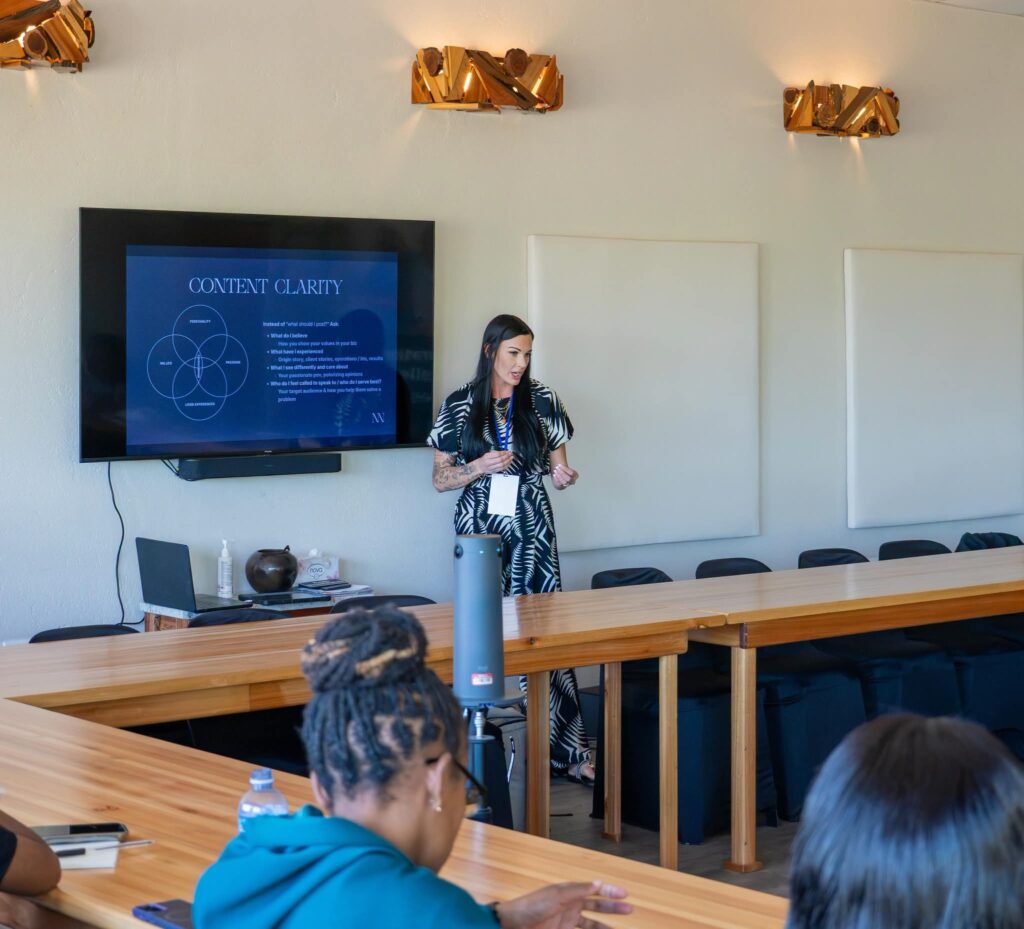
The call was made by United States entrepreneur Natalie Nicole Kozub, a CEO, serial entrepreneur and brand strategist, while speaking as a featured speaker and panellist at the LaunchPad Business Conference 2026.
The conference brought together entrepreneurs, business leaders and aspiring business owners for discussions on entrepreneurship, business development, content creation, technology and business growth. 
Kozub, who travelled from the United States for the conference, focused her presentation on using AI to batch content.
She said entrepreneurs needed to establish a clear foundation for their businesses before turning to technology to communicate their ideas and reach potential customers.
She said understanding who the business serves, what it offers and the results it seeks to achieve would enable entrepreneurs to use AI more effectively.
“Have a solid foundation, and understand deeply who we are, who we’re serving, what our end goal or result is, then we’re going to get way better results with AI as a tool,” Kozub said.

Kozub stressed that AI should complement an entrepreneur’s strategy rather than become the authority on what a business represents.
She said entrepreneurs should retain control over their message and use technology to help them articulate their ideas.
“It should not be our source of truth. It should be a tool to help us further what we’re trying to articulate and what we’re trying to get to in the result,” she said.
She said entrepreneurs should first have clarity about their identity, products or services and the value they offer before worrying about how they will present themselves on social media.
“When you’re clear on who you are and what you’re offering and the value that you provide to your audience, how much easier is it?” she said.
“If you know you can genuinely help someone with your business solution, you should be able to talk about that confidently.”
Kozub also encouraged entrepreneurs to draw on their own knowledge, experiences and perspectives when producing content.
She said business owners should not underestimate the value of the knowledge they have accumulated or assume they have nothing meaningful to share with potential customers.
“You know so much. You have a unique perspective. God gave you the vision to start something for a unique reason. So use that,” she said.
The entrepreneur further challenged business owners to rethink how they measure success on social media, saying likes, comments and follower numbers did not always provide a complete picture of the impact of their content.
She said some potential customers could regularly consume a business’s content without publicly interacting with it, only to make contact when they were ready to purchase a product or service.
“These people are secretly consuming your content, and when they’re ready to buy, when they’re ready to convert, they will reach out,” she said.
Kozub cautioned entrepreneurs against allowing changes in social media algorithms or a decline in engagement figures to undermine their confidence.
She said lower levels of visible engagement did not necessarily mean that content was failing to reach or influence an audience.
“It’s not you,” she said.
She used her own business experience to demonstrate the importance of building a loyal audience rather than focusing solely on the size of a social media following.
“I made multiple six figures with low followers. I only have 3 000 followers on Instagram, but it’s very loyal. I’ve been in business for six and a half years and I showed you I’m still standing,” she said.
Kozub said entrepreneurs should focus on developing meaningful relationships with their audiences and consistently providing value rather than chasing immediate online attention.
“Social media should be about nurturing your audience, forming a relationship, being social,” she said.
She said entrepreneurs needed to understand that building trust with potential customers was a process and that social media did not always produce immediate results.
“We want instant likes, we want instant results, and that’s not how it works anymore,” Kozub said.