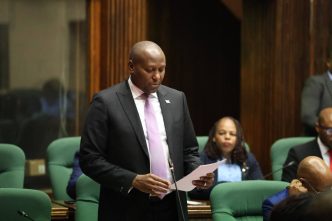
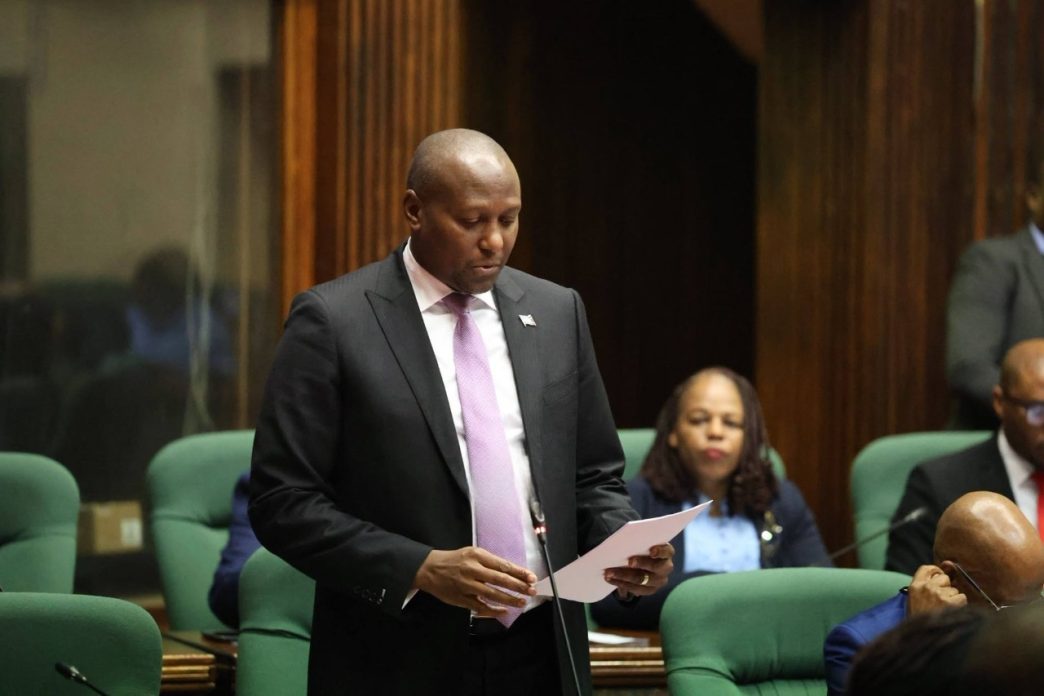
Government has rejected suggestions that Prime Minister Russell Mmiso Dlamini interfered with the Judiciary through remarks made in Parliament, insisting that his comments were made in fulfilment of his constitutional duty to account to Members of Parliament and were never intended to influence judicial decision-making.
In a statement issued on Monday by Acting Government Spokesperson Thabile Mdluli, Government sought to clarify remarks that had subsequently been interpreted by Chief Justice Bheki Maphalala as constituting interference with the Judiciary. 
While maintaining that the Prime Minister’s comments did not amount to interference, Government said it considered it necessary to provide context in order to preserve public confidence in State institutions and maintain the constitutional relationship between the Executive and the Judiciary.
According to the statement, the Prime Minister’s remarks were made while responding to questions from Members of Parliament concerning the work of the Anti-Corruption Commission (ACC). Government said his response was limited to the operational diligence expected of the Commission in carrying out its statutory mandate and was not directed at the Judiciary.
Government explained that the Prime Minister’s position was that where applications for warrants of arrest had previously been declined, the ACC should not abandon its investigations but should continue pursuing matters where sufficient evidence existed to satisfy the legal requirements for obtaining warrants.
It argued that encouraging the Commission to continue investigating corruption cases did not amount to questioning judicial decisions or directing courts on how to exercise their discretion.
“The remarks neither questioned nor sought to influence the exercise of judicial discretion,” the statement said.
Government further stated that the Prime Minister did not seek to attribute responsibility to the Judiciary for investigative outcomes, nor did he attempt to direct, advise or influence any judicial officer in the performance of judicial functions.
It added that any interpretation suggesting otherwise was regretted because it did not reflect either the intention or substance of the Prime Minister’s remarks.
The statement reaffirmed Government’s commitment to the constitutional doctrine of separation of powers, describing judicial independence as one of the fundamental pillars of constitutional governance and the rule of law.
Government said the Executive fully recognises that judicial authority must be exercised independently and without improper influence, adding that it remains committed to respecting that constitutional principle at all times.
The statement also highlighted what it described as a longstanding tradition of mutual respect and institutional cooperation between the Executive and the Judiciary.
According to Government, concerns affecting the relationship between the two arms of State have historically been addressed through constructive and private institutional engagement rather than public exchanges.
It said the Prime Minister remained committed to preserving that tradition and expressed confidence that the current misunderstanding could similarly be resolved through respectful dialogue conducted within the appropriate constitutional framework.
Government also used the statement to reaffirm its determination to strengthen the fight against corruption, saying that this commitment should not be interpreted as an attempt to interfere with constitutionally independent institutions.
It stated that the Executive’s anti-corruption agenda is carried out in fulfilment of the mandate entrusted to Government by His Majesty King Mswati III and resolutions of Sibaya.
According to Government, efforts to combat corruption are intended to safeguard public resources, promote integrity within public administration and ensure that all persons are subject equally to the rule of law.
The statement further pledged continued support for institutions responsible for preventing, investigating and prosecuting corruption, saying they would be provided with the necessary resources to execute their statutory mandates independently, professionally, impartially and without fear or favour.
Government said strengthening these institutions remains essential to ensuring that justice is administered fairly while maintaining public confidence in the Kingdom’s governance institutions.