The Chief Justice has disputed Prime Minister Russell Mmiso Dlamini’s assertion that courts are delaying corruption cases by failing to issue warrants of arrest and has accused political interference of undermining the Anti-Corruption Commission.
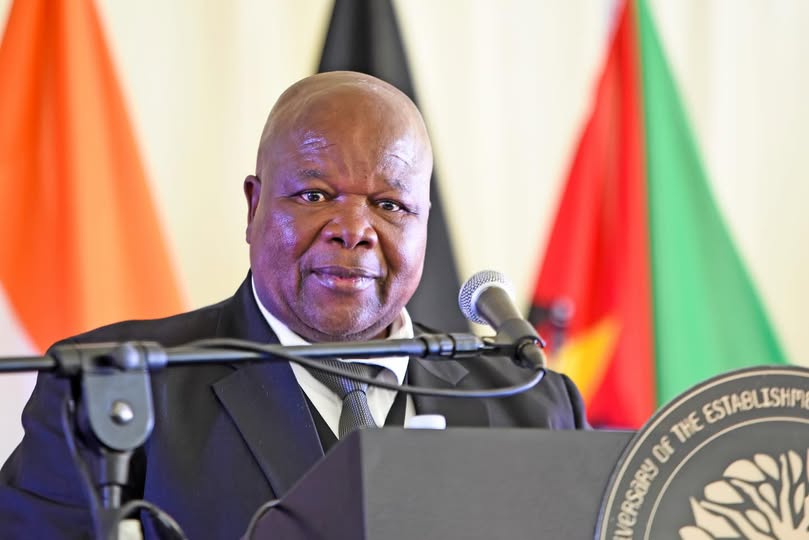
During a press briefing at the Supreme Court on Monday, the Chief Justice responded to remarks made by the Prime Minister in Parliament during debate on the Private and Cabinet Office 1st Quarter Performance Report.
The Chief Justice said the claim that the judiciary was refusing to issue warrants was incorrect. He explained that the law sets out a clear process: the Anti-Corruption Commission investigates independently, submits findings to the Director of Public Prosecutions and the DPP then applies to court for a warrant. 
He said courts can only issue warrants where there is evidence to support an application. Without that evidence, the courts cannot proceed, he noted.
The Chief Justice said it was necessary to correct the record to prevent misinformation from spreading about the role of the judiciary.
He described corruption as a critical issue that has been raised repeatedly by His Majesty King Mswati III in Parliament and by the nation during sibaya.
The Chief Justice said the matter requires institutions to act within their constitutional mandates and that courts must not be blamed for delays caused elsewhere in the process.
On the structure of the Anti-Corruption Commission, the Chief Justice said the law places the body under the authority of His Majesty, not under Cabinet.
He noted that the Commission was established through the Judicial Service Commission following amendments to the law in 2006. The legislation, he said, provides that the Commission shall operate independently and shall not be subject to the direction or control of any person.
According to the Chief Justice, this means the Commission reports to the King and must carry out its work free from political direction or support.
The Chief Justice stated that the Prime Minister’s involvement in the affairs of the Commission is not provided for in law. He said such involvement amounts to interference in the Commission’s work processes.
He also questioned the appointment of an assistant within the Commission, saying there is no legal basis for it.
The Chief Justice argued that political interference is one of the factors that allows corruption to persist and that the law does not require politicians to be part of the Commission’s operations.
He urged politicians to withdraw from the activities of the Anti-Corruption Commission to allow it to function as intended by law.
The Chief Justice reiterated that the Commission must investigate independently, make determinations and forward matters to the DPP. It is then the role of the courts to assess applications for warrants based on evidence presented.