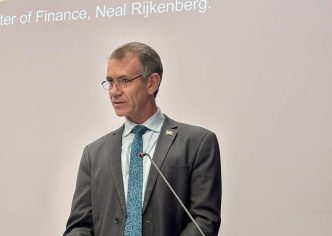
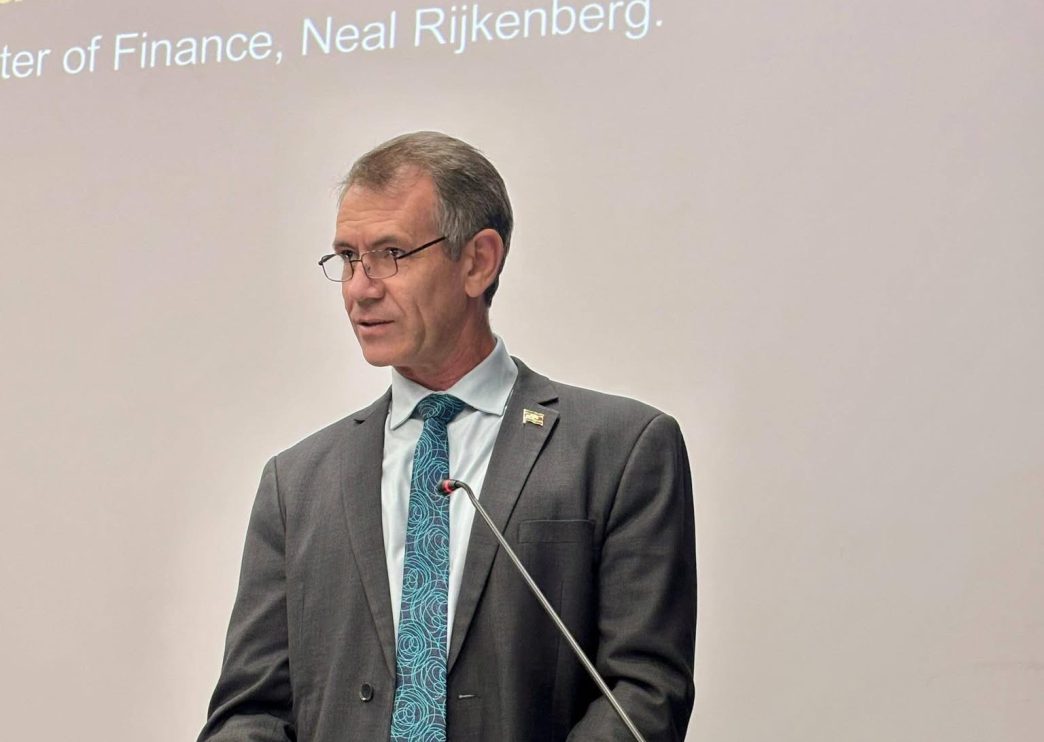
Municipalities can approach commercial banks to finance infrastructure projects, but must first obtain Government approval, Minister for Finance Neal Rijkenberg has told Parliament.
Rijkenberg clarified while responding to Motion 19/2026, moved by Kubuta MP Masiphula Mamba and seconded by Mbabane East MP Welcome Dlamini, calling for the release of outstanding Capital Investment Programme subventions to Mbabane and Manzini.
The motion also sought an explanation for the alleged suspension of the subventions and called for the Government to lift the purported ban.
However, Rijkenberg dismissed the suggestion that the government had imposed a ban on capital investment subventions to the two cities.
He explained that the government had changed its approach to allocating capital investment funding after finding that municipalities were receiving small amounts that had limited impact on infrastructure development.
“It was E2 million here, E3 million there, E1 million there,” Rijkenberg said. The minister said the Ministries of Economic Planning and Development and Housing and Urban Development had instead consolidated the allocations into a single fund currently amounting to E26.5 million.
The consolidated funding is being directed to one municipality at a time to support projects with a greater impact, including tarred roads and bridges.
Rijkenberg said the approach was intended to ensure that municipalities benefited over time, with the Ministry of Housing and Urban Development determining which municipality had the greatest need each year.
The minister also told the House that the government had provided the full amounts requested by Mbabane and Manzini for rates.
Mbabane has been allocated E74.5 million in the current budget, while E40.8 million has been provided for Manzini.
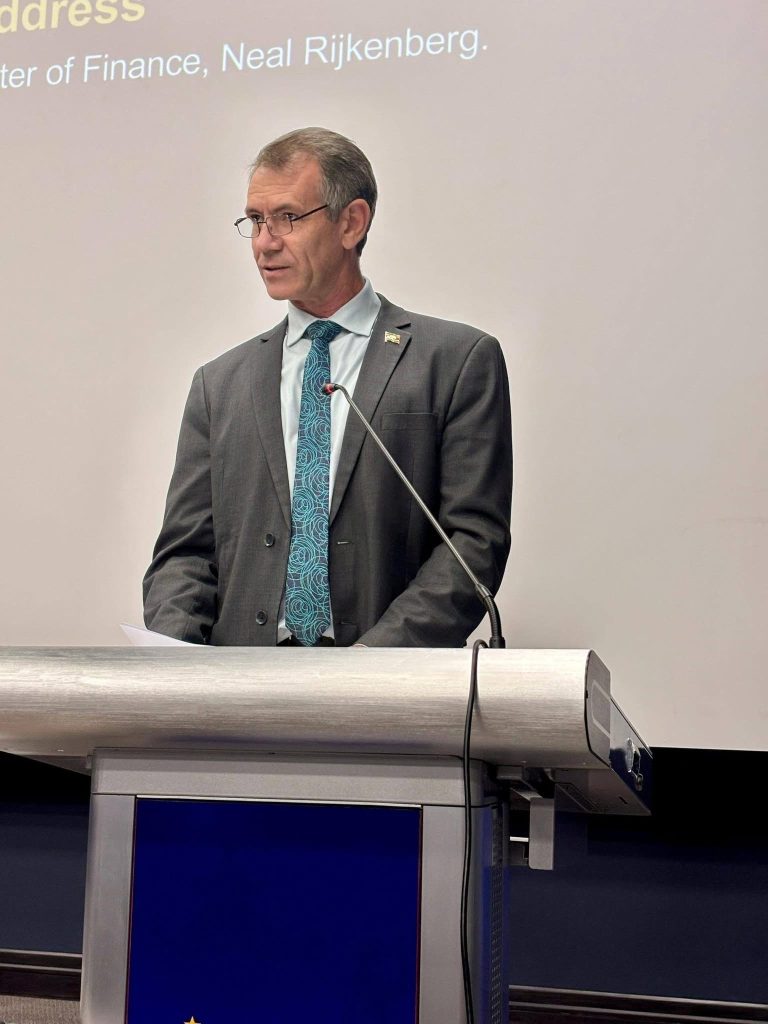
However, Rijkenberg cautioned that budgetary provision did not guarantee immediate payment, citing the government’s current cash-flow constraints.
He said the government had also prioritised reducing arrears owed to the municipalities, with E20 million provided this year to begin settling the outstanding amounts, as was done the previous year.
Rijkenberg said increasing allocations while substantial arrears remained would not necessarily be the best use of limited public funds.
“It’s not a matter of providing more budget. It’s a matter of making sure that the allocation of the budget is as fair as possible across government,” he said.
He acknowledged that clearing the arrears would take several years, but said the government could reconsider increasing capital investment subventions once the backlog had been reduced.
On municipal borrowing, Rijkenberg clarified that there was no prohibition on municipalities obtaining loans from commercial banks.
However, municipalities cannot approach banks independently without Government approval.
“There’s no requirement that they can’t go to the banks. It’s just they can’t go directly to the banks. They do need to ask for approval from Government to go to the banks,” he said.
The clarification provides Mbabane and Manzini with another potential avenue for financing infrastructure projects, although any borrowing remains subject to Government approval.
Rijkenberg maintained that the changes to the capital investment programme were intended to maximise the impact of limited public resources rather than disadvantage the two cities.
He further advised MPs that funding concerns should be raised during the national budget process, when allocations are being considered, and could also be revisited during consideration of the supplementary budget.