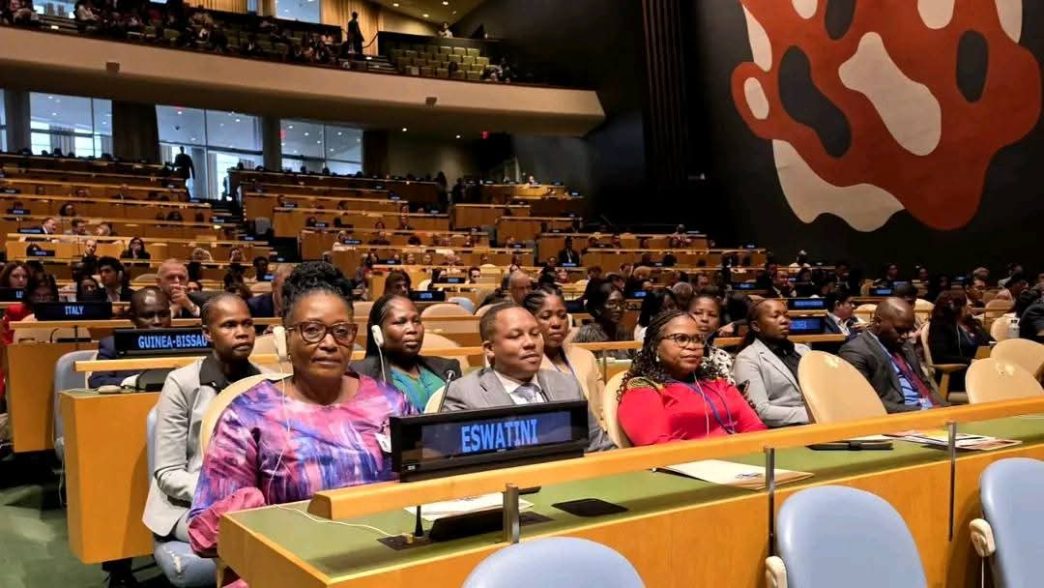
The Kingdom of Eswatini has reaffirmed its commitment to strengthening disability inclusion,
social protection systems, and economic empowerment initiatives, with the government highlighting a comprehensive and deliberate national approach aimed at ensuring that persons with disabilities are fully integrated into all aspects of society.
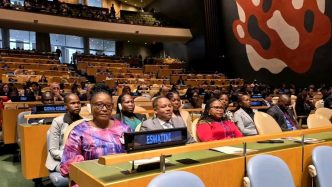
Delivering the country’s statement at the 19th Session of the Conference of State Parties to the Convention on the Rights of Persons with Disabilities (CRPD), 
held at the United Nations Headquarters in New York, Deputy Prime Minister Thulisile Dladla outlined the Kingdom’s progress in expanding community-based support systems,
improving access to essential services, and promoting inclusive economic participation.
The high-level conference, which brings together member states, UN agencies, and disability rights stakeholders,
concludes tomorrow and serves as a global platform to assess progress in the implementation of the CRPD and to strengthen international cooperation on disability rights.
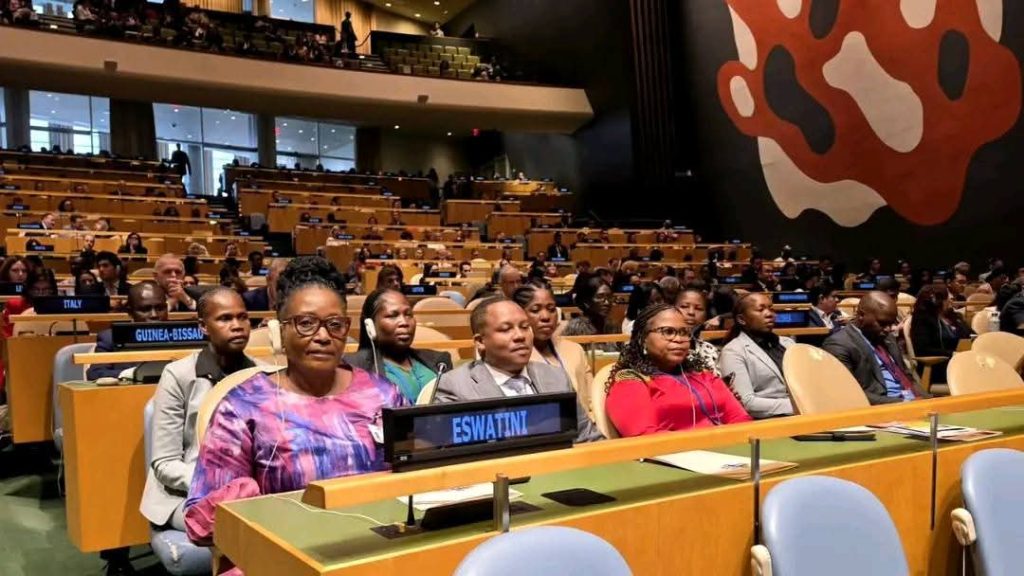
In her address, the Deputy Prime Minister emphasised that Eswatini has adopted a holistic approach that places disability inclusion at the centre of national development planning.
“Eswatini continues to promote the economic inclusion of persons with disabilities through employment opportunities across multiple sectors of the economy.
We further recognise the importance of cultural participation as a fundamental human right.
They must have equal opportunities to participate in cultural activities, traditional events, sports, creative industries, music, dance, and the arts,” she said.
The DPM further noted that with technical and financial support from United Nations agencies, Eswatini has developed a costed National Disability Plan of Action (2024–2028),
which embeds disability inclusion within national development priorities and aligns it with budgeting frameworks to ensure implementation rather than policy aspiration alone.
She explained that the plan is designed to strengthen coordination across government sectors while ensuring that disability considerations are mainstreamed into public service delivery, infrastructure development,
and social programming. Under Article 28 of the CRPD, which focuses on adequate standards of living and social protection,
the Deputy Prime Minister said Eswatini continues to expand social protection measures aimed at reducing poverty, supporting vulnerable families, and enhancing the dignity and resilience of persons with disabilities.
She also highlighted significant progress made under Articles 9, 19, and 24 of the Convention, which cover accessibility, independent living and community inclusion, and education, respectively.
These advancements, she noted, reflect ongoing efforts to remove barriers that have historically limited full participation of persons with disabilities in society.
While acknowledging progress, the Deputy Prime Minister was candid that challenges remain, particularly in ensuring that inclusion is fully realised at community level and across all service delivery systems.
She stressed that achieving full inclusion requires sustained investment, stronger institutional partnerships, and shared responsibility between government, development partners, and civil society.
“The progress we have made reflects strong political will and our collective commitment to leaving no one behind. Let us move beyond commitments to implementation.
Let us move beyond inclusion as an aspiration, to inclusion as a lived reality,” she said.
She reaffirmed that the Kingdom of Eswatini remains committed to working with international partners to accelerate progress, deepen impact, and scale up solutions that advance the rights,
dignity, and full participation of persons with disabilities in all spheres of life.
The statement was widely aligned with global calls at the conference for accelerated implementation of disability rights frameworks,
particularly in developing countries where structural barriers continue to limit access to education, employment, healthcare, and public infrastructure.