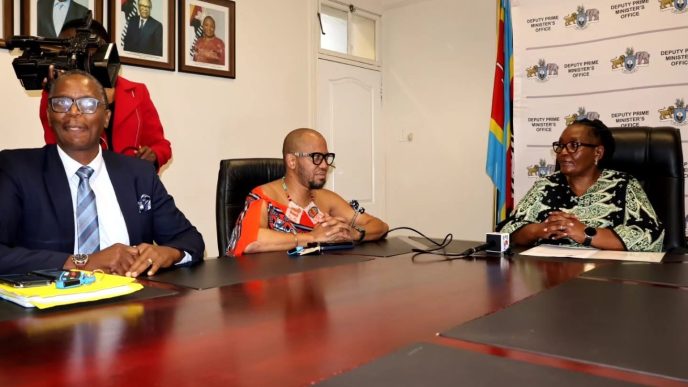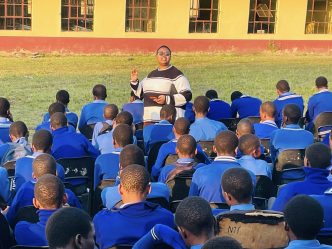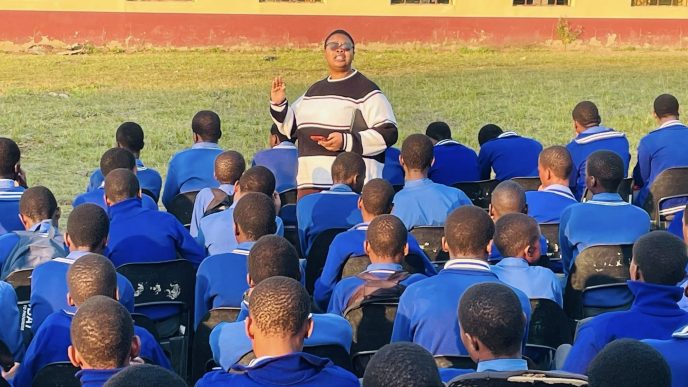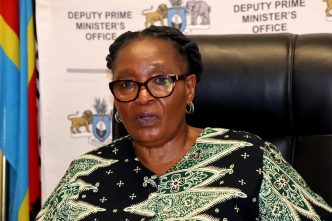

Deputy Prime Minister Thulisile Dladla has called for renewed national commitment towards ensuring that every child in Eswatini has access to clean water,
safe sanitation facilities and proper hygiene services, describing these as fundamental rights rather than privileges.
Speaking during the commemoration of the International Day of the African Child, Dladla emphasised that access to Water, 
Sanitation and Hygiene (WASH) services remains critical to the health, dignity and future development of children across the country.
This year’s focus on WASH underscored the importance of creating environments where children can grow,
learn and thrive without being hindered by preventable health risks associated with poor sanitation and unsafe water.
Addressing stakeholders, Dladla said access to clean water and sanitation extends beyond basic survival and plays a central role in building stronger communities and a healthier nation.
“Access to these essential services is not only a matter of survival, but a cornerstone for building a healthier, safer and more inclusive society where every child can thrive,” she said.
The Deputy Prime Minister noted that as the country marks the Day of the African Child, Eswatini remains committed to advancing child welfare and inclusive development through sustained investment in WASH programmes.
She said prioritising water, sanitation and hygiene was an investment in a healthier and more resilient future, not only for children but for the nation as a whole.
Dladla reaffirmed government’s dedication to ensuring the holistic development of every child in the Kingdom.
She acknowledged that achieving universal access to WASH services cannot be accomplished by government alone and requires collaboration among multiple stakeholders.
The DPM stated that government was accelerating multisectoral efforts to improve access to water, sanitation and hygiene as part of its broader mandate of community development and social welfare.

According to her, children remain at the centre of these interventions because of their vulnerability and their importance to the country’s future.
In a strong appeal for collective action, Dladla called on government ministries, development partners,
civil society organisations, traditional leaders, the private sector, parents and local communities to unite behind a common vision of ensuring WASH services for every child.
The Deputy Prime Minister specifically appealed to local leadership structures, urging them to champion water and sanitation priorities within their communities.
She encouraged local authorities to mobilise residents to protect water sources and ensure the continued maintenance of sanitation facilities so that gains made in improving access are sustained over the long term.
Dladla also appealed to bilateral partners and development agencies to continue investing in WASH programmes, saying such support remains critical in helping the country achieve its development goals and improve the quality of life for children.
Turning her attention to the private sector, the Deputy Prime Minister challenged businesses to play a more active role in improving living conditions within the communities where they operate.
She encouraged companies to embrace corporate social responsibility initiatives that support the construction, rehabilitation and maintenance of water and sanitation infrastructure.
Parents and caregivers were not left out of the call to action. Dladla stressed the importance of instilling proper hygiene habits among children from an early age.
She said families have a responsibility to model good hygiene practices and educate children about the life-saving importance of handwashing, clean drinking water and proper sanitation.
The Deputy Prime Minister further challenged children themselves to take ownership of available facilities and make responsible use of them.
“We urge the children themselves, we are not passive recipients of development,
use the existing facilities in your schools and communities well, thereby protecting your fundamental right to clean water and sanitation,” she said.
One of the most emotional moments of her address came when she delivered a heartfelt message directly to children across the Kingdom.
“We have a special message to the children of Eswatini, to every child in the Kingdom of Eswatini, in the mountains of Hhohho, the valleys of Manzini, the Lubombo fields and the plains of Shiselweni.
We see you, we hear you, we love you and are committed to your welfare,” she said.
“You deserve to grow up healthy, safe and dignified. You deserve to drink clean water.
You deserve to use safe and proper toilets and wash your hands with soap. These are not luxuries,” Dladla declared.