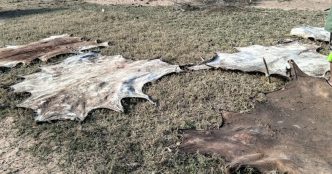
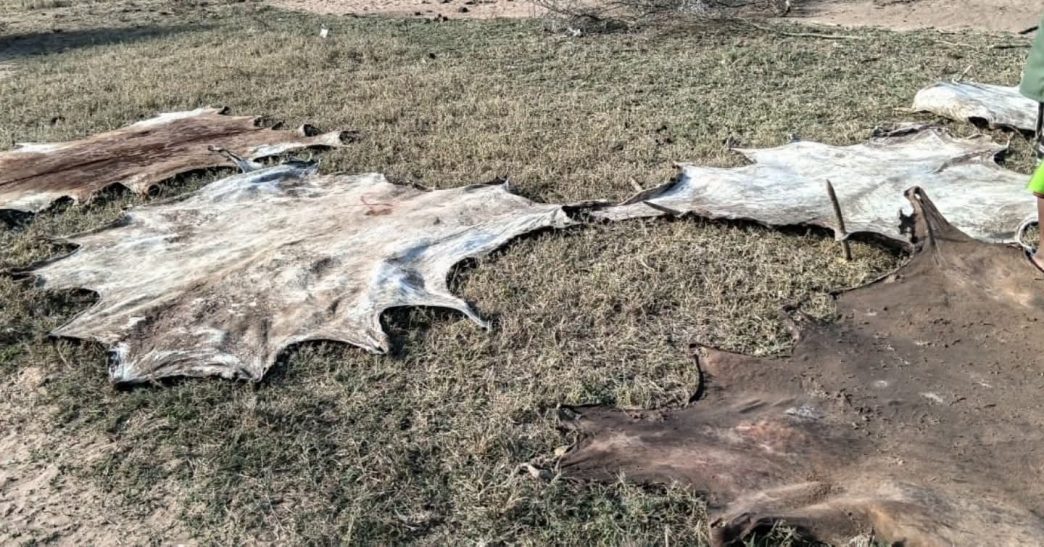
The Deputy Prime Minister’s Office has extended appreciation to Bushland Farm for donating animal skins to support persons with disabilities,
a contribution that will be used to produce traditional attire and build practical skills ahead of this year’s Umhlanga Ceremony.
The donation will go toward making lihawu, emajobo and tigeja. According to the DPM’s Office, 
the initiative is designed to enable persons with disabilities to take part in national cultural events with dignity, pride and confidence.
The Eswatini School for the Deaf Libutfo, working with the Indvuna responsible for the Deputy Prime Minister’s Office Libutfo, will lead the process of transforming the donated skins into traditional lihawu.
The DPM’s Office described the project as more than the manufacture of attire.
They said it creates an opportunity to equip learners and young persons with disabilities with hands-on skills while also preserving cultural heritage.
The Deputy Prime Minister’s Office noted that the work will allow participants to be meaningfully involved in national ceremonies, including Umhlanga, Emaganu and Incwala.
For many learners at the School for the Deaf, the project provides direct experience in traditional craftsmanship that can be applied beyond the cultural season.
The Office stated that disability inclusion must be embedded in all areas of society, including culture and tradition.
By involving persons with disabilities in the production and wearing of regalia,
the initiative seeks to ensure they are visible participants in events that define national identity.
The programme aligns with several policy frameworks. The government said it advances the aspirations of the United Nations Convention on the Rights of Persons with Disabilities,
particularly the right of persons with disabilities to participate fully in cultural life on an equal basis with others.
It also contributes to the United Nations Sustainable Development Goals under Agenda 2030, which call for inclusive education, decent work and reduced inequalities.
Domestically, the initiative supports the Eswatini National Disability Plan of Action 2024–2028.
The ENDPA prioritises inclusive skills development, culture and recreation, social protection, gender equality, economic empowerment and full participation of persons with disabilities in national development.
The Deputy Prime Minister’s Office said the partnership with Bushland Farm demonstrates how private sector support can help deliver on those priorities.
The donation of animal skins provides the raw materials needed for training and production without placing additional cost burdens on schools and implementing institutions.
The DPM’s office will provide cultural guidance while the school coordinates learners who will be involved in cutting, preparing and finishing the lihawu.
The DPM’s Office said similar models could be replicated in other schools and centres for persons with disabilities, to expand access to skills training and cultural participation nationwide.
The Deputy Prime Minister’s Office thanked Bushland Farm for the gesture, describing it as a meaningful contribution to inclusion and heritage preservation.
The government reiterated its commitment to implementing the ENDPA and to mainstreaming disability across sectors.
That includes creating pathways for skills development, economic opportunities, and cultural engagement.
The Office added that cultural ceremonies offer a powerful platform for promoting unity and identity, and that participation by all emaSwati, including persons with disabilities, strengthens that purpose.