
Tough times!
Households in Eswatini are spending an increasing share of their income on education, which highlights the growing financial burden of schooling even as the country continues to prioritise investment in human capital.
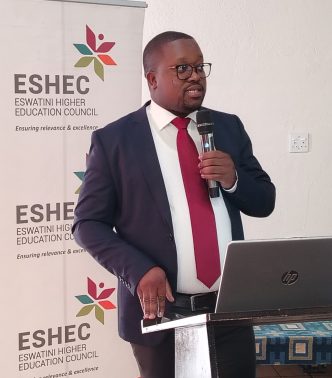
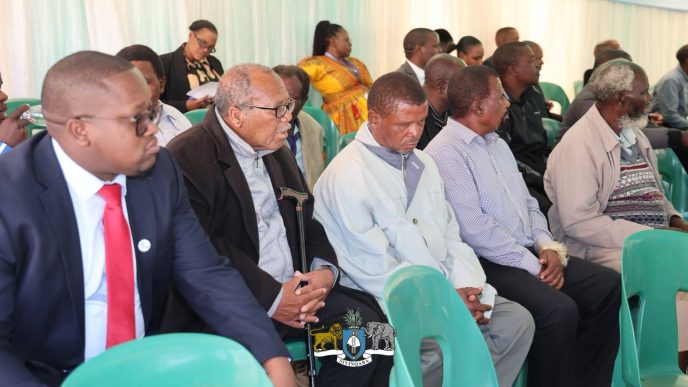
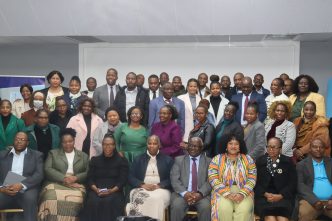
This emerged during the presentation of the National Education Progress Report (NEPR) 2025 by the Ministry of Education and Training on Tuesday, 
where Acting Principal Secretary and Director of Education Dr Tholakele Mngomezulu said the report would guide evidence-based policy, budgeting and resource allocation to improve learning outcomes.
Speaking on behalf of the Principal Secretary at Sibanesami Hotel, Mngomezulu described the report as more than a compilation of statistics, saying it serves as a strategic planning tool that will help Government direct limited financial and human resources to areas where they are needed most.
She said that in an environment of competing priorities and finite resources, reliable data remains the foundation for effective planning, targeted budgeting and sound policy formulation.
According to Mngomezulu, decisions based on accurate information enable Government to ensure that every investment in education translates into measurable improvements in learning outcomes,
while reducing the risk of allocating resources based on assumptions rather than evidence.
She said the 2025 report incorporates a Results-Based Monitoring framework, shifting the focus from measuring activities and inputs to evaluating actual outcomes and long-term impact.
This, she said, will strengthen accountability and ensure that the objectives of the Education Sector Strategic Plan 2022–2034 and its Multi-Year Action Plans are supported by measurable results.
Mngomezulu noted that while the report records important achievements, including declining repetition rates in some sub-sectors, it also identifies persistent challenges that require targeted interventions.

She called on academic institutions, civil society organisations, researchers and development partners to use the report as a basis for further research aimed at identifying the root causes of the challenges facing the education sector and developing practical solutions.
Mngomezulu also acknowledged the Education Management Information System (EMIS) team and the Ministry’s Planning Unit for producing the report, while expressing appreciation to UNICEF for its continued technical and financial support in strengthening education data systems and monitoring capacity.
She said the Ministry had also invited experts from institutions responsible for collecting education statistics to present their latest findings, providing stakeholders with a comprehensive picture of the state of education in the country.
Mngomezulu urged stakeholders to engage critically with the report’s findings, challenge assumptions and use the evidence presented to support informed decision-making that advances equitable, quality education for every learner in Eswatini.