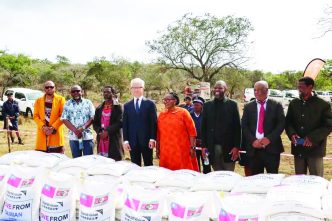

Government of Eswatini, in partnership with the Republic of China (Taiwan) and World Vision, has committed E42.789 million to a national Food-for-Work programme targeting 6,600 households across 15 priority Tinkhundla centres.
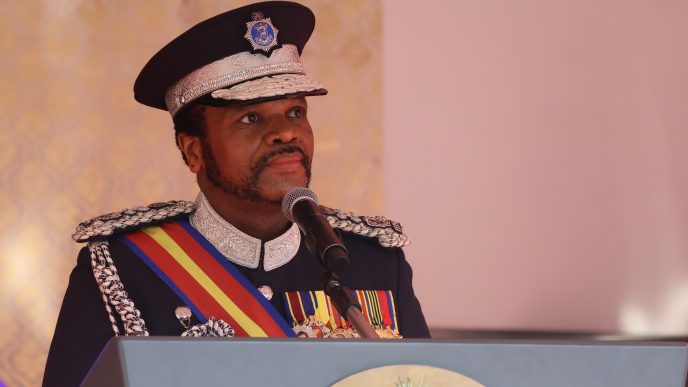
The Deputy Prime Minister, Thulisile Dladla, announced the investment during the official rice handover and programme launch held at Mhlumeni.
The initiative is being implemented by the National Disaster Risk Management Authority (NDRMA) in collaboration with World Vision Eswatini and World Vision Taiwan. 
According to data presented at the launch, the total investment of E42.789 million is split across three partners.
Taiwan, through World Vision Taiwan, donated 990 metric tonnes of rice valued at E22.686 million, equivalent to USD1.33 million.

The Government of Eswatini allocated E6.85 million toward shipping costs. World Vision Eswatini committed E4.2 million for administration, storage, transportation, distribution and overall programme implementation.
Dladla said the partnership is governed by a Memorandum of Agreement between NDRMA, World Vision Taiwan and World Vision Eswatini.
The objective is to improve food security and disaster resilience among households affected by chronic food insecurity and recurring climatic shocks.
The Food-for-Work/Assets Programme will target 6 600 households, representing approximately 33 000 beneficiaries.
Implementation will cover 15 priority Tinkhundla centres across all four regions of the country.
At Mhlumeni, 77 community members participated in the reconstruction of a cattle dipping tank destroyed several years ago. In return, they received food rations under the programme.
The project directly benefited 296 people and restored livestock services for local farmers.
A second project is underway at Mhlumeni High School. Sixty-six community members are currently engaged in the construction of a computer laboratory and a teachers’ house under the same Food-for-Work arrangement.
The launch comes ahead of projected increases in food insecurity.
The 2026 Vulnerability Assessment and Analysis projects that approximately 222 000 people, representing 18 percent of Eswatini’s population, will face acute food insecurity between June and September 2026.
Dladla said the programme is designed to provide immediate food assistance while simultaneously creating durable community assets.
“Initiatives such as Food-for-Work not only provide immediate relief through food assistance but also leave behind lasting community assets, including livestock infrastructure, education facilities and other public development projects that will benefit future generations,” she said.
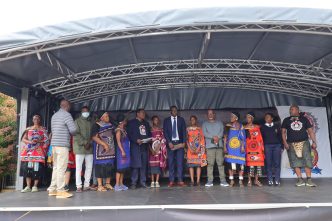
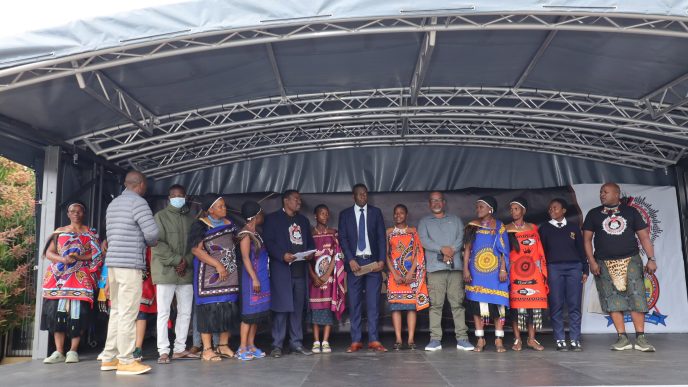
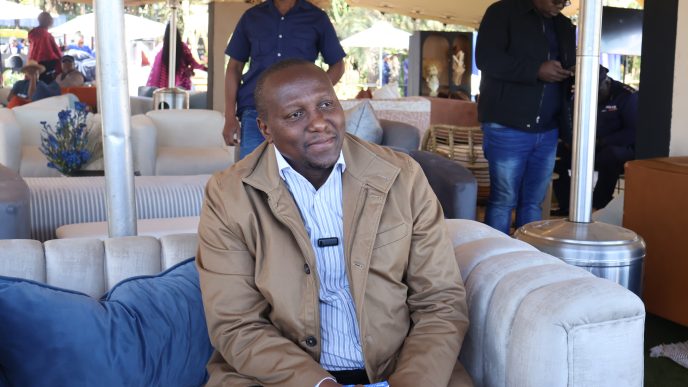
The launch was attended by the Representative of the Ambassador of the Republic of China (Taiwan), Minister Ching-Lin Tsuei, Lugongolweni Member of Parliament Joseph Souza, and World Vision Eswatini National Director Amos Zaindi.
The E42.7 million intervention combines direct food support with labour-based public works. Under the model, beneficiaries receive rice rations in exchange for work on community infrastructure.
This approach reduces the fiscal burden of standalone relief distributions while delivering assets that support agriculture and education.

The cattle dipping tank at Mhlumeni addresses animal health for local farmers. The computer laboratory and teachers’ house at Mhlumeni High School address infrastructure gaps in education.
Government’s E6.85 million contribution covers logistics, while the E22.686 million rice donation from Taiwan constitutes the largest single cost component.
World Vision’s E4.2 million allocation funds operational delivery.
NDRMA is responsible for coordination and targeting of beneficiaries. World Vision Eswatini is managing administration, storage and distribution.
World Vision Taiwan facilitated the rice donation from Taiwan.
The 990 metric tonnes of rice will be distributed across the 15 Tinkhundla during the programme period. Selection criteria prioritize households affected by chronic food insecurity.
Dladla said the programme aligns with government’s broader commitment to disaster risk reduction and rural development.
She noted that community participation is central to the model, with residents taking ownership of projects in their areas.
The Deputy Prime Minister reaffirmed government’s commitment to working with development partners to strengthen resilience and ensure that no emaSwati is left behind in the country’s development agenda.