
The Kingdom of Eswatini has called on countries in East, Central and Southern Africa to strengthen regional cooperation, embrace innovation and invest in sustainable healthcare systems to improve health outcomes and prepare for future public health threats.
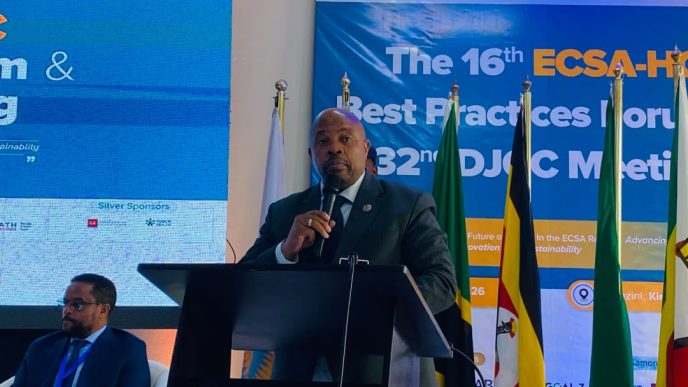
Speaking at the official opening of the 16th East, Central and Southern Africa Health Community (ECSA-HC) Best Practices Forum and the 32nd Directors Joint Consultative Committee (DJCC) Meeting in Manzini, Minister for Health Mduduzi Matsebula said no country could achieve health security in isolation.
He said the forum, held under the theme “Shaping the Future of Health in the ECSA Region: Advancing Health Security, Innovation and Sustainability”, comes at a critical time as countries continue to face cross-border disease outbreaks, climate change, antimicrobial resistance, non-communicable diseases and declining global health financing.
Matsebula said Eswatini was honoured to host the gathering while serving as Chairperson of ECSA-HC, describing it as an opportunity to strengthen regional solidarity and practical cooperation.
“We accept this responsibility with humility and a firm commitment to regional solidarity and practical cooperation towards measurable improvements in the health and well-being of our people,” he said.
The minister highlighted several initiatives undertaken by Eswatini to strengthen its health sector, including improving epidemic preparedness and response systems in line with the International Health Regulations,
training more than 50 African Volunteer Health Corps (AvoHC-SURGE) volunteers to respond to public health emergencies, and expanding specialist training for local doctors and nurses through ECSA colleges.
He said the country was also embracing innovation by introducing artificial intelligence-enabled diagnostic technologies, including mobile X-ray and fundoscopy tools at primary healthcare level, while rolling out digital health information systems to improve patient data management and supply chain efficiency.
Matsebula added that the government was working to ensure the sustainability of previously donor-funded health programmes so that essential services continue even when external funding declines.
He warned that weaknesses in surveillance systems, laboratories, supply chains and emergency preparedness in one country could quickly become a regional threat.
“We must strengthen health security through resilient primary healthcare, a skilled workforce, reliable laboratories, real-time surveillance, trusted community engagement and effective emergency coordination,” he said. 

The minister urged member states to adopt the One Health approach by strengthening collaboration between the human, animal and environmental health sectors.
On innovation, Matsebula said technologies such as digital health platforms and artificial intelligence had the potential to improve disease surveillance, clinical care and access to healthcare services. However, he stressed that innovation must be guided by scientific evidence, equity, transparency, data protection and public benefit.
He further called on member states to mobilise more domestic resources for healthcare, improve efficiency and strengthen regional procurement and production of essential health commodities as global donor funding becomes increasingly uncertain.
Matsebula encouraged delegates to ensure the conference produces practical outcomes by openly sharing evidence, identifying proven interventions that can be scaled up across the region and strengthening collaboration in areas such as cross-border disease surveillance, research, regulatory cooperation and technical expertise.
He also emphasised the need to place people at the centre of healthcare decisions, saying quality services must reach rural communities, women, children, young people, persons with disabilities, older persons and migrant populations.
The minister recognised the role of young professionals, researchers and innovators in shaping the future of healthcare, urging member states to involve them as active decision-makers rather than simply participants.
He concluded by calling on delegates to use the forum to transform research into policy and policy into action that delivers better health outcomes for the people of East, Central and Southern Africa before officially declaring the conference open.