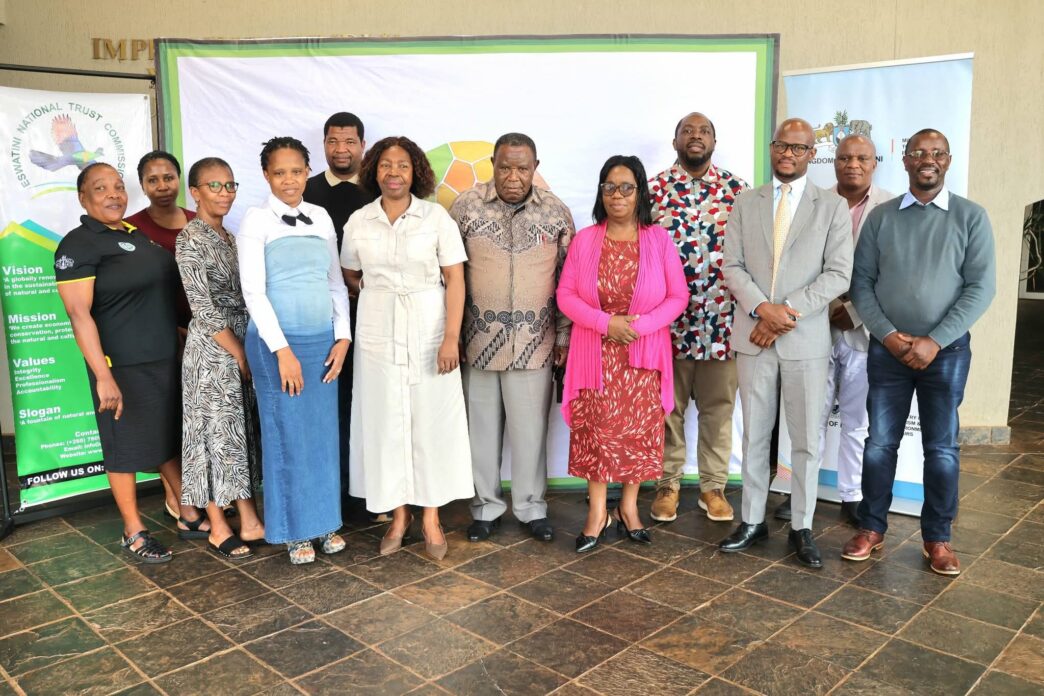
The Ministry of Tourism and Environmental Affairs, together with the Eswatini National Trust Commission(ENTC), on Friday engaged the Ministry Portfolio Committee on the draft National Biodiversity Strategy and Action Plan, NBSAP 3.0.
The consultation gave Senators an opportunity to interrogate Eswatini’s biodiversity priorities, targets and proposed actions for the next decade, while testing how well the draft aligns with the Kunming-Montreal Global Biodiversity Framework.
It also enabled the Committee to review the draft strategy, provide recommendations and highlight areas where policy guidance, oversight and support will be important for the effective implementation of NBSAP 3.0. 
Officials told the Committee that biodiversity is fundamental to the wellbeing and development of the nation. Healthy ecosystems support food production, water security, tourism, livelihoods and climate resilience.
The third National Biodiversity Strategy and Action Plan provides a strategic framework for biodiversity conservation and sustainable use in Eswatini from 2026 to 2035.
It seeks to align national priorities with the Kunming-Montreal Global Biodiversity Framework, while responding to Eswatini’s unique circumstances and development needs.
Senators raised questions on funding, enforcement, community participation and how the plan will be monitored. The Committee noted that without clear budgets and institutional accountability, even the best strategy risks remaining on paper.
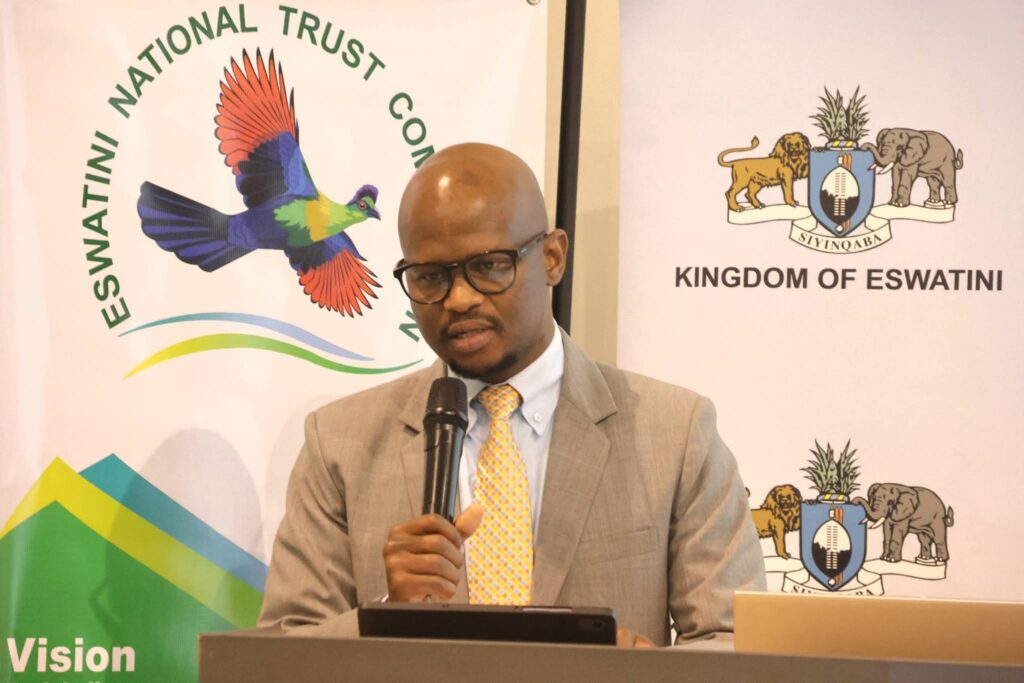
Eswatini National Trust Commission Chief Executive Officer Thulani Methula briefed the Committee on the technical content of NBSAP 3.0 and the role ENTC will play in implementation.
Methula said the draft plan comes at a critical time when the country is experiencing increased pressure on natural resources from agriculture, settlements and climate variability.
He told Senators that biodiversity loss is not an abstract problem, it is already affecting the daily lives of communities who depend on forests, wetlands and wildlife for income and food.
“For ten years, NBSAP 3.0 will guide how we conserve, restore and sustainably use our biodiversity,” Methula said. “We cannot separate the environment from development.
If our rivers dry up, agriculture suffers. If our forests are cleared, water becomes scarce,” he further said.
He said that if wildlife habitats disappear, tourism loses its appeal.
That is why this strategy must be treated as an economic document, not just an environmental one.
“The Kunming-Montreal Global Biodiversity Framework gives us global targets, but NBSAP 3.0 must respond to Eswatini’s reality.
Our targets must be measurable, our actions must be funded, and our institutions must be held accountable.
We have learned from the previous two strategies that good intentions alone are not enough,” said Methula.
ENTC’s role will be to coordinate with government, the private sector, traditional authorities and communities.
Methula said they need communities to be custodians, not bystanders. “When people see direct benefits from conservation, whether through tourism revenue, sustainable harvesting, or ecosystem services, they will protect it,” he stressed.
“Finally, let us remember that biodiversity underpins tourism, agriculture and water. If we get this right from 2026 to 2035, we will leave a legacy where both people and nature thrive,” he said.
During the engagement, Senators asked for clarity on how NBSAP 3.0 will be domesticated into sector policies, including agriculture, mining, and infrastructure development.
They also sought details on public awareness campaigns and on mechanisms to ensure traditional authorities are included in decision-making.
Committee members emphasised that implementation will require coordination across ministries and consistent reporting to Parliament.
The Ministry of Tourism and Environmental Affairs said the comments and recommendations from the Committee will be incorporated before the draft is finalised for Cabinet consideration.
Officials noted that the 2026 to 2035 timeframe is intended to give institutions enough time to set baselines, mobilise resources, and deliver results that can be verified.
Eswatini is a signatory to the Kunming-Montreal Global Biodiversity Framework, adopted to halt and reverse biodiversity loss worldwide.
NBSAP 3.0 is the country’s instrument for translating those global goals into national action.
The ministry said alignment with the framework will also help the country access international climate and biodiversity funding.