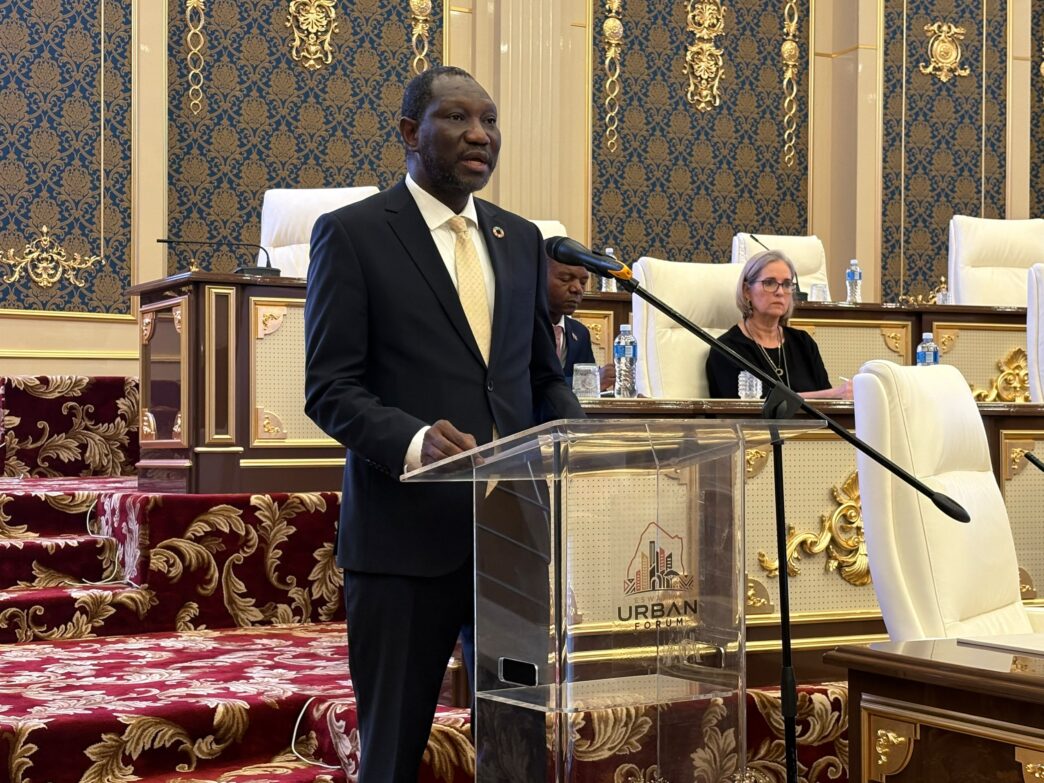
Eswatini will not manage its rapid growth unless it puts in place a national spatial plan to guide where people live, where factories are built and where roads, water and electricity go.
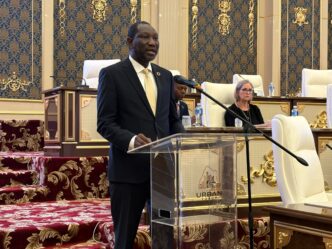
This is the view of UN-Habitat’s Director for the Regional Office for Africa, Oumar Sylla, who told delegates at the Second Eswatini Urban Forum that without such a plan, development will remain chaotic.
He disclosed that moments before entering the hall, he had discussed the matter with Prime Minister Russell MmisoDlamini. “I had a conversation with the Prime Minister before we got in the room on the necessity of getting Eswatini a national spatial plan, which is a very important tool for guiding development and infrastructure in the country,” Syllasaid.
The forum, he said, is significant because it falls within Urban October, a global UN initiative that brings together governments, local authorities and communities to reflect on urban challenges ahead of World Cities Day on October 31, which this year will be celebrated under a call to make cities more inclusive, safe, resilient and sustainable.
Sylla said the Eswatini forum offers a chance to turn that global call into local action. “It will reinforce the importance of placing cities and towns at the centre of national development and ensure that urbanisation becomes a driver of economic opportunity, social inclusion, climate resilience and improved quality of life,” he said.
He commended Eswatini for convening the second edition of the forum, following the first in 2024, noting that across Africa the conversation has shifted from whether urbanisation matters to how it is financed and implemented.
Referencing the Second Africa Urban Forum held in Nairobi in 2026, Sylla said the continent must now move beyond acknowledging the importance of cities to taking practical steps.
The core of his message was about local authorities. “Local authorities are the frontline. They are responsible for delivering services, managing urban growth and responding to the everyday needs of communities,” he said.
Yet, he noted, many councils face constraints – lack of financing, limited technical capacity, poor infrastructure and lack of access to appropriate technologies.
He said UN-Habitat promotes an integrated approach where housing, land use, transport, water, sanitation, waste management and economic development are planned together, rather than in silos. Councils must also be empowered to mobilise their own revenue, engage communities, build partnerships with the private sector and use reliable data to guide investment decisions.
Sylla praised the emerging partnership between UN-Habitat and Eswatini, pointing to the recently concluded Eco-City Master Plan developed with support from the African Development Bank.
“The master plan provides an important planning framework for guiding more coordinated urban development. Its value lies in helping connect land use, housing, infrastructure, economic opportunities and environmental considerations,” he said.
He said the plan also creates an opportunity to align urban growth with major national initiatives such as the Mkhondvo-Ngwavuma Water Augmentation Programme, so that water security, settlement development and emerging economic activities reinforce each other.
But he warned that the plan will mean nothing if it stays on paper. “A master plan delivers its greatest value when it moves beyond the planning stage into implementation. This requires clear priorities, phased investments, effective coordination and active participation of local authorities and communities,” Sylla said.
Keep Up to Date with the Most Important News