
The government is set to hire a consultant to finalise regulations for the Nuclear, Safety and Radiation Act of December 2025.
This comes after a two-day workshop where stakeholders reviewed the draft and raised concerns around implementation, public health and the protection of unborn babies.
Minister for Tourism and Environmental Affairs Jane Mkhonta-Simelane said the workshop was called to ensure the law does not remain on paper. 
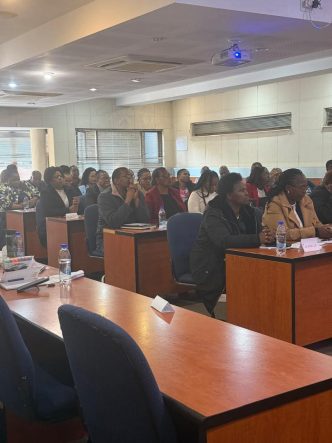
epresentatives from different government ministries, private-sector institutions and organisations spent the two days educating each other on the draft, testing the agreement on its contents and identifying areas that will need to be fixed before rollout.
“The purpose was to know if everyone understands it clearly, and to know when putting it into implementation, which parts need to be fixed,” the minister said at the close of the workshop.
Participants went through the draft clause by clause.
They gave opinions, asked technical questions and flagged sections where responsibilities were not clear.
The goal, the Minister for Tourism and Environmental Affairs said, was to produce regulations that are practical and enforceable across hospitals, industry and research institutions.
The minister thanked Attorney General Mashampu Khumalo for providing legal guidance during the discussions.
She said Khumalo’s input helped participants understand how the regulations will be applied.
“It was the first time I witnessed lawmakers giving themselves time, making sure all goes well in these workshop discussions,” the Minister said.
She also appreciated the various ministries and organisations for sending representatives, noting that their input will shape how the law works on the ground.

The minister said the government will now move to hire a consultant who will facilitate the final work on the regulations.
The consultant will work hand in hand with the departments and organisations that attended the workshop to wrap up the document.
Once finalised, the regulations will be submitted to Cabinet and thereafter to the entire House of Parliament for consideration.
Minister Mkhonta said the process will be expedited because institutions need clarity on compliance now that the Act has been in place since December 2025.
A key feature highlighted during the workshop was Gender Mainstreaming.
The minister said the Act deliberately includes it to ensure that safety measures consider how radiation exposure affects men, women, boys and girls differently.
She placed special emphasis on the protection of unborn babies. “With this coming Act, there are many things that will protect unborn babies,” she said.
The regulations are expected to set stricter standards for facilities that use radiation equipment, including hospitals and clinics, to minimise risk to pregnant women and foetuses.
The minister also used the platform to warn members of the public about unnecessary exposure.
She cited X-rays and scans as common procedures and urged people to only undergo them when medically required.
“People must do it only when it is needed, not when it is not necessary because in most cases there are usually dangers,” she said.
The warning forms part of broader public education planned alongside the rollout of the regulations.
The minister said the aim is to reduce avoidable exposure while ensuring patients who need diagnostic services still access them safely.
The Nuclear, Safety and Radiation Act provides for the control of radioactive materials, licensing of facilities, safety standards, and emergency preparedness.
The regulations will spell out how those provisions will be implemented, who will be responsible, and what enforcement mechanisms will apply.
Stakeholders said clear rules are needed because radiation is already in use in health care, mining, manufacturing and research.
Without detailed regulations, monitoring and compliance will be difficult.
The minister ensured that the government is committed to balancing development with safety.
She noted that nuclear technology has benefits, but it must be managed responsibly to protect workers, patients and the general public.
The minister said the contributions made at the workshop will ensure that when the regulations come into effect,
they reflect the realities of the institutions expected to comply, while prioritising the health and safety of emaSwati.