
The Eswatini Water and Agricultural Development Enterprise, EWADE, has handed over digital equipment valued at more than E300 000 to the Ministry of Agriculture to strengthen monitoring under the Smallholder Agricultural Productivity Enhancement and Marketing Project, SAPEMP.
The handover included 40 tablets valued at E200,029 and four HP laptops worth E83,904. The equipment will be used by agricultural extension officers to collect and enter real-time data from farms across the country.
SAPEMP is funded by the International Fund for Agricultural Development, IFAD. The project has moved from its start-up phase into full implementation. 
According to project, SAPEMP currently operates in 30 Tinkhundla.
It has identified 40 farmer clusters comprising approximately 3 000 farmers who are being supported through Ministry of Agriculture extension services.
Officials said the tablets and laptops will be used to capture information on crops planted, locations, irrigation access, production levels and farmers’ access to markets.
The data will be submitted directly from the field to improve reporting, coordination and decision-making.
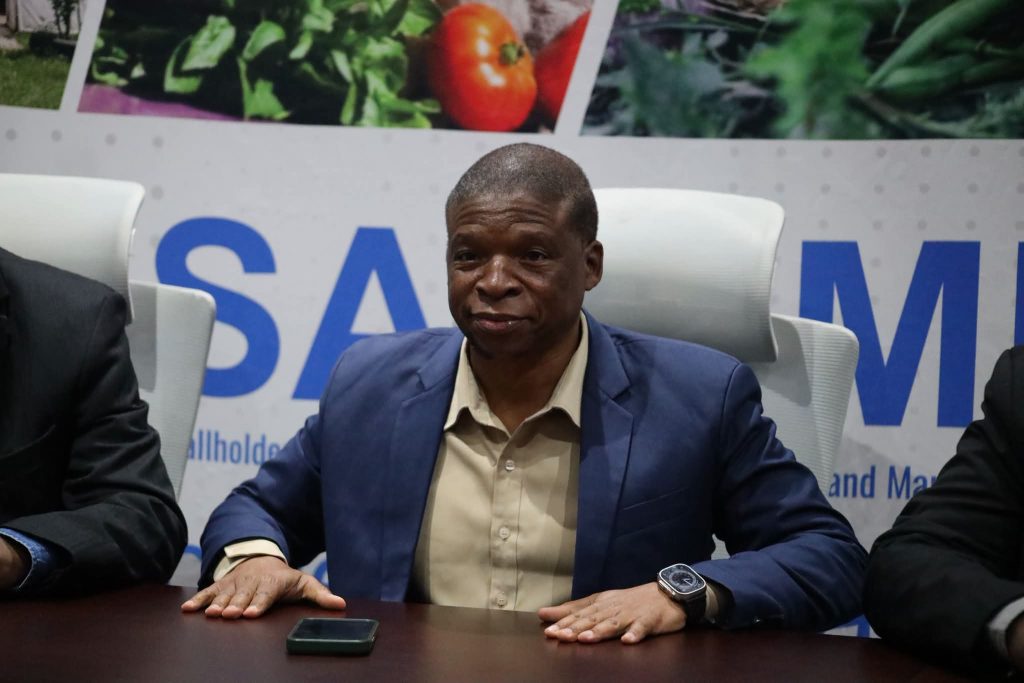
EWADE CEO Samson Sithole said the equipment is intended to improve how agricultural information is collected and used.
Sithole said SAPEMP is about moving from subsistence to business and business runs on information.
“This E300 000 investment is small, but its impact will be big because it allows us to track every emalangeni we put into the 40 clusters and 3 000 farmers.
Our job now is to make sure this data leads to action, faster approvals, targeted support and measurable results for rural households,” he said.
Minister for Agriculture Mandla Tshawuka said the digital tools will assist government to make informed decisions and improve service delivery.
“These 40 iPads and four laptops give our extension officers the tools to bring that information to us in real time.
With SAPEMP now in 30 Tinkhundla and set to expand over seven years, we must have systems that show us what is working and what is not,” Minister Tshwawuka stated.
He said that this will help the Ministry direct resources, support the 3 000 farmers already identified and ensure that public money delivers food security and income.
The ministry is committed to using this data to improve policy, improve extension and improve markets for our people.
It was revealed that SAPEMP seeks to improve smallholder agricultural productivity, market access, incomes, food and nutrition security, and resilience.
EWADE said reliable field data will enable earlier identification of production challenges, more accurate tracking of progress, and better targeting of interventions.
The digitalisation of data collection is expected to replace paper-based reporting, which has previously caused delays in information reaching project managers and policymakers.
Extension officers will be deployed with the equipment to the 40 identified clusters. Training on data collection and device use has commenced.
EWADE said it will work with the Ministry and IFAD to monitor the performance of the digital system during the seven-year implementation period of SAPEMP.