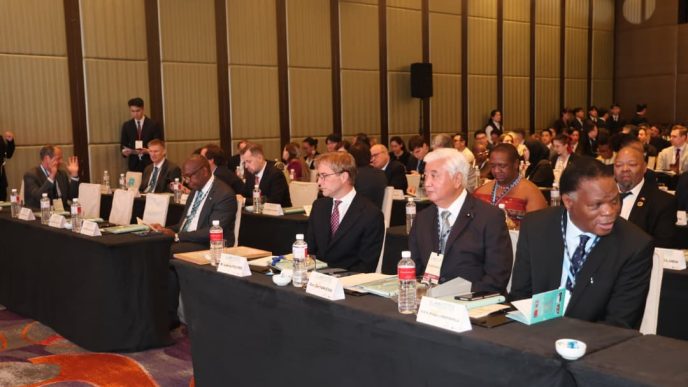
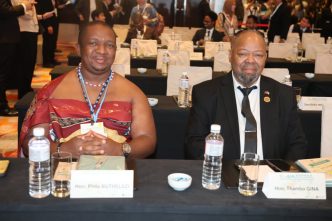
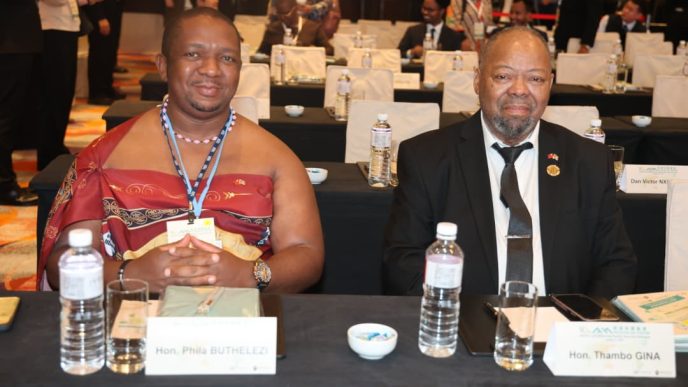
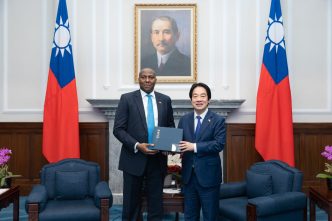
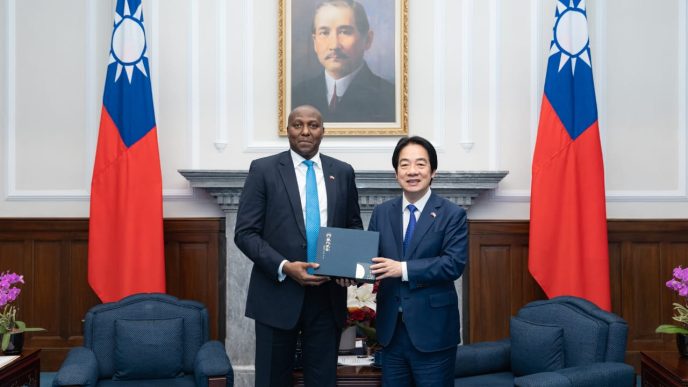
Prime Minister Russell Dlamini has used the Ketagalan Forum in Taipei to outline Eswatini’sposition on three key development areas.
The Prime Minister touched on the governance of artificial intelligence, food security in Africa and the expansion of cooperation with Taiwan in health, education and skills.
Delivering the keynote address on behalf of His Majesty King Mswati III, the Prime Minister told delegates that the international system is undergoing major transformation driven by technological change, geopolitical competition, climate pressure and conflict. 
He said the response must be anchored in cooperation, inclusive governance and partnerships that deliver tangible results for people.
The PM’s address covered governance reform, digital transformation, agriculture and bilateral relations, with specific emphasis on Africa’s role and Eswatini’s long-standing ties with Taiwan.
The Prime Minister said the rapid pace of technological advancement is raising new questions about regulation, jurisdiction and accountability.
He argued that values must guide digital transformation and must not widen existing inequalities between and within nations.
Eswatini’s stated position is that artificial intelligence should serve human interests and remain subject to legal and ethical oversight.

The government is advocating for AI governance frameworks that prioritise human dignity, transparency and accountability and that respect international law and state sovereignty.
The PM noted that innovation must unite rather than divide societies.
He warned against approaches that treat technology as an end in itself, saying progress without a human focus ultimately diminishes human welfare.
Eswatini’s call comes as many countries continue to develop domestic AI policies.
The Prime Minister said international coordination is needed to ensure standards do not undermine the sovereignty of states or create new forms of digital exclusion.
The government maintains that legislation in one country should not erode principles that support global stability and cooperation.
In the context of Africa, the Prime Minister linked digital transformation to broader development goals including education, skills and entrepreneurship.
He said policy choices made now will determine whether African economies participate in the knowledge economy or remain dependent on raw material exports.