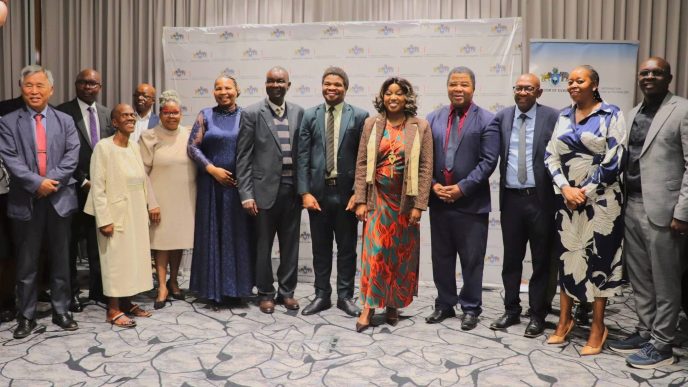

The Ministry for Education and Training has established a Joint Governing Committee to oversee the implementation, monitoring and future expansion of the Schools Cultural Villages initiative, marking a significant step towards preserving Eswatini’s cultural heritage and strengthening learners’ identity.
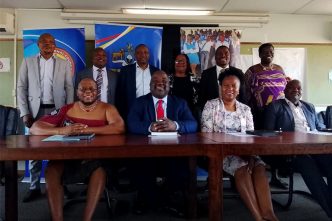
The committee was unveiled by Minister for Education and Training Owen Nxumalo during the official launch of the Schools Cultural Villages (Culture Hubs) initiative at the ministry’s boardroom on Tuesday.
Describing the initiative as a milestone in the country’s education system, Nxumalo said the committee would provide strategic leadership and governance to ensure the programme delivers meaningful results in schools across the country.
He said the committee, comprising representatives from the Ministry for Education and Training and the Eswatini National Council of Arts and Culture (ENCAC), would oversee implementation, monitor progress and evaluate the effectiveness of the programme, with the findings guiding its expansion to more schools.
“The Joint Governing Committee will ensure smooth governance and the long-term success of this initiative. Through continuous monitoring and evaluation, we will assess its impact and use the findings to guide future expansion,” said Nxumalo.
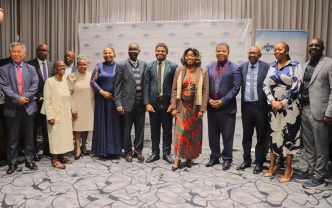
The committee will be chaired by Chief Inspector of Primary Schools Dr Thamsanqa Dlamini, while ENCAC Chief Executive Officer Stanley Mthunzi Dlamini will serve as vice-chairperson.
Other members are renowned cultural practitioners Sabelo Sydwell Matsebula (Did’umbutfo), Amos Magagula (Nsimyenkhosi), Njabulo Dlamini (Gcumgcum), Mathokoza Sibiya (Ngcwenga), Nimrod Mdluli, Thembekile Dlamini (LaMalindane) and Mandl’endoda Shongwe.

Nxumalo said the Schools Cultural Villages would become living classrooms where learners would experience Eswatini’s culture through practical learning rather than simply reading about it in textbooks.
He said the initiative supports the ministry’s mandate of providing relevant and high-quality education by ensuring learners remain connected to the country’s traditions, values and indigenous knowledge.
“Education is not merely about academic achievement within four classroom walls. It is about holistic development, personal identity and preparing our young people to navigate the world without losing touch with who they are,” he said.
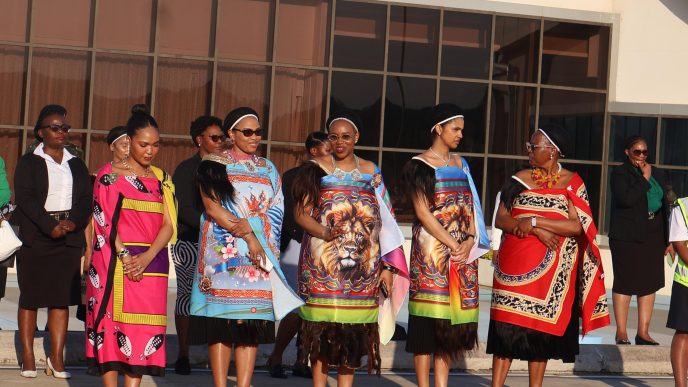
Through the Culture Hubs, learners will participate in indigenous crafts and visual arts, traditional dances, oral traditions and storytelling, traditional food preparation demonstrations, heritage workshops and educational simulations of traditional ceremonies.
The programme will also include inter-school cultural showcases and festivals to promote appreciation of Eswatini’s customs and traditions.
The minister said the initiative would also help identify and nurture artistic talent from an early age while encouraging learners to blend traditional heritage with modern creativity.
He added that preserving indigenous knowledge systems remained central to the programme, ensuring the wisdom of previous generations is passed on through practical learning experiences.
Nxumalo expressed confidence that the initiative would produce well-rounded learners who excel academically while remaining proud of their cultural identity.
He thanked ENCAC, led by Chief Executive Officer Stanley Mthunzi Dlamini, Principal Secretary Nanikie Mnisi and officials from the Ministry for Education and Training for working together to bring the initiative to fruition.
Officially launching the Schools Cultural Villages initiative, Nxumalo said protecting Eswatini’s cultural heritage was an investment in the country’s future.
“A nation that forgets its roots loses its future. By founding these School Cultural Villages today, we ensure that as our learners step into a globalised world, they remain firmly rooted in their identity as emaSwati,” he said.