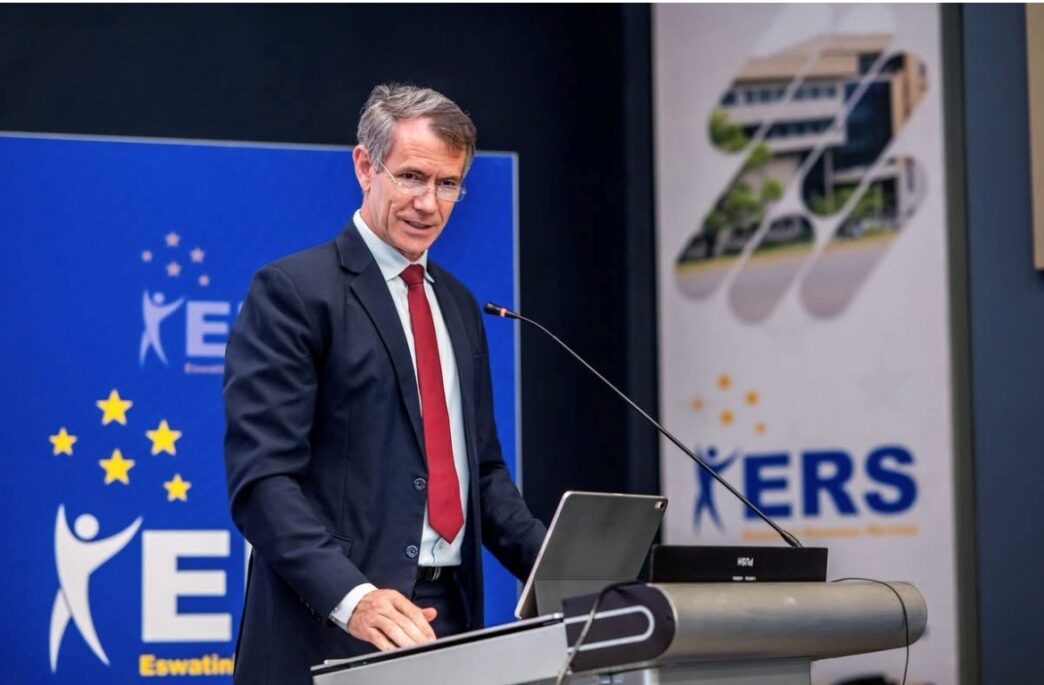
The Eswatini Revenue Service (ERS) has been entrusted with collecting domestic revenue amounting to a staggering E9.4 billion in the financial year 2026/27 on behalf of Government.
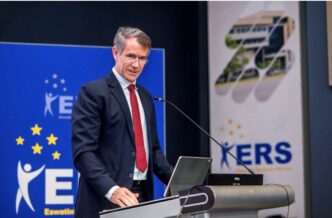
The target was revealed by the Minister of Finance Neal Rijkenberg during the official launch of the 2026 Annual Income Tax Return Filing Season under the theme: “File Right. File On Time.” on Wednesday at the ERS Auditorium.
“The importance of this filing season extends far beyond compliance with the law. For
the 2026/27 financial year, the Eswatini Revenue Service has been entrusted with the
responsibility of collecting E19.48 billion in domestic revenue on behalf of
Government. This target represents part of the resources required to build and maintain our roads, strengthen healthcare services, support education, enhance public safety, expand
social programmes and invest in the infrastructure necessary for economic growth and
national development,” the Minister said.
He said everybody has a key role to play in achieving this target as Government has a responsibility to ensure that public resources are utilised effectively and transparently.
He said the Eswatini Revenue Service has a responsibility to administer the tax system fairly, efficiently and professionally.
“Equally, taxpayers have a responsibility to declare their income accurately, file their returns on time, and pay the taxes that are due. Whether you are a business owner, an employee, a professional, an investor, a trustee or a high net worth individual, your compliance helps fund the services and infrastructure that our citizens depend upon every day.
When taxpayers meet their obligations, we strengthen our nation’s ability to finance its
own development. When income is under-declared or not declared at all, Government
is left with fewer resources to meet the growing needs of our people. In such
circumstances, the country is often compelled to rely on borrowing to bridge the gap.
This is neither sustainable nor desirable in the long term.
The success of our revenue collection efforts therefore depends on a shared
commitment to compliance and nation-building,” He said.
The Minister said the theme “: “File Right. File On Time.” is simple, direct and highly relevant.
“It reminds us that tax compliance is not simply about submitting a return. It is about submitting an accurate return and doing so within the prescribed timelines. The filing season is one of the most important periods in the annual tax calendar. It is the time when taxpayers account for their income and economic activities during the previous tax year, declare the taxes due, and fulfil their legal obligations to the nation. It is a critical exercise in accountability, transparency and responsible citizenship. Today, I wish to remind every taxpayer that where the law requires you to file an Income Tax Return, filing and paying your prescribed tax obligation is not optional, it is a legal obligation. Every person expected to file must ensure that they accurately declare their income and settle any tax liabilities due within the prescribed deadlines,” the Minister added.
The Minister said for the 2026 filing season, taxpayers should take note of the following deadlines:
The following taxpayers are required to file and pay any tax due by 31 October 2026:
• Companies and Trusts;
• VAT-Registered Businesses;
• Non-VAT Registered Businesses; and
• Presumptive Taxpayers.
The following taxpayers are required to file and pay any tax due by 30 November
2026:
• Individuals earning E1 million or more per year;
• Individuals with employment income and other sources of income;
• High Net Worth Individuals; and
• Other special taxpayer categories.
“I encourage all taxpayers to familiarise themselves with the requirements applicable
to their circumstances and to ensure that these deadlines are met. Where you may be
unsure, and need assistance, please contact the Eswatini Revenue Services team.
This year’s filing season places particular emphasis on compliance among High-Net-
Worth Individuals. The Eswatini Revenue Service is implementing a targeted strategy
to improve compliance where taxpayers’ declared income may not fully reflect their
wealth, assets and economic activities,” the Minister said.
He added: “Historically, much of the focus has been on individuals earning annual income of E3
million and above. While income remains an important consideration, experience has
shown that significant wealth may not always be reflected through annual earnings
alone. As a result, the HNWI category has now been broadened.
In addition to individuals with annual income of E3 million and above, the category will
now include:
• Individuals who own immovable property, movable assets, financial
investments, shares or bonds with a combined value of E3 million and above;
• Trustees and founders excluding trustees of recognised and registered pension
Funds,”
The Minister said this enhancement is necessary because there are instances where individuals
possess significant assets and wealth yet declare little or no taxable income.
He said in some cases, individuals with substantial economic resources have never declared income at all despite controlling significant assets.
“The objective of this strategy is not to discourage success or investment. Rather, it is
to strengthen fairness within the tax system, promote transparency and ensure that all
taxpayers contribute their fair share in accordance with the law. A tax system is strongest when all participants are treated equitably and when compliance obligations apply consistently across all segments of society,” the Minister said.