
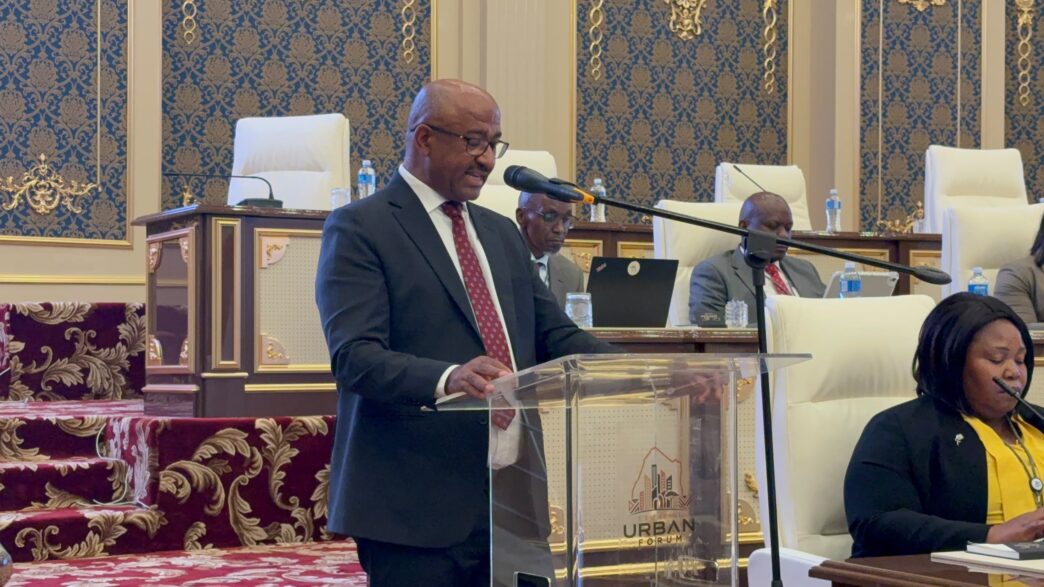
Eswatini’s towns are expanding faster than the plans meant to guide them, leaving local authorities struggling to manage growth, provide housing and control informal development.
This was the assessment of the Senior Physical Planning Officer in the Ministry of Housing and Urban Development, Simphiwe Dube-Ntshingila, during the second day of the Eswatini Urban Forum held at Ezulwini ICC.
She said the country is experiencing a classic urban challenge where demand for land, housing and services has outpaced both the planning instruments and the institutional capacity to implement them.
According to Ntshingila, urbanisation in Eswatini is no longer confined to the major cities. It is happening across all towns, driven by population growth, migration and the search for economic opportunity. The result is increasing pressure on land that is already limited, both within town boundaries and on the periphery where towns interface with rural and traditional land.
“We are seeing development that pushes beyond the limits of our existing town planning schemes,” she said. “The plans exist, but the growth is happening outside the space those plans were prepared for.”
She said this has implications for how towns function. When development occurs outside approved planning frameworks, it becomes difficult to provide basic infrastructure such as roads, water, sanitation and electricity in an orderly and cost-effective manner.
Ntshingila noted that housing remains the most visible pressure point. Demand far exceeds supply, particularly for low-income and middle-income families. With limited formal housing options, many households resort to informal settlements and unplanned subdivisions, which then require retrofitting at a much higher cost to government and municipalities.
“The need for family housing is enormous. There are many people in our communities who need decent shelter, and the expectation is that the national government and local authorities must provide that framework,” she said.
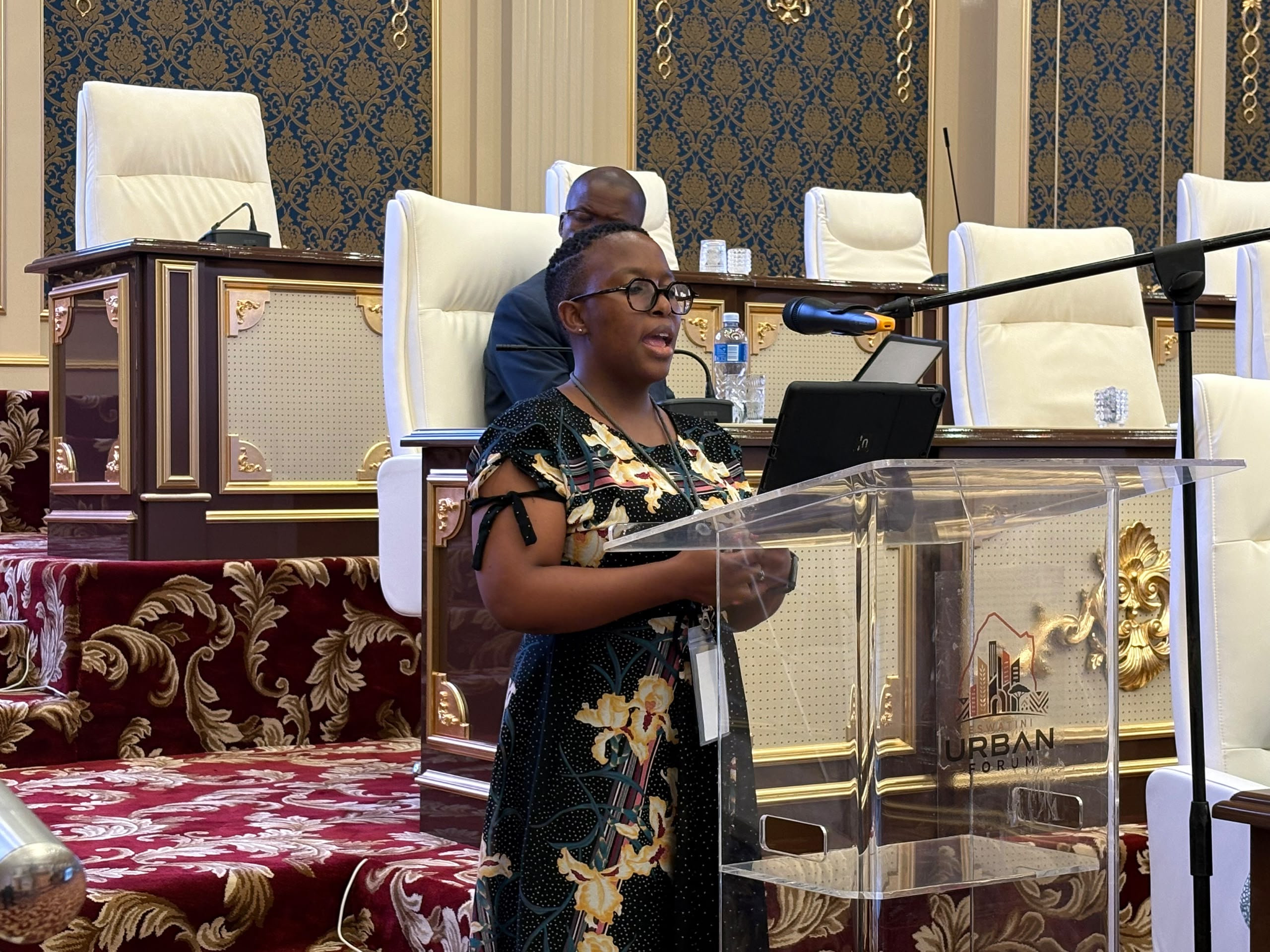
She said part of the challenge is institutional coordination. Urban development involves multiple players: physical planning, housing, disaster management, environment, roads, utilities and traditional authorities. Without a coordinated mechanism, planning becomes fragmented, and enforcement becomes weak.
“We have limitations when it comes to institutional coordination. Each sector does its own thing, and that affects how we manage urban growth as a whole,” she said.
Ntshingila said Eswatini does have planning tools. Most towns have town planning schemes and local development plans. The problem is not always the absence of plans, but the lack of implementation, monitoring and alignment with on-the-ground realities.
“We do have local plans. We can document what should happen where. But translating those plans into actual projects on the ground is where we struggle. Plans quickly become outdated if they are not implemented and reviewed,” she said.
She said rapid, unplanned growth also exposes communities to risks. Settlements developing in areas not suitable for housing, including flood-prone areas, steep slopes and environmentally sensitive zones, increase vulnerability to disasters and place additional strain on disaster management resources.
She emphasised the need for planning and proactive land management rather than reactive responses to informality.
“It is important for us to plan and ensure that we continue to guide development properly. Our role as a planning agency is to make sure that development happens in a structured manner,” she said.
According to her, towns need to define where growth should happen, where housing should be located, where economic activities should be concentrated, and where land should be protected. That requires clear spatial frameworks that are understood by all stakeholders, including communities, developers and traditional leaders.
She said controlled development does not mean stopping growth, but directing it to areas where services can be provided efficiently and where development opportunities can be maximised for residents.
Ntshingila said the current situation where many workers live in informal areas far from job opportunities is unsustainable. It increases transport costs, reduces productivity and undermines quality of life.
“When people cannot find housing close to where they work, they will find housing where they can. But that housing may not be in a planned area, and it may not have services,” she said.
She said the way towns are planned also needs to reflect local realities. Planning standards, housing typologies and land management approaches must respond to affordability and cultural considerations while still ensuring orderly development.
She added that local authorities need support to strengthen their planning and development control functions, including capacity to enforce town planning schemes, process development applications timeously, and engage communities in planning processes.
“Development control is still a challenge. We have areas where development happens without approval, and by the time we intervene, people have already invested and settled,” she said.