. . . If the application is approved by regulator, ESERA, E100 could buy you only 29 units of electricity instead of 35 units from April 2027.
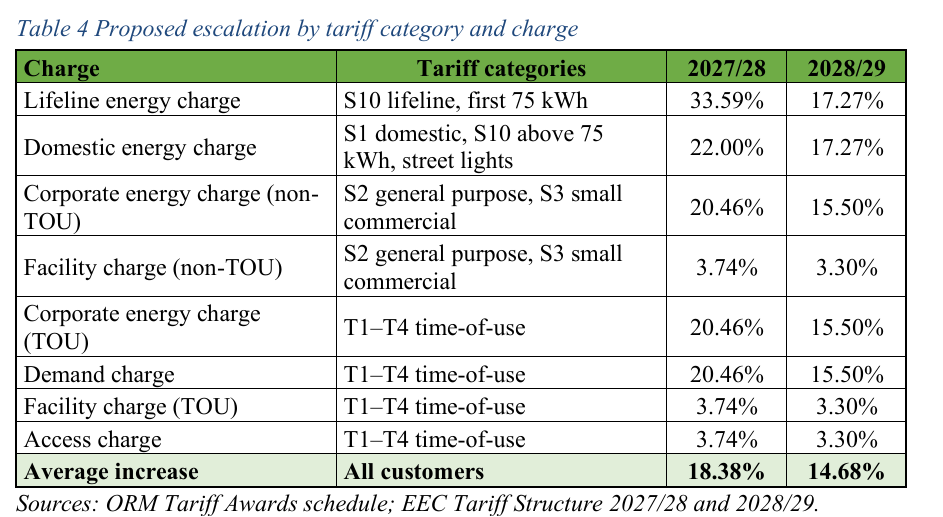
The Eswatini Electricity Company (EEC) has applied to the Eswatini Energy Regulatory Authority (ESERA) an electricity tariff hike of 18.38 per cent for the 2027/28 financial year and a 14.68 per cent for the 2028/29 financial year.
In simple terms, what currently gives domestic consumers 35 units of electricity for E100 could translate to 29 units for the same amount of money.
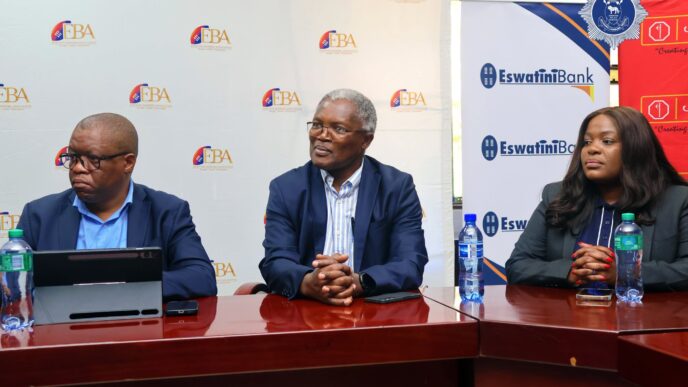
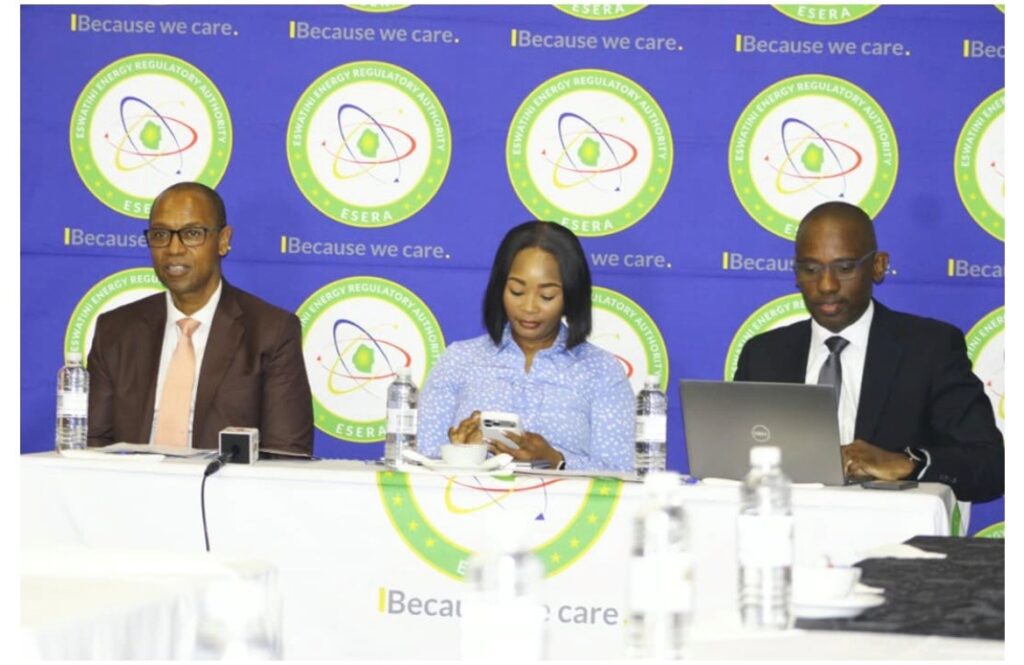
This was revealed by ESERA Chief Executive Officer (CEO) Sikhumbuzo Tsabedze when addressing members of the media during the announcement of an application by EEC for electricity tariff review at Mountain View hotel on Tuesday.
The proposed increases are not yet approved and will only come into effect if ESERA gives them the green light after reviewing application and considering submissions from electricity consumers and other stakeholders.


Tsabedze said EEC has submitted three applications for consideration and approval by the ESERA, namely:
Tariff Review application for the financial years 2027/28 and 2028/29
Time-of-Use (TOU) Tariff Rebalancing Application and
Embedded Generation Feed-In Tariff and Associated Charges Application
“EEC requests for a revenue requirement of E4.683 billion for the financial year 2027/28 and a revenue requirement of E4.939 billion for the financial year 2027/28 and 14.68% for the financial year 2028/29, excluding the 2.5 % Electrification Access Fund levy and 15% VAT,” Tsabedze said.
He said according to EEC, the application is driven primarily by the cost of bulk electricity purchases, which constitute approximately 61% of the total revenue requirement as well as the recovery of E533.1 million in past undern-recoveries.
“The utility states that the proposed revenues are required to cover prudently incurred costs, maintain network operations and ensure the continued reliability and quality of electricity supply,” he said.
Tsabedze said EEC has further applied for approval to restructure its Time-of-Use (TOU) tariffs by removing the distinction between high-demand and low-demand season energy charges applicable to tariff categories T1, T2, T3 and T4.
“Under the proposal, seasonal charges would be replaced with a single year-round set of peak, standard and off-peak energy charges. EEC has indicated that the proposed tariff restructuring is intended to be revenue neutral and follows changes in its bulk electricity supply arrangements, where seasonal differentiation in bulk supply tariffs has been removed. The proposal does not seek additional revenue but aims to realign tariff structures with current cost of supply,” Tsabedze said.
Tsabedze further stated that EEC also submitted an application seeking approval of embedded generation feed-in tariffs and related connection and administrative charges for the financial years 2027/28 and 2028/29.
“The application maintains the avoided-cost principle for determination of compensation for elig9ible embedded generators through a net-billing mechanism. For 2027/28, EEC proses a flat non-Time-of-Use feed-in tariff of 79.65 CENTS/kWh, while for 2028/29 the proposed tariff is 77.36 cents/kWh. Proposed TOU export credits according to off-peak, standard and peak periods,” Tsabedze added.
Tsabedze said in terms of Section 5 (1) (f) of the Energy Regulatory Act read with Section 32 of the Electricity Act, together with Section 5 and 6 of the Tariff Methodology, the ESERA is mandated to undertake review, once the request is received by November 1st and is expected to announce a decision not later than February 1, the following year, after a three-month review process.
“As part of the process, ESERA is committed to solicit input from the public and interested stakeholders, to incorporate into the review. The public and all interested stakeholders are, therefore, invited to submit their comments on the applications for review by December 18, 2026. The Authority will further hold public hearings to gather comments on the review. Members of the public and various stakeholders are encouraged to attend the public hearings,” he said.
E100 EXAMPLE BASED ON THE EEC APPLICATION
Domestic customers
Current year: with E100, a customer gets 35 units (levy inclusive)
Year 2027/28; with E100, a customer would get 29 units (levy inclusive)
Year 2028/29; with E100, a customer would get 24 units (levy inclusive)
Lifeline customers
Current year: with E100, a customer gets 64 units (levy inclusive)
Year 2027/28; with E100, a customer would get 48 units (levy inclusive)
Year 2028/29; with E100, a customer would get 41 units (levy inclusive)
Small Commercial customers (spaza, churches etc)
Current year: with E100, a customer gets 29 units (levy inclusive), Facility charges; E208,16 per month excluding VAT.
Year 2027/28; with E100, a customer would get 24 units (levy inclusive), Facility charges; E215,94 per month excluding VAT.
Year 2028/29; with E100, a customer would get 21 units (levy inclusive), Facility charges; E223,07 per month excluding VAT.