
Prime Minister Russell Dlamini has returned to Eswatini after an official visit to Taiwan focused on strengthening diplomatic ties, attracting investment and advancing the country’s energy ambitions.
Dlamini visited the Republic of China (Taiwan) at the invitation of President Lai Ching-te, representing His Majesty King Mswati III during the high-level engagements.
The Prime Minister was accompanied by Minister for Economic Planning and Development Dr Tambo Gina, Minister for Natural Resources and Energy Prince Lonkhokhela and Minister for Labour and Social Security Phila Buthelezi. 

During the visit, the PM delivered remarks on behalf of His Majesty at the 10th Ketagalan Indo-Pacific Security Forum, where he joined other leaders and distinguished participants in discussions on regional and international issues.
The visit also placed Eswatini’s economic transformation and energy security ambitions at the centre of engagements with Taiwanese government officials, business leaders and investors.
A key part of the programme was the Prime Minister’s visit to three major energy projects in Tainan, where he explored Taiwan’s experience in renewable energy and invited Taiwanese companies to consider investment opportunities in Eswatini.
The delegation visited Hengs Technology Co. Ltd, a leading solar energy engineering, procurement and construction company with more than 28 years’ experience.
They also visited Jhih-Guang Energy Corp, a subsidiary of Ta Ya Green Energy Technology, which operates Taiwan’s first large-scale 85-megawatt fishery-solar symbiosis project across 114 hectares, integrated with major energy storage facilities.
The final stop was Shalun Smart Green Energy Science City, a major high-tech and green energy industrial park supporting Taiwan’s net-zero ambitions, artificial intelligence and smart technology research.
The engagements provided the Eswatini delegation with an opportunity to learn from Taiwan’s advancements in solar generation, battery storage and smart technologies designed to improve the reliability of renewable energy.
The premier used the engagements to outline Eswatini’s plans to expand energy generation capacity in support of industrialisation and economic growth.
He said the country was seeking strategic investors to develop projects capable of generating at least 100 megawatts each, with a broader national objective of exceeding 1 000 megawatts in additional generation capacity.

The Prime Minister said the increased generation capacity would provide reliable baseload power for industries being established in the Kingdom and help secure Eswatini’s long-term energy future.
Beyond the energy sector, Dlamini held engagements with Taiwanese investors from manufacturing, banking, real estate, pharmaceuticals, technology, construction and other strategic industries.
He met prospective investors interested in the proposed Taiwan Innovation Industrial Park at Phocweni, which is being positioned as a catalyst for industrialisation and increased foreign direct investment.
The Prime Minister also held strategic discussions with the Taiwan Packaging Association on potential investment, partnerships and skills transfer.
He highlighted Eswatini’s reliance on imported packaging materials and said developing local packaging capacity could create jobs, support value addition and strengthen export sectors such as sugar, citrus, vegetables and coffee.
The Taiwan Packaging Association, which has more than 300 member companies, expressed interest in exploring investment opportunities in the Kingdom.
The investment programme also saw Tex-Ray Industrial Co. Ltd Founder and Chairman Ray Lin pledge to expand his investments in Eswatini and explore the introduction of high-technology textile manufacturing.
Lin, who has invested in Eswatini for about 25 years, encouraged other Taiwanese investors to consider the Kingdom as their next investment destination.
Dlamini responded by inviting the investors to establish operations through the Taiwan Innovation Industrial Park, which the government sees as an important vehicle for attracting Taiwanese investment and supporting industrialisation.
The Prime Minister also met emaSwati students studying in Taiwan, encouraging them to remain focused, disciplined and committed to their academic pursuits while serving as ambassadors of the Kingdom.
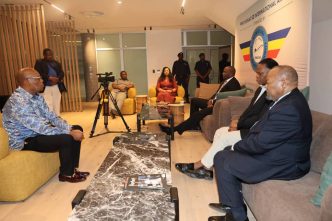
Another notable engagement was a visit to the home of Acer founder Stan Shih, where Dlamini and his delegation were received by Shih and his wife.