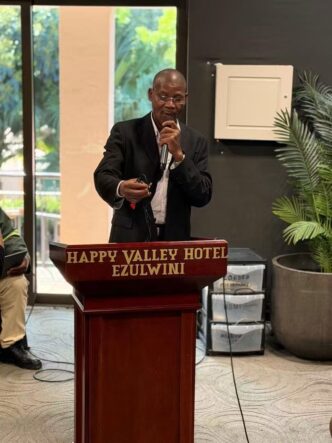
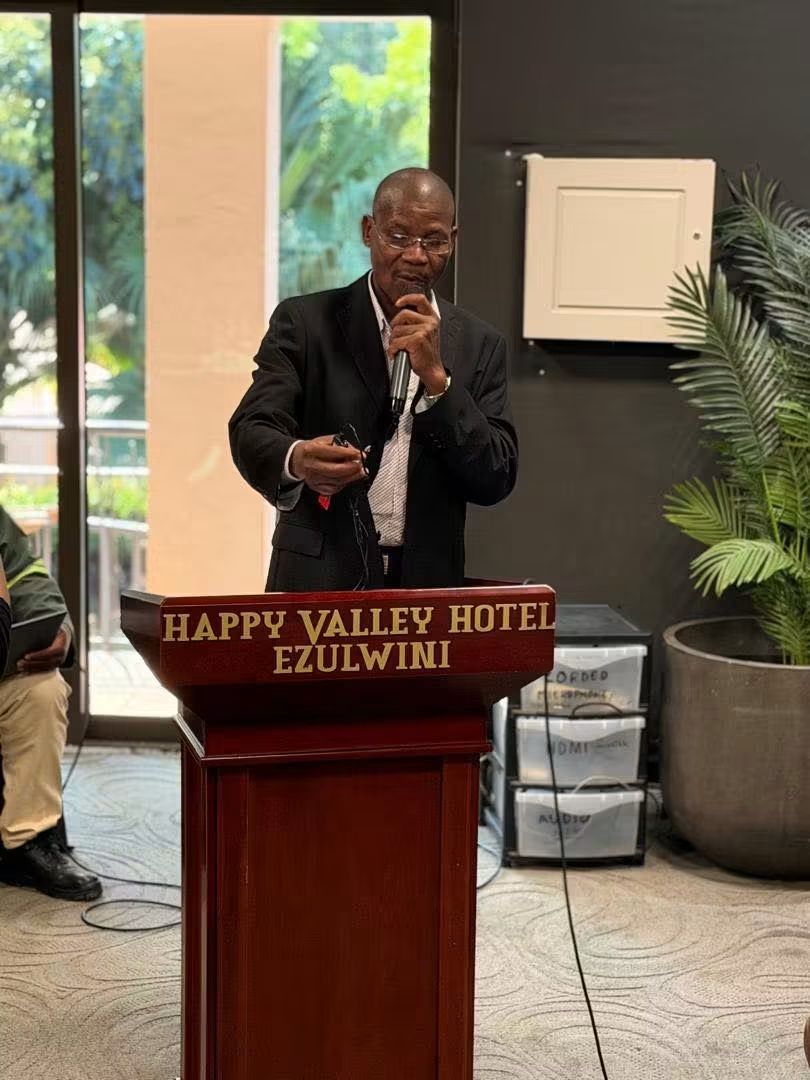
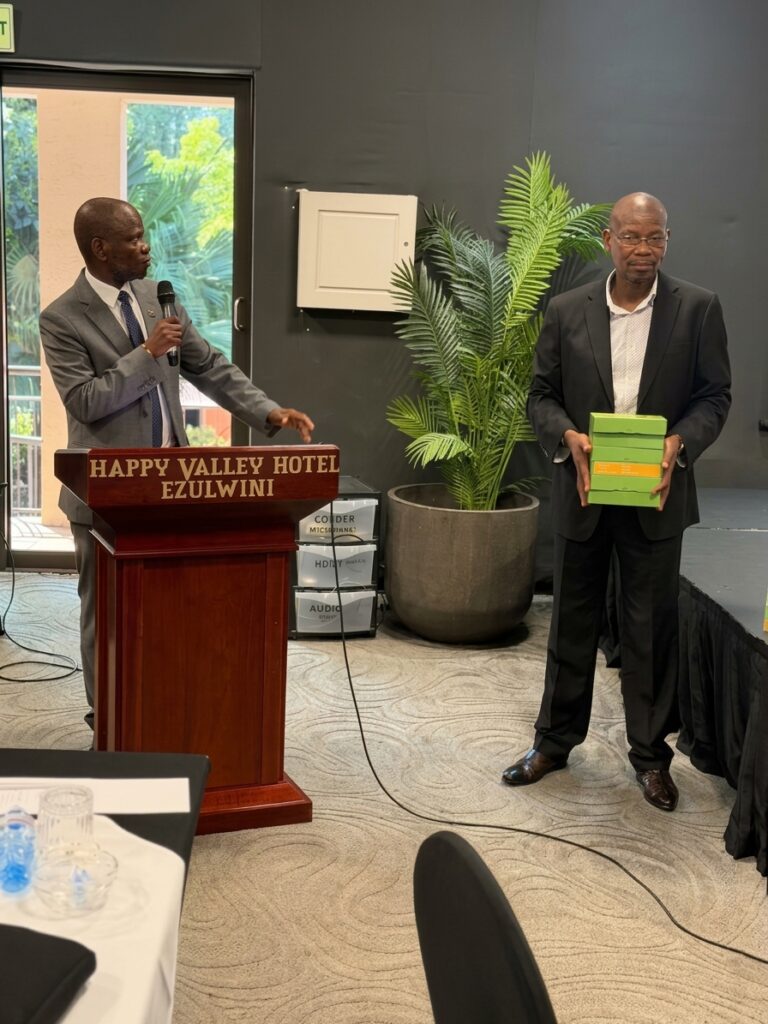
The National Maize Corporation (NMC) has donated 20 digital soil testers worth E11 680 to the Ministry of Agriculture to improve access to soil testing for farmers across the country.
The devices are expected to be distributed to Rural Development Areas (RDAs) in all four regions, bringing rapid soil assessment closer to farming communities.
Minister of Agriculture Mandla Tshawuka said it was time for Eswatini’s agricultural sector to advance its use of modern technology. 
He said the donation will support efforts to bring services closer to farmers and improve decision-making at farm level.
NMC Chief Executive Officer Velaphi Vilane said the corporation has been using the devices and decided to donate after hearing concerns from farmers and the Ministry about challenges related to soil testing.
Vilane demonstrated how the devices can be used with smartphones to access soil information.
He said NMC could consider providing additional devices depending on the impact of the initial donation.
The donation is aimed at addressing complaints from farmers about having to travel long distances for soil testing and waiting for long periods to receive results.
The immediate advantage of the digital testers is the speed at which they provide results.
Portable digital soil testing technology will provide rapid field readings of selected soil characteristics.
Depending on the model and sensors, the devices will measure indicators including pH, moisture, temperature and electrical conductivity.
The 20 devices are expected to be used by extension officers to give farmers quick indications about soil conditions directly in the field.
The intention is to give farmers and extension officers faster information at the point of production.
The Ministry of Agriculture places soil testing at the centre of sound crop management.
According to the Ministry’s Soil Testing Unit, its laboratory analyses soil for pH, exchangeable acidity, macro and micronutrients and uses the results to make lime and fertiliser recommendations.
The unit also trains extension personnel and farmers in soil fertility management.
The Ministry’s Soil Sampling Manual states that proper soil sampling enables farmers to obtain accurate fertiliser and lime application rates based on test results.
Minister Tshawuka said the introduction of portable testers will complement existing laboratory services, not replace them.
The central laboratory remains responsible for detailed analysis and formal recommendations.
The decision to channel the devices through RDAs is expected to strengthen extension services.
The Ministry says its Soil Testing Unit provides technical support on soil fertility and management across all four regions.
The digital devices will provide extension officers with an additional diagnostic tool to use closer to production areas.