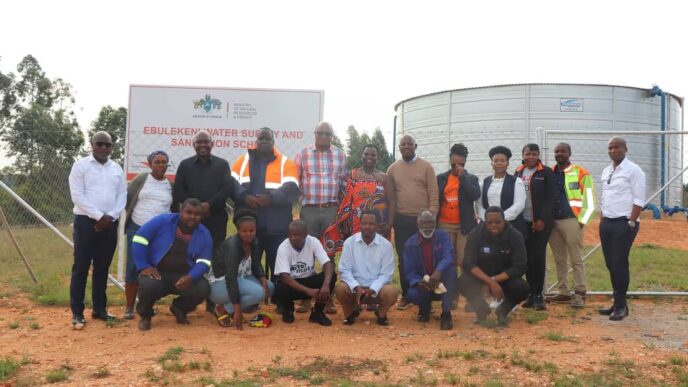
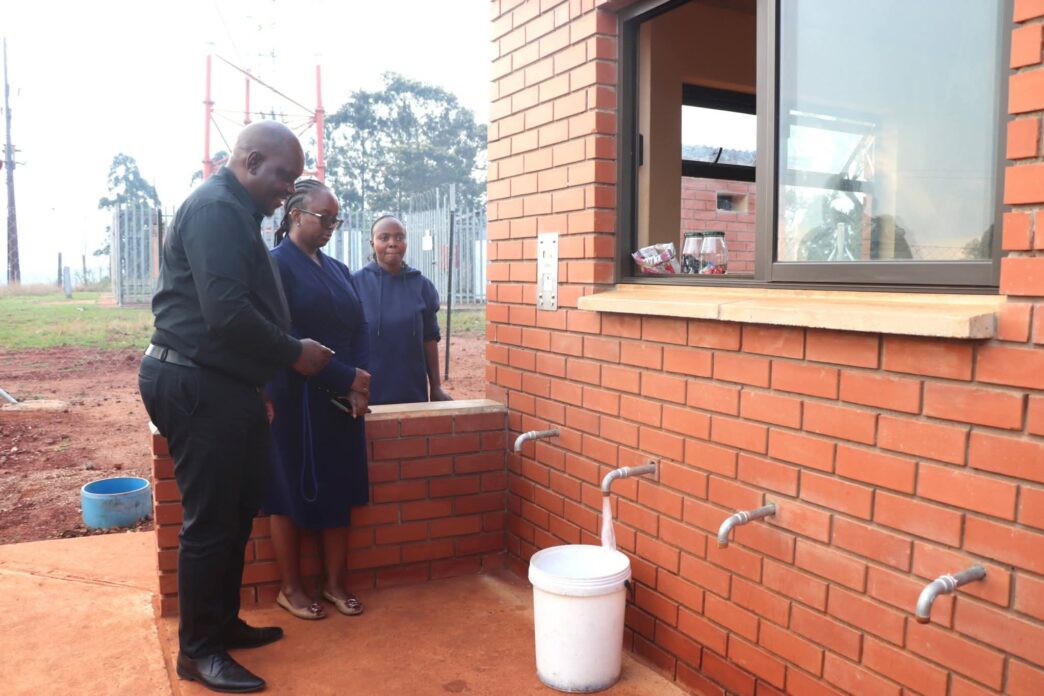
About 2 300 people and a nearby school are benefiting from a solar-powered water supply scheme at Ebulekeni, as a combination of renewable energy, government support and community involvement strengthens access to clean water in the Shiselweni region.
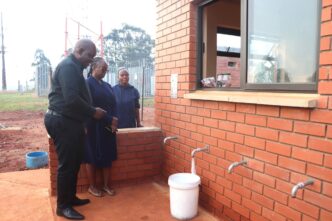
The Ebulekeni water supply scheme, under Zombodze Emuva Inkhundla, uses a hybrid system combining solar energy and the national electricity grid to provide water through 55 communal taps. The project was established through a partnership between World Vision Eswatini (WVE) and the Ministry of Natural Resources and Energy (MNRE), with solar power helping to reduce operational costs and improve the affordability of water services for the community.
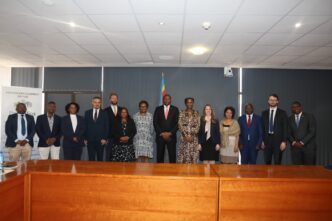
The scheme recently attracted regional attention when a delegation from Water and Sewerage Company (WASCO) Lesotho visited Eswatini to learn from water solutions being implemented at community level. Led by WASCO Chief Executive Officer Lebohang Mpeke Makara, the delegation was hosted by Eswatini Water Services Corporation (EWSC) and World Vision Eswatini during a learning and benchmarking visit to water projects in the Shiselweni region.
The visit gave the Lesotho delegation an opportunity to observe how partnerships between communities, government institutions, development partners and water utilities can contribute to sustainable water service delivery. At Ebulekeni, the delegation observed how solar energy is being incorporated into the water system to maximise the available sunlight while reducing reliance on electricity from the national grid.
The 55 communal taps provide residents with access to water within the community, while the nearby school is also benefiting from the scheme.
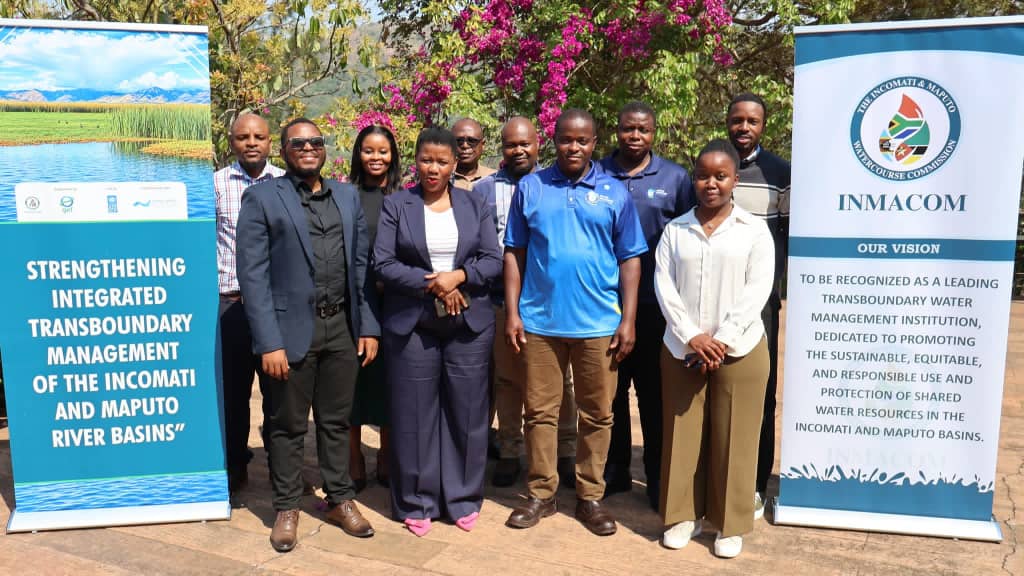
Makara applauded Eswatini’s community base and government support, describing both as important elements in developing sustainable water solutions.
He also highlighted the efficient management of the water systems visited and the use of solar power as a way of maximising sunlight and reducing dependence on the grid. “What is key is how Eswatini has managed to practicalise and implement community projects. And a lot of community leadership, which is actually quite powerful,” Makara said.
The WASCO chief executive said the learning visit provided an opportunity to see how community leadership could be combined with government support and practical water solutions. The delegation also visited Makhwelela community on the outskirts of Nhlangano, where a prepaid water system is serving approximately 294 customers.
Constructed jointly by World Vision Eswatini and EWSC, the system allows residents to purchase water in advance and access it when required. The prepaid model promotes efficient water use while supporting the sustainability of the service. The final stop was the EWSC Prepaid Water Kiosk, where households without direct water connections can purchase water using prepaid tokens.
Every 20 litres of water costs 20 cents, providing households with an alternative way of accessing water according to their needs. The three projects demonstrated different approaches to improving access to water. While Ebulekeni uses solar energy and communal taps to serve thousands of people, Makhwelela uses prepaid technology to manage water access for hundreds of customers. The EWSC kiosk, meanwhile, provides an option for households without direct connections.
Throughout the visit, community ownership emerged as another important aspect of sustainable water service delivery. The delegation examined how communities can participate in managing and maintaining water infrastructure, helping to ensure that projects continue serving residents after construction.
World Vision Eswatini WASH representative Ntando Mabuza said the exchange reinforced the value of collaboration, innovation and community participation in addressing water access challenges. The learning visit also provided an opportunity for Eswatini to share practical experiences with a neighbouring country facing its own water service challenges.
The Ebulekeni scheme, in particular, offered a practical example of how renewable energy can support rural water infrastructure while reducing dependence on the national grid. For the approximately 2,300 people and the nearby school benefiting from the scheme, the project represents improved access to clean water through a system built around communal access points and a combination of solar and grid electricity.
The exchange further demonstrated how locally implemented water solutions can provide lessons beyond national borders, with the Lesotho delegation able to observe the systems and community approaches first-hand.