
















Sigwe walks into the future with new shoe factory

By Delisa Magagula
Sigwe Inkhundla is set for an economic boost as the Ministry of Commerce, Industry and Trade confirms a new footwear factory in the area.
Led by Amandla Omnotho, the project aims to transform the local economy and the broader leather value chain in Eswatini.
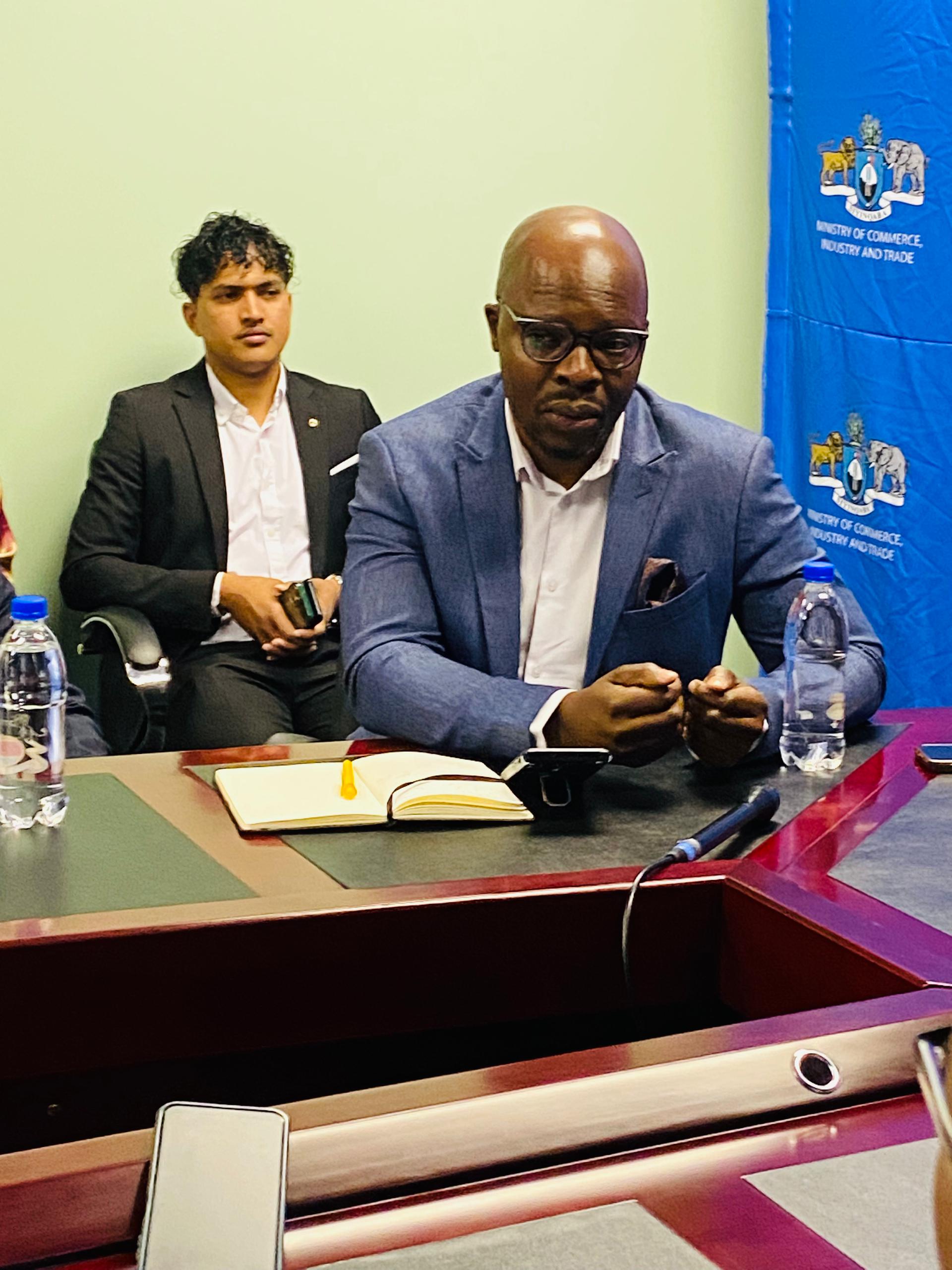
Minister of Commerce, Industry and Trade Manqoba Khumalo, and Gugulethu Xaba, President and Founder of Amandla Omnotho, recently announced the project.
Minister Khumalo described the factory as a game-changing investment, set to empower the youth, create sustainable jobs, and position Eswatini as a serious player in the footwear industry.
“This project is more than just about making shoes. It is about reviving our leather value chain, building sustainable industries from the ground up, and ensuring that young Emaswati are not just employees but also investors and co-owners of the businesses that shape their future,” said the Minister.
The Minister explained that although Eswatini produces significant amounts of leather, much of it currently goes to waste due to the absence of a structured value chain.
The establishment of the Sigwe footwear factory is expected to change this trajectory, creating a market for raw materials while stimulating related industries.
According to Amandla Omnotho, the factory will begin by producing 5,000 pairs of shoes per month, focusing initially on school shoes, a critical market given the country’s large population of learners.
The investment is expected to generate 50 permanent jobs in Phase One, with the number increasing to 120 permanent positions once the factory reaches full capacity.
Beyond job creation, the company has committed to providing on-the-job training for local workers to develop skills that will empower them within and beyond the project.
Ownership opportunities will also be extended to Emaswati, particularly the youth, ensuring that they are active participants in the long-term sustainability of the project.
The Minister further stressed that remuneration structures will be guided by the Kingdom’s Gazette, ensuring that workers receive fair and improved wages.
The factory’s operations will be overseen by Thulani Goba, a seasoned footwear expert with decades of industry knowledge. Goba will not only manage production but will also lead training programmes to ensure that local employees are equipped with modern skills in footwear manufacturing.
“Our vision is to build an industry that lasts. We are committed to equipping young people with practical skills that will allow them to run and own production lines, and eventually become the industry leaders of tomorrow,” said Goba.
The announcement of the investment was warmly received by Sigwe Member of Parliament, David ‘Cruiser’ Ngcamphalala, who expressed his gratitude to Their Majesties for appointing Minister Khumalo.
Ngcamphalala described the project as a long-awaited development for the Sigwe community, which has struggled with unemployment and limited industrial opportunities.
“This factory is not just about jobs, but about dignity and self-reliance for our people. We thank the government for bringing such a life-changing initiative to our community. It gives us hope and motivation for the future,” he said.
The Minister revealed that the next step will involve introducing the appointed contractor to local traditional authorities, marking the official start of the project.
“The people of Sigwe must be part of every step of this journey. From the construction phase to production, this project belongs to the community, and they will be its biggest beneficiaries,” the Minister
The Ministry is expected to return to Sigwe soon for this formal introduction, which will pave the way for construction to begin.
While the financial estimate of the project has not yet been made public, Minister Khumalo hinted that it would be a significant investment.
“This is not a small undertaking.
The figures are still being finalised, but what we can say is that it is big enough to change the face of Sigwe and to inspire other investors to look at Eswatini as a serious manufacturing destination,” he said.