













From Mbabane to Dublin: Two Young Swazi Women Among 10 Chosen for Prestigious Irish Scholarships

By Karabo Ngoepe
When two young women from Eswatini board their flights to Dublin later this month, they will be carrying more than suitcases and passports. They will be carrying the hopes of a nation that has long invested in its young people as engines of change.
They are part of a group of 10 students, eight from Mozambique and two from Eswatini, who have been awarded fully funded scholarships to pursue one-year master’s degree programmes in Ireland under the prestigious Ireland-Africa Fellowship Programme.
The programme, funded by the Government of Ireland, is aimed at nurturing Africa’s future leaders by giving them access to some of the world’s best universities.
Fields of study range from governance and health to gender equality, climate change, and peacebuilding, areas that are as critical to Eswatini’s growth as they are to the region’s.
For the two Swazi women, the scholarships represent both opportunity and responsibility. They were selected through a rigorous, highly competitive process that weighed academic merit, professional achievements, and a demonstrated commitment to making a difference back home.
Ireland, with its long tradition of academic excellence and emphasis on innovation, has become an unexpected but powerful partner in Africa’s development journey. Its universities are globally ranked, offering research-driven teaching that blends theory with practical application.
For years, Mozambican students have benefited from this partnership, returning to their communities as leaders in education, health, and governance. Now, with Eswatini joining in, the fellowship marks a new chapter.
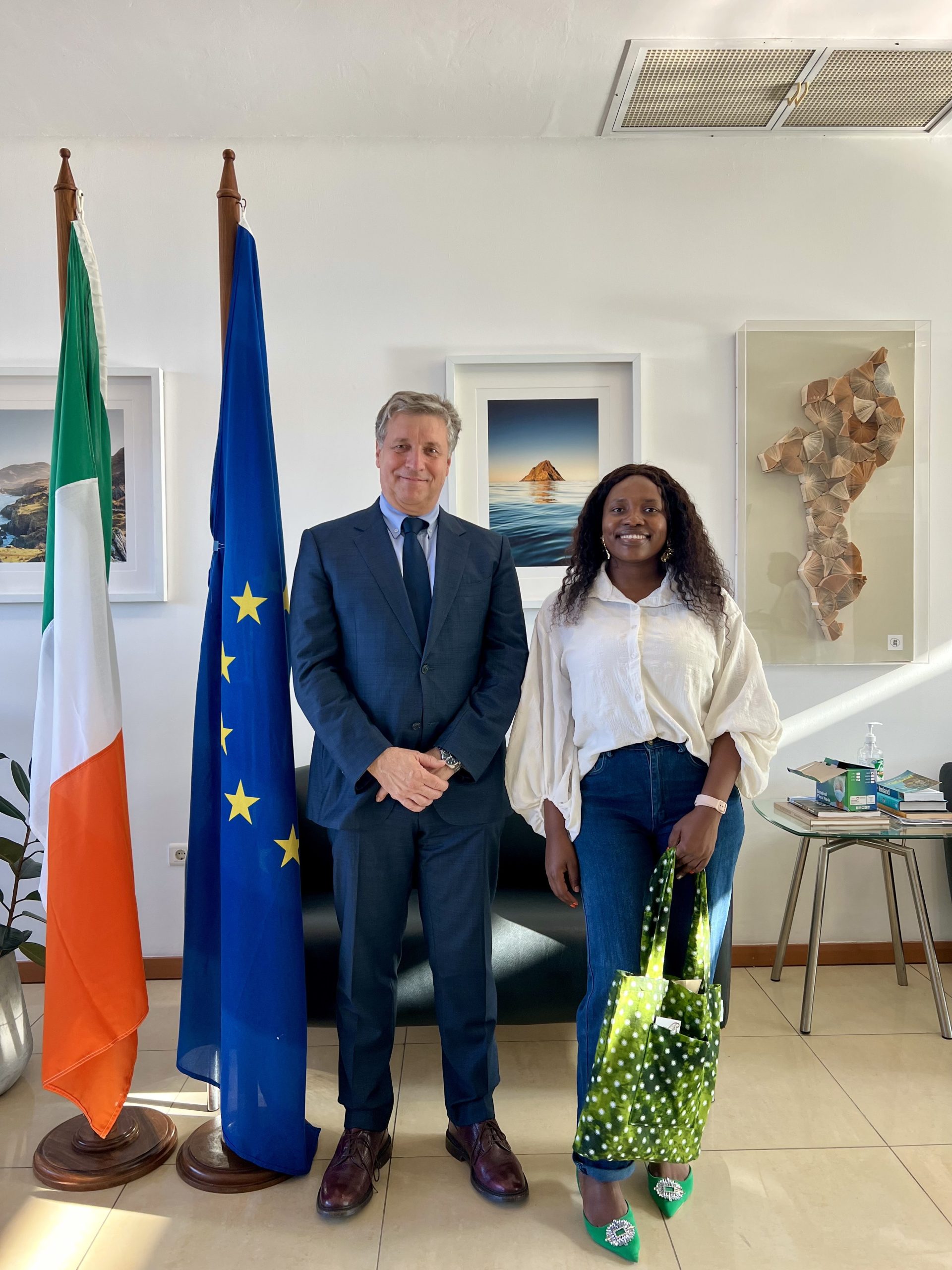
The Embassy of Ireland in Maputo, which also oversees relations with Eswatini, has made clear that this is more than a scholarship scheme, it is a bridge between two continents.
“The Ireland-Africa Fellowship Programme represents a bridge between education in Ireland and the practical application of knowledge for sustainable and inclusive development in Mozambique and Eswatini,” the embassy said in a statement.
“This initiative reinforces Ireland’s strong commitment to investing in human capital.”
For Eswatini, the scholarships arrive at a moment when the country is grappling with the need for skilled professionals who can help steer reforms in health, education, climate adaptation, and governance.
The fellows will spend a year immersed in Irish classrooms, libraries, and research hubs, but their journey will not end in Dublin. Upon returning home, they are expected to use what they have learned to make tangible contributions to national development.
For the two women from Eswatini, this is both a challenge and a calling. They represent the country on a global stage, but more importantly, they return as role models for other young Swazis, proof that talent, hard work, and determination can open doors across continents.
And so, as they say their goodbyes at King Mswati III International Airport, they carry with them more than dreams of academic success. They carry the hopes of their families, their communities, and a nation eager to see them soar and return to lift others with them.