
















Albinism and the Job Market: The Fight Against Discrimination
By Delisa Magagula
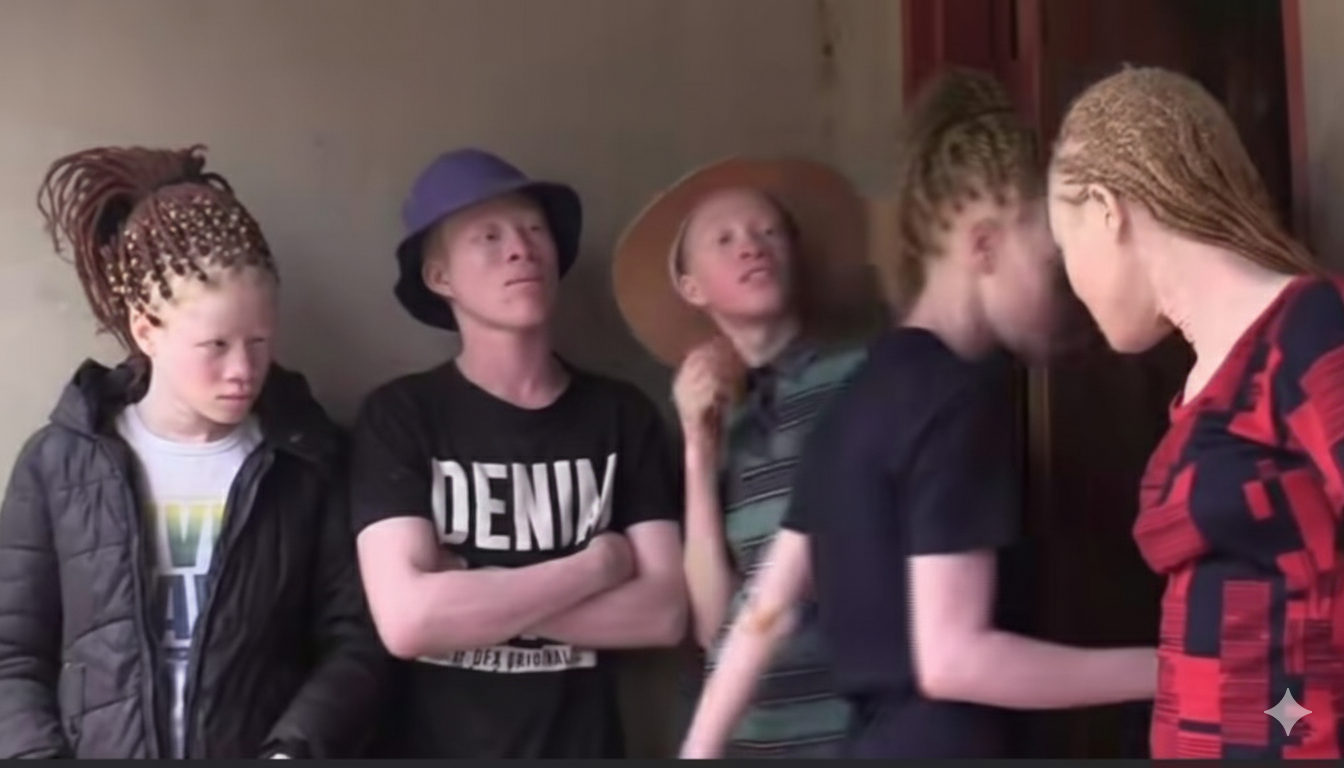
Life has never been easy for the Masilela family. For Thembi Masilela, a mother of six, every day is a balancing act of hope and heartache.
All of her children were born with albinism, and while her home is filled with love and resilience, the reality outside its walls is far less kind.
Her son, Sabelo Masilela, explained that growing up and trying to find employment has been one of the hardest battles.
“It is hard to get employment opportunities or jobs. People see us as if we have skin problems. They don’t even give us the call to ask us what we can do. They see the skin first and stop there,” said Sabelo.
Sabelo has looked for jobs nearby, often asking at businesses and farms, but he says he is often turned away. When he does find temporary work, it never lasts long.
“You can feel it when people don’t want you around. Even if you can do the job, they will find a reason to say no,” he said.
For their mother, seeing her children rejected is the hardest part of raising them.
“As a mother, it is harder to see your children suffering. I plead for my children to be given a chance. They want to work and support themselves. They want to be seen as normal young people, not as a burden,” she said.
Thembi says her children often come home feeling discouraged after being turned away from opportunities.
“Sometimes they lose hope, and I do not know how to comfort them. All I can do is pray someone will open a door for them,” she explained further.
The Masilela children’s experience reflects the wider challenges faced by many people living with albinism in Eswatini. Discrimination and stigma remain deeply rooted, with myths and misconceptions surrounding the condition still present in communities.
The children said they grew up hearing hurtful names and being treated as different in school. Simple tasks such as reading the chalkboard became difficult because of visual impairment, a common condition among people with albinism. Without proper glasses or magnifiers, they were often left behind.
Teachers did not always understand their needs, and bullying by other children pushed them further into isolation.
“Sometimes you want to give up because you feel you don’t belong anywhere,” said one of the siblings.
The stigma carried into adulthood, with employers unwilling to consider them for jobs. According to the family, most of the rejection is not openly explained.
“No one will tell you directly it’s because of your albinism, however, you can see it. You can feel it,” said Sabelo.
Thembi said she fears what the future holds for her children if the situation does not change.
“They are getting older, and each year without work makes life more difficult. They need jobs to live with dignity. They need opportunities so that they can stand on their own,” said Thembi.
She added that even daily survival can be difficult. Sunscreen, protective hats, and glasses are expensive and not always available in local shops. Without these, her children’s health is at risk from the harsh sun.
“We make do with what we have, but it is never enough,” she said.
All Thembi says she wants is for her children to be treated like everyone else, as they did not choose to be born this way.
Over 6k people live with Albinism in Eswatini
According to available figures, there are an estimated 7,000 people living with albinism in Eswatini, with higher numbers reported in the Manzini region.
Worth noting is that Albinism is a genetic condition caused by a lack of melanin, the pigment that gives skin, hair, and eyes their colour.
The condition often results in poor vision and makes people more vulnerable to sunburn and skin cancer.
Despite these health challenges, many people living with albinism say social stigma is a greater burden than the medical risks.
Discrimination in schools and workplaces is a recurring concern. Some families report that children with albinism drop out of school early because they are bullied, lack support for their vision problems, or cannot afford protective items. In adulthood, the barriers continue, with employers often unwilling to hire them.
The United Nations has noted that people with albinism in Eswatini face exclusion from education, health services, and economic opportunities.
Advocacy groups have called for greater inclusion and protection of people living with the condition, urging the government to ensure access to resources such as sunscreen and to strengthen laws against discrimination.
Campaigns have been launched in recent years to raise awareness and promote inclusion. Eswatini TV, for example, introduced an Albinism Care Campaign that included scholarships for students with albinism.
Government officials have also spoken publicly about the need to support families affected.
Despite these efforts, many individuals say little has changed in their daily lives. Poverty, lack of resources, and persistent stigma continue to define their experiences.
Meanwhile, for the Masilela family, each day is a reminder of how far there is to go before equality becomes reality. The children spend most of their time at home, while their mother tries to encourage them not to lose hope.
Sabelo said he does not want pity, only a fair chance. “We are not asking for special treatment. We just want to be treated like everyone else, to work and to live with dignity,” he said.
The family’s story sheds light on the broader struggle of people with albinism across Eswatini. Despite public awareness campaigns and official commitments, the reality on the ground remains one of exclusion and hardship. For families like the Masilela’s, change cannot come soon enough.