






Seventeen African Nations Commit to Expanding Electricity Access Under Mission 300
By Karabo Ngoepe
Seventeen African countries have pledged sweeping reforms and investment plans to expand electricity access as part of Mission 300, an ambitious programme led by the World Bank Group and the African Development Bank Group.
The initiative aims to connect 300 million Africans to electricity by 2030.
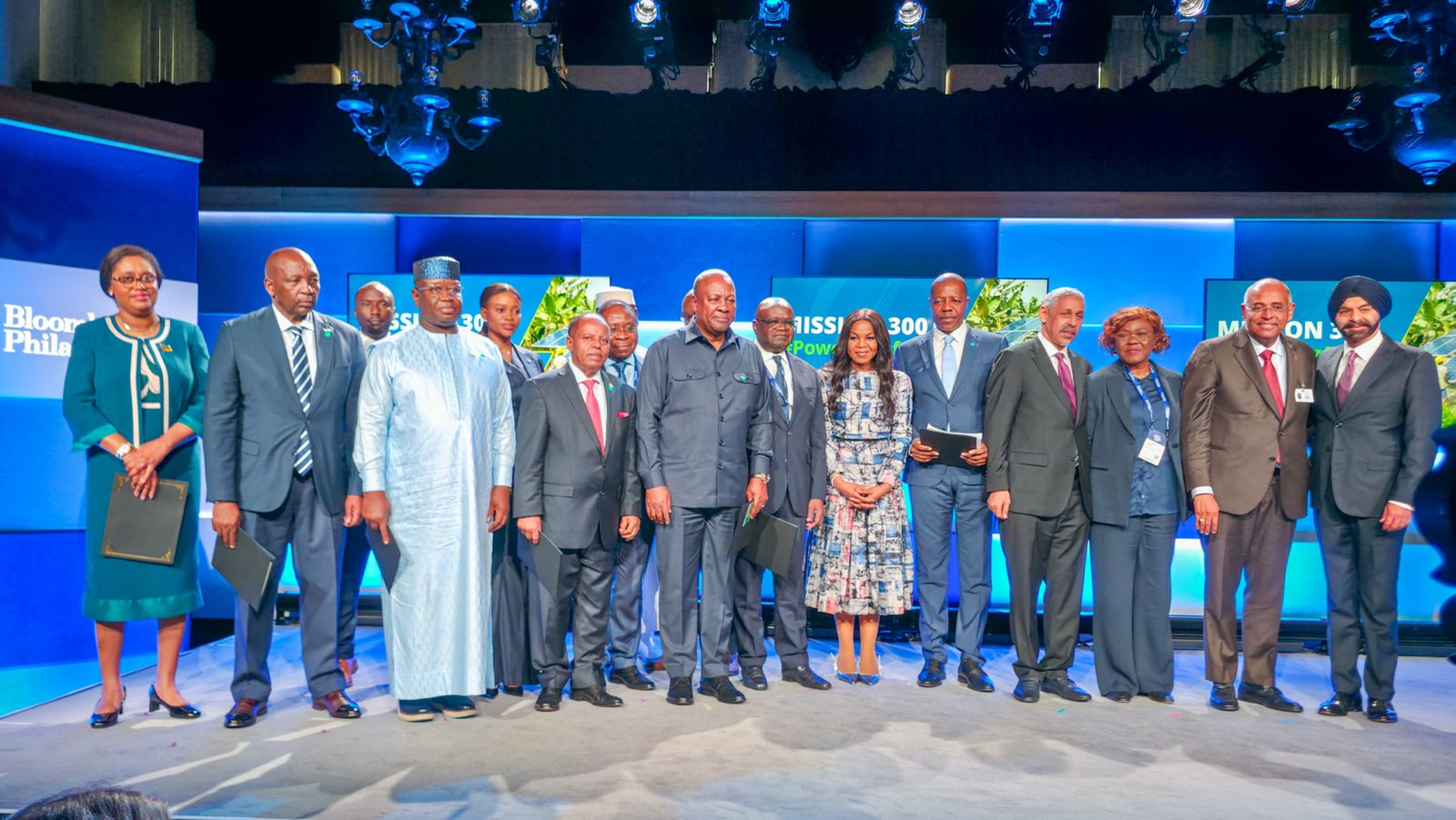
The announcement was made during the Bloomberg Philanthropies Global Forum in New York, where leaders endorsed National Energy Compacts, detailed blueprints that guide public spending, trigger reforms, and attract private capital.
The new commitments came from Benin, Botswana, Burundi, Cameroon, Comoros, the Republic of the Congo, Ethiopia, Gambia, Ghana, Guinea, Kenya, Lesotho, Mozambique, Namibia, São Tomé and Principe, Sierra Leone and Togo.
Since its launch, Mission 300 has already connected 30 million people to electricity, with more than 100 million additional connections in the pipeline.
“Electricity is the bedrock of jobs, opportunity, and economic growth,” said World Bank President Ajay Banga. “Mission 300 is more than a target, it is driving reforms that cut costs, strengthen utilities, and draw in private investment.”
African Development Bank President Dr. Sidi Ould Tah stressed the ripple effect of reliable power. “Give a young entrepreneur power, and you’ve given them a paycheck,” he said, noting electricity’s role in small businesses, agro-processing, digital work, and industrial growth.
The Energy Compacts integrate three core tracks, policy, financing, and infrastructure, and are tailored to each country’s needs. Earlier this year, 12 other nations, including Nigeria, Senegal, Tanzania, and Zambia, also signed on, pledging more than 400 policy actions to strengthen utilities, reduce investor risk, and accelerate clean energy adoption.
For many leaders, the Compacts represent more than just infrastructure, they are central to national visions of growth and equity.
Kenya’s President William Ruto called energy “a key enabler” of the country’s economic transformation, while Mozambique’s President Daniel Chapo positioned his country as a “regional powerhouse” for exporting clean energy.
In the Republic of the Congo, President Denis Sassou Nguesso highlighted the country’s vast hydroelectric potential, while Ghana’s President John Dramani Mahama stressed that universal access was vital for poverty reduction and equal opportunities.
Lesotho’s Prime Minister Sam Matekane put it poetically: “Mountain winds blow, waters flow, the sun shines brightest, Lesotho, the kingdom in the sky. Universal access to renewable energy is our proud imperative.”
Partners supporting Mission 300 include the Rockefeller Foundation, the Global Energy Alliance for People and Planet, Sustainable Energy for All, and the World Bank’s Energy Sector Management Assistance Program.
Together, they are aligning co-financing and technical support to accelerate delivery.
With nearly 600 million people in Africa still lacking access to electricity, Mission 300 is one of the most ambitious undertakings to date. Its success, leaders say, could transform industries, create jobs, and improve the daily lives of millions across the continent.