












Suppliers to be paid in full for the rest of the year
By Delisa Magagula
The government has announced that all suppliers owed money for goods and services will be fully paid before the end of the current financial year.
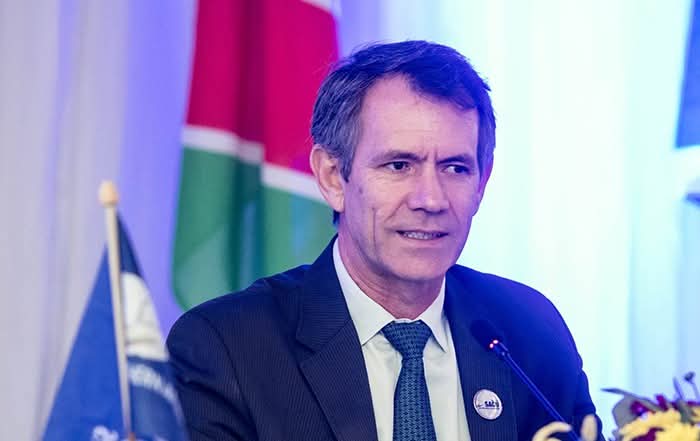
Minister of Finance Neal Rijkenberg confirmed that the new loan facilities have already been secured and those awaiting parliamentary approval are designed to ensure cash flow stability and restore confidence among local businesses.
For many companies, particularly small enterprises, arrears have constrained operations and limited their ability to expand.
Speaking during an interview, Rijkenberg said the repayment of the International Monetary Fund (IMF) loan was completed, freeing the government to focus resources on clearing obligations to local suppliers.
“Our commitment is that these two loans will settle arrears once and for all. If that happens, we will be able to settle arrears in the country and we believe that will be the last of arrears,” he stated.
The government has tabled two additional loan Bills for approval, E865 million (US$50 million) facility from OPEC and an E821.7 million (US$47.5 million) facility from the African Development Bank (AfDB).
These loans will complement the E1.73 billion (US$100 million) World Bank facility secured earlier this year. Together, the financing is expected to provide enough liquidity to pay outstanding suppliers.
For local businesses, the announcement is a welcome development. Many firms have endured long delays in government payments, forcing them to rely on overdrafts and costly short-term borrowing.
Small and medium-sized enterprises (SMEs), often most vulnerable to cash flow shocks, have been particularly affected.
One supplier of medical equipment, who asked not to be named, said arrears had been a heavy strain on operations:
“We’ve had to stretch our credit lines just to keep stock moving. If these payments come through this year, it will take real pressure off us,” said one of Government’s suppliers.
Another contractor in the construction sector noted, that they have been waiting for government to be paid.
“We’ve been waiting close to a year for some invoices to be cleared. The commitment to pay all suppliers before year-end gives us hopes we can plan projects without so much uncertainty,” said the contractor.
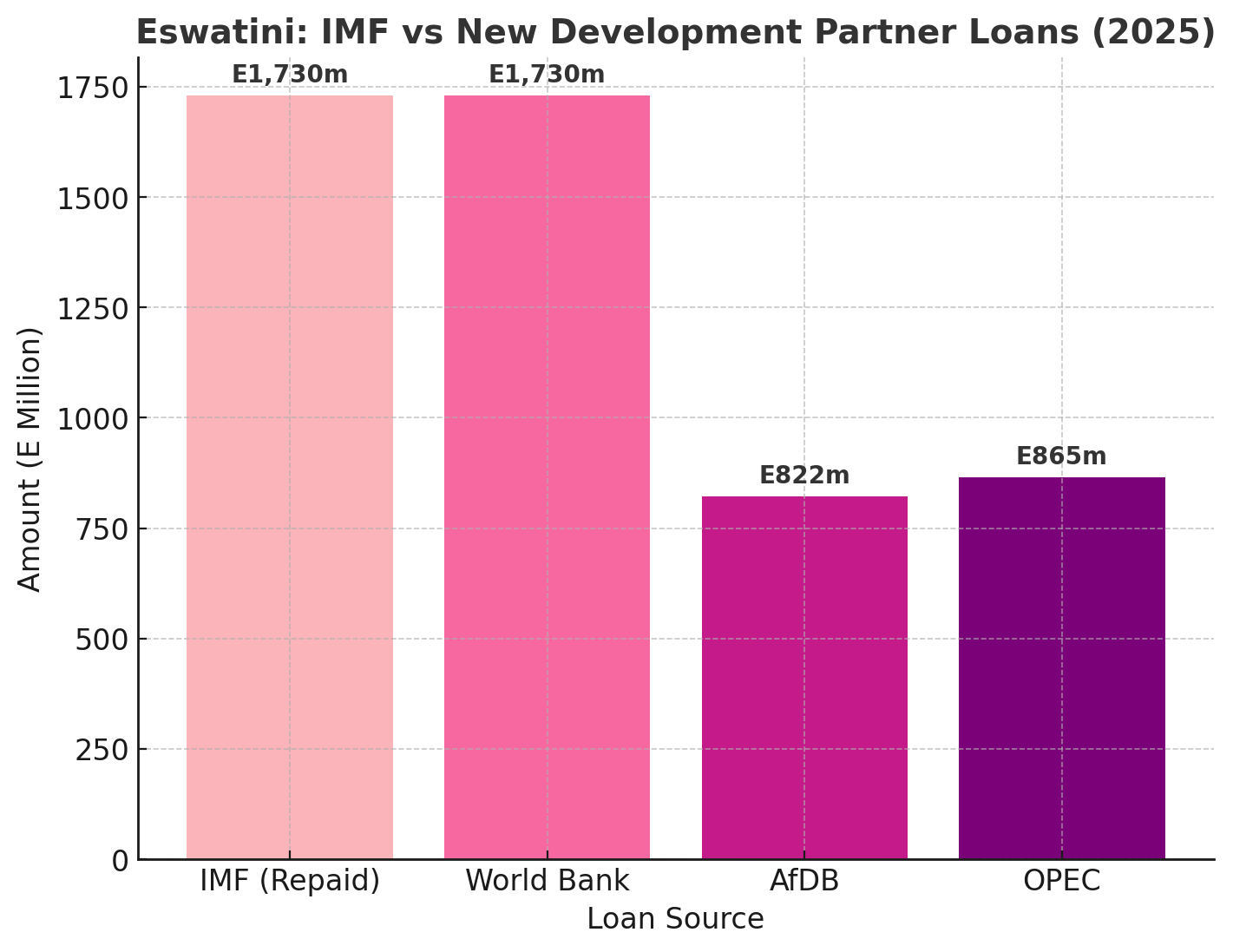
Eswatini’s fiscal strategy has shifted away from IMF reliance toward concessional loans from multilateral development institutions.
The IMF loan, taken during a period of fiscal stress, has now been fully repaid. This repayment, while not immediately visible to businesses, signals restored stability in external debt obligations.
Rijkenberg explained that the IMF repayment was pragmatic in the crisis context, but the current focus is on boosting liquidity for domestic commitments.
“History has now also shown over the last period that we have stopped the accumulation of arrears,” he noted, adding that fiscal discipline has improved over the past seven years.
Economists view the decision as both necessary and risky. Dr. Sibusiso Dlamini, a Mbabane-based economic analyst, said the shift to development bank loans buys government space to stabilize cash flow.
“Clearing arrears will be a confidence booster for the private sector. But Eswatini must ensure that the new borrowing is matched with fiscal reforms, otherwise the risk of arrears returning remains,” he cautioned.
Another economist, Nombulelo Mabuza, pointed out that arrears repayment has a multiplier effect.
“When suppliers are paid, they can pay their workers and creditors, which stimulate domestic demand. It’s not just a financial transaction; it’s a catalyst for economic activity,” said Mabuza.
Government data shows that arrears, once a recurring problem, have been steadily reduced since 2018. The finance minister credited this to strict control of expenditure and measures to curb overspending.
“We also believe arrears will be a thing of the past once these loans are approved and paid out,” Rijkenberg said.
The repayment of the IMF loan also frees fiscal space for government to engage with development partners under more favorable terms.
Unlike IMF lending, loans from the World Bank, AfDB, and OPEC typically carry lower interest rates and longer repayment periods, easing the burden on state finances.
The government views the clearance of arrears as more than a financial measure it is also a step toward restoring credibility with the private sector.
By paying suppliers in full for the rest of the year, authorities hope to demonstrate reliability and rebuild trust in government contracts.
Business leaders say consistency will be key.
“Payment this year is welcome, but what we want to see is a system where arrears never build up again,” said a supplier of agricultural inputs.
The finance minister emphasized that fiscal reforms will continue to underpin stability.
“We have avoided overspending in recent years, which should prevent arrears from recurring,” he said.
This assurance is expected to reassure both domestic businesses and international lenders of Eswatini’s fiscal direction.
Eswatini’s repayment of the IMF loan, combined with new financing from the World Bank, AfDB, and OPEC, marks a turning point in the country’s fiscal management.
With E3.4 billion in new loans lined up, government has pledged that all suppliers will be paid in full before the year ends.
For businesses, this pledge offers the prospect of improved cash flow and renewed confidence in the state as a reliable partner.