












MPs slam EWSC’s E166 mln employee benefits, reject new E137.3 mln loan request
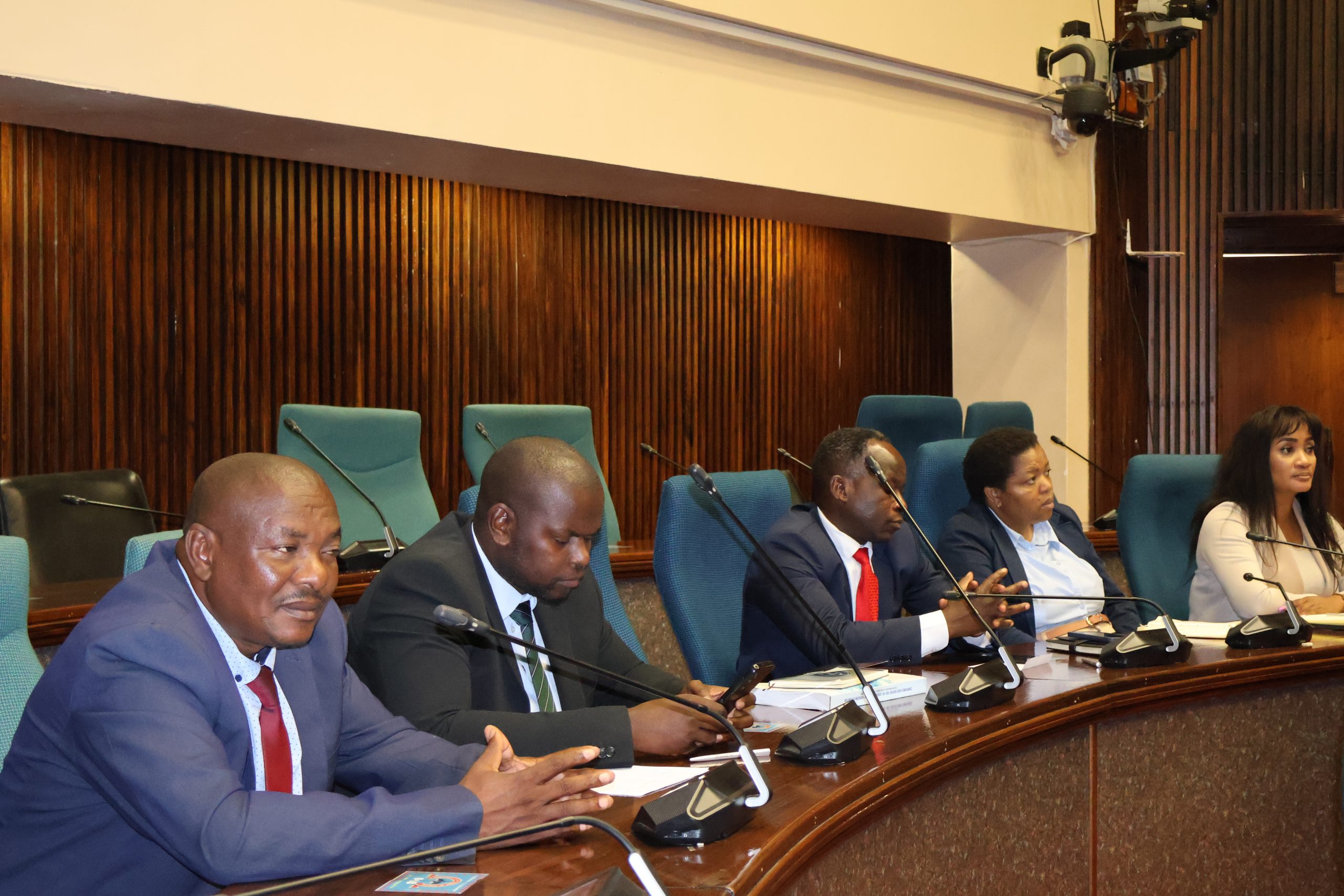 Members of Parliament follow proceedings during the loan bills debate.
By Kwanele Dhladhla
The Eswatini Water Services Corporation (EWSC) came under fierce attack in the House of Assembly as legislators criticised the parastatal for its high salaries, expensive staff uniforms, and sleek motor vehicles, while Emaswati continue to endure rising water tariffs for access to the essential service.
A heated debate arose during deliberations on a proposed additional loan negotiated by Minister of Finance Neal Rijkenberg from the International Bank for Reconstruction and Development (IBRD, also known as the World Bank) on Wednesday.
The loan, not exceeding US$8 million (E137.3 million), has been earmarked for the financing of the Eswatini Water Supply and Sanitation Access Project, a flagship initiative targeting underserved communities in the Shiselweni Region.
Motivating the loan, Rijkenberg explained that the government, through EWSC, was implementing a project to expand access to clean water and sanitation for rural households, schools, health centers, and informal settlements.
However, he said escalating costs, driven by inflation, exchange rate fluctuations, and unforeseen factors, had created financing shortfalls that require additional resources to complete water supply infrastructure works.
“The loan is highly important to ensure that we drive the agenda of access to clean water. EWSC is better suited to implement the project than any other institution, based on a thorough analysis. The loan will be serviced by the state and will not add to the cost of water for the public,” Rijkenberg explained.
Yet, MPs seized the opportunity to vent their frustration at what they described as EWSC’s mismanagement and extravagant expenditure.
According to the corporation’s 2024 annual report, employee benefits expenses rose to E166.9 million from E158.4 million in 2023, an increase of E8.5 million.
The cost of corporate gifts surged from E155,198 to E695,312, staff uniforms skyrocketed from E8,309 to E1.4 million, and management car travel expenses totalled E10.3 million. The report states that there were 550 employees as of 2024.
Nhlambeni MP Manzi Zwane described EWSC as a ‘monster’ that ordinary people could no longer afford.
“Most of the money we pay goes to salaries and luxurious uniforms, even tracksuits. It seems EWSC is now a cash cow, spending willy-nilly on lucrative contracts, while Emaswati struggle with tariffs,” he said.
Lobamba MP Michael Masilela echoed the criticism, saying the corporation appeared to be spending lavishly with little regard for the impoverished.
“Tariffs are crippling households and the business community. EWSC must embrace transparency and consider reducing fees, instead of hiking them continuously,” Masilela argued.
Some legislators, however, supported the loan but insisted on strict oversight. Zombodze Emuva MP, Ntando Mkhonta, stressed the importance of improving water connections in Shiselweni and urged colleagues to visit the region to witness the dire need.
“Yes, the loan should be approved, but accountability is essential,” Mkhonta submitted.
Mafutseni MP Sabelo Mtetwa highlighted governance concerns, urging the minister to ensure competent appointments to parastatal boards.
“Cabinet ministers should not appoint their friends to boards.
We must have professional oversight. And pre-paid meters should be rolled out faster, so people pay only for what they use,” he stated.
Nkomiyahlaba MP Mduduzi Dlamini pressed for a stronger corporate social responsibility drive, criticising the high salaries of senior managers while junior staff faced retrenchments.
Mayiwane MP Sicelo Dlamini dismissed the loan as offside, claiming it would only benefit a few.
“EWSC keeps raising tariffs but is not taking money back to the people. Rural water should be prioritised instead,” he said.
MP Sabelo Ndlangamandla also opposed the loan, citing exorbitant tariffs and poor infrastructure maintenance.
“If pre-paid meters had been fully rolled out, I might support this loan. But as things stand, I cannot,” he argued.
Manzini Region MP Thandeka Mavuso questioned how many schools and communities would benefit from the E137.3 million and challenged EWSC to consider public-private partnerships to improve efficiency.
Rijkenberg outlined that the state would repay the loan in 40 semi-annual instalments, beginning after a five-year grace period. The financial terms include interest at a floating base rate plus a variable spread, a front-end fee of 0.25 per cent of the loan amount, and a commitment charge of 0.25 per cent per annum on the undisbursed balance.
He acknowledged public frustration over tariffs but insisted that no entity could operate without covering inflation costs.
He added that pre-paid meters were already being rolled out, though at a gradual pace.
Meanwhile, water tariffs have continued to rise. Effective April 1, 2025, households consuming 10,000 litres (10 cubic metres) of water now pay E189.06, up from E181.79 the previous financial year, a four per cent increase authorised under the Fixation of Water and Sewage Tariffs Regulations, 2024, issued by Minister of Natural Resources and Energy Prince Lonkhokhela.
Finance Portfolio Committee Chairperson and Lobamba Lomdzala MP, Marwick Khumalo, said whether the loan would be approved remained undecided.
“Management of EWSC must address the concerns raised by MPs. If approved, it will be tabled in the House on Thursday,” he explained.
SOME EWSC COSTS IN NUMBERS:
Employee benefits expenses; E166.9 million (2024)- E158.4 million (2023) up by E85 million
Corporate gifts; E695 312 (2024)- E155 198 (2023) up by E540 114
Board fees; E331 393 (2024) – E264 863 (2023) up by E66 530
Staff uniforms E1 440 125 (2024)- E8 309 (2023)
Foreign Travel Allowances E1 425 274 (2024)- E1 178 432 (2023) up by E246 842