















I Blew It: Inside the Life of a Woman Who Lost Everything to Online Gambling

By Delisa Magagula
The house always wins. That is how 33-year-old *Sihle Lukhele sums up the past two years of her life, years that took her from financial stability to debt and regret after losing about E200 000 to online gambling.
Lukhele, an HR practitioner in the private sector, started gambling casually last year. What began as a few small bets on Mulasport games quickly escalated into daily wagers on a popular online gaming platform.
She said the game’s fast pace and the ease of betting through her phone made it seem harmless at first.
Lukhele mentioned that she started off by betting on games, crash games, until she found her ‘niche’ on the popular aviator ‘Indiza’.
“I would win, and then double my stake, thinking I could win again. Sometimes I did, but I never stopped in time. I always thought the next round would bring the big one,” she said.
By mid-2024, Lukhele’s winnings had turned into losses. She sold her car to recover what she had lost and began missing rent payments.
She defaulted on her child’s school fees and eventually moved from a three-bedroom house to a single-room flat in Mbabane.
“I used to have everything planned out: savings, good credit and my own car. Now I’m taking public transport, I haven’t bought clothes for myself in months and every salary goes straight to paying debts,” she said.
She estimates her total losses at about E200 000, money that had once been her safety net. Part of the funds she used for gambling had come from her personal savings and short-term loans.
Some of the winnings had gone towards useful expenses, including paying family medical bills and upgrading her home’s internet connection. But the losses outweighed all of it.
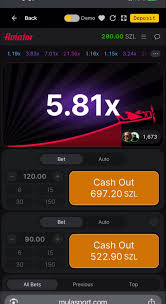
“I’d justify it by saying I was helping family quietly. But in the end, I was just feeding the cycle. It took me a lot of money to realise that, the house always wins,” said Lukhele.
Her story mirrors a growing pattern in Eswatini’s expanding online gambling market. The Ministry of Tourism and Environmental Affairs reported that bookmakers contributed over E9 million in levies to the state in the 2023/24 financial year.
The number of registered online gaming users increased from approximately 220,000 in 2023 to 385,000 in 2024, a 75% rise. While these numbers reflect a booming digital leisure industry, they also point to rising personal risks.
The ministry acknowledged that the surge has drawn participation from unemployed youth and working-class adults alike, many of whom gamble on smartphones.
Dr Thabsile Maseko, a clinical psychologist based in Mbabane, said online betting’s design can make it addictive. She further mentioned that winners should know when to stop.
“The speed and accessibility of online platforms keep the brain in a constant loop of anticipation and reward,” she explained.
“People experience dopamine highs from small wins and then chase that feeling when they lose. For some, it becomes a form of escape or stress relief, but it can spiral into compulsion,” said Maseko.
She further emphasized that the system was designed to benefit the developers. She said Lukhele’s case reflects common behavioural cues, winning early, increasing bets, and rationalising losses.
“The illusion of control is powerful. Players believe that strategy or timing can change outcomes, when in reality, the odds are designed for the house to profit,” said Maseko.
Meanwhile, Economist Sibongile Kunene said the E9 million collected from bookmakers is an indicator of a growing economic segment that requires careful regulation.
“Eswatini’s gambling market is still small compared to South Africa’s R75 billion industries, but its growth rate is among the fastest in the region. That means more money circulating through informal and digital channels, and a higher risk of consumer indebtedness,” said Kunene
She further said that while the industry generates state revenue, it also exposes households to new financial vulnerabilities.
“Most gamblers are using disposable income that doesn’t exist. When you combine easy digital access with limited financial literacy, the social cost becomes visible in stories like Sihle’s story,” she added.
According to the ministry’s report, online gaming operators in Eswatini, including local platforms such as MulaSport, eBet, 8Bet, and DiskiBet, have expanded their customer bases rapidly since 2023.
About one in four citizens has registered for an online gaming account, and the majority of players are aged between 18 and 35.
The Eswatini Gaming Board has confirmed that four licences have been approved, with more under review following new legislation passed in late 2025 to legalise and regulate online gambling.
Under the new framework, an online casino licence costs E1 million, and operators are required to implement responsible-gaming measures.
“Everything happens in seconds. You lose E2 000, and with one tap, you’re betting again. When I tried to stop, I would still log in just to ‘check odds,’ but I’d end up betting,” said Lukhele during the interview
Her turning point came in early 2025 when her child was home due to unpaid fees.
“That was the day I realised I had lost control. I looked at my account and there was nothing left,” she said.
Lukhele began therapy after being referred by a friend. She now attends weekly counselling sessions aimed at managing compulsive behaviour and financial recovery.
Her therapist said that rebuilding from gambling loss involves more than financial discipline.
“It’s about re-establishing self-worth and control. Many clients carry shame, but acknowledging the addiction is the first step,” she said.
Maseko further said cases like Lukhele’s underline the importance of responsible-gaming programmes.
The Board confirmed that Eswatini’s Gambling Act of 2022 already set the minimum gambling age at 18 and imposed penalties for unlicensed operations. The 2025 amendments extend those protections to digital platforms.
Lukhele said her gambling often began late at night after work. The games were easy to access, with colourful graphics and instant payout notifications.
“It gave me a rush, I’d tell myself I could quit after one more round, but that round would turn into five,” she confessed.
When she did win, sometimes E10 000 or more, she felt in control again. But the wins led to higher stakes. Her loans came from credit facilities and friends.
Within months, she was juggling repayment plans at high interest rates. She also fell behind on rent and electricity bills.
“I used to think only men got addicted to gambling. Now I know it doesn’t choose. You can have a good job, a degree and still lose everything if you don’t stop in time,” she said.
Financial adviser Lindokuhle Dlamini said cases like Lukhele’s are becoming more frequent as mobile betting spreads.
“People underestimate how quickly small wagers accumulate. The average player may spend E200 a day, but over a month, that’s E6 000, equivalent to rent or school fees. Once you fall behind, you borrow to keep up, and the cycle repeats,” he said.
He added that financial institutions are beginning to see gambling-related defaults reflected in consumer credit data.
“You’ll notice delayed loan repayments and increased short-term borrowing. It’s a growing credit-risk signal,” he said.
Today, Lukhele’s priorities are different. She has joined a small support group run by a local church, where former gamblers share coping strategies. She keeps no betting apps on her phone and limits her use of mobile money accounts.
“I deleted everything. If I feel tempted, I call my sister or go for a walk. The urge doesn’t just disappear, it fades slowly,” said Lukhele.
She said therapy has helped her understand that gambling filled an emotional gap rather than a financial one.
“I used to play when I felt lonely or stressed. Now I’m learning to sit with those feelings instead of escaping them,” she said. Her goal is to repay her debts within two years and eventually buy another car.