
















Adultery leaves wife homeless as Umphakatsi strips home

By Delisa Magagula
Accusations of adultery have spiralled into a public domestic conflict in which a woman’s home was vandalised and stripped bare under the watch of her in-laws and the local Umphakatsi.
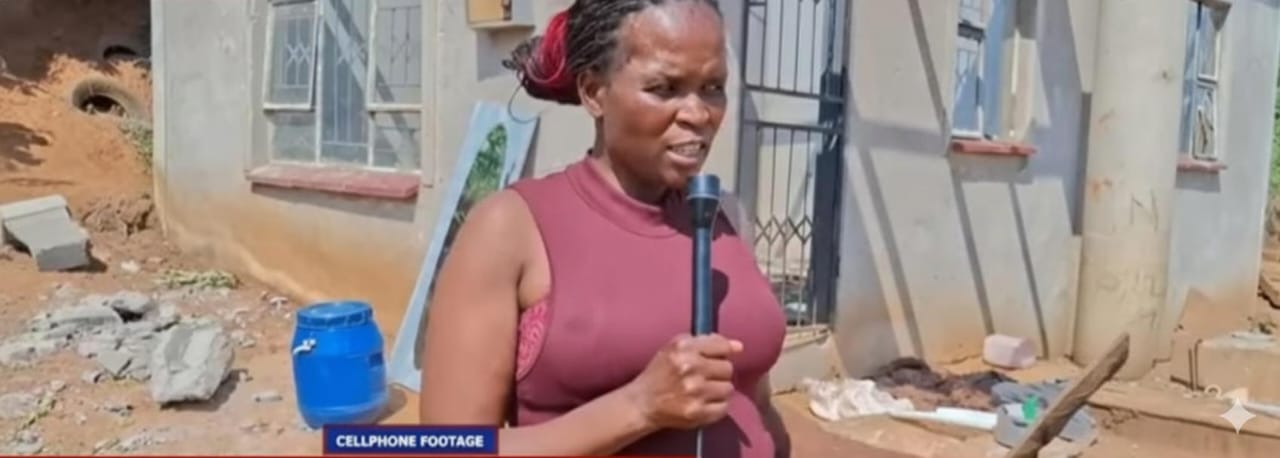
Thirty-eight-year-old Winile Nhleko revealed her marital home was forcefully cleared out last Saturday afternoon by a group that included her husband Thulani Nhleko, his relatives and members of the traditional authority.
She said her furniture, household goods and personal items were taken while she and her two young children watched in shock.
“They told me the home was now under the Umphakatsi and that I no longer had a place here. They shouted at me and called me names in front of my children,” said Winile.
The dispute, according to both families, stems from accusations of infidelity that have divided the marriage and drawn in traditional leaders.
While the husband insists his wife has been repeatedly found with another man, Winile denies ever being unfaithful and says her husband’s renewed relationship with his former partner mother to one of his children is the real cause of the fallout.
Witnesses from the area say the incident began when vehicles arrived at the Nhleko homestead carrying the husband’s relatives and other men linked to the Umphakatsi.
Inside the house, Winile says she was ordered to sit quietly as the group moved through rooms, removing furniture and household appliances.
“They said everything belonged to the family because the house was built under my husband’s name,” she said.
Neighbours who requested anonymity said they saw the group loading items into vehicles.
“It looked like an eviction, there was no police around, only family and the men from the chief’s kraal,” said one neighbour.
When reached for comment, Thulani Nhleko confirmed that the incident took place but denied it was vandalism. He said the home was part of his late wife’s property, not Winile’s, and that the Umphakatsi had ruled that the structure belonged to his family.
“She has been found several times with another man. The Umphakatsi knows this matter. We followed the right channels and were told the home must come back to the family,” he said.
Asked about his alleged reconciliation with his former partner, Thulani declined to elaborate, saying only, “My focus now is to restore order in my home and family.”
A senior representative of the Umphakatsi confirmed to this publication that the traditional authority was aware of the matter.
“This is not a new case.
The matter has been before us several times. We know about the removal of property, and it was part of resolving a family dispute,” said the representative.
However, the official did not provide documentation or a written order authorising the seizure of household property.
Despite the incident, no case has been filed with the Royal Eswatini Police Service (REPS). Winile says she fears intimidation from her husband’s family and uncertainty over whether the police would intervene in what she has been told is a customary issue.
“I don’t know if I still have rights. They said it’s now in the hands of the Umphakatsi, not the police,” said Winile.
Chief Police Communications Superintendent Phindile Vilakati contacted for comment said no report matching the incident had been filed by Sunday evening.
They reminded citizens that property destruction and assault are criminal offences even on Swazi Nation Land, and that anyone affected should open a case.
Local residents say the scene shocked the neighbourhood. Women’s rights advocates have long warned that customary family disputes can easily escalate into rights violations when not monitored by law-enforcement agencies.
“This case is another example of how women’s security and property rights remain fragile under dual legal systems,” said Eswatini Action Group Against Abuse (SWAGAA) Director Nonhlanhla Dlamini commenting generally on similar cases.
“Even when disputes arise from alleged infidelity, destruction of property or eviction without proper orders cannot be justified,” she added.
Worth noting is that, under Swazi law and custom, family disputes and property matters on Swazi Nation Land fall under the authority of chiefs and their Umphakatsi councils.
However, courts have repeatedly ruled that any eviction or confiscation must follow lawful procedure and cannot rely on self-help measures.
In Dlamini v Shongwe and Others (2018), the High Court ruled that even when a traditional authority has jurisdiction, forceful removal or demolition of property without written orders can be challenged as unlawful.
The judgment cautioned Umphakatsi structures against acting beyond procedural limits.
Legal analysts note that cases like the Nhleko matter demonstrate the tension between tradition and state law, where families resort to customary action while victims remain unprotected by police or civil courts.
In a 2025 case of a widow’s bottle store and grocery building demolished by her area’s chief, who claimed the land fell under his Umphakatsi, was widely reported.
The widow said the chief arrived with machinery and police escort, destroying the structure without a court order. The incident drew public criticism and revived calls for clear boundaries between customary and civil authority.
Observers say the Nhleko case echoes that controversy, showing how quickly personal disputes can escalate into property loss when traditional systems act unilaterally.
So far, no written order has surfaced authorising the seizure of the Nhleko home, and no law-enforcement body has intervened.
Legal experts say such a situation leaves victims in a vacuum unable to seek help from police while being told the matter is under customary control.
Human rights lawyers argue that both systems civil and traditional must coordinate to prevent abuse.
“When traditional authorities make rulings that affect property, especially involving women and minors, there should be documentation and police presence,” said attorney Siphesihle Mavuso, commenting broadly on the legal principle.