
















Inkhosikati Make LaNgangaza urges collective action for universal palliative care
By Siphesihle Dlamini
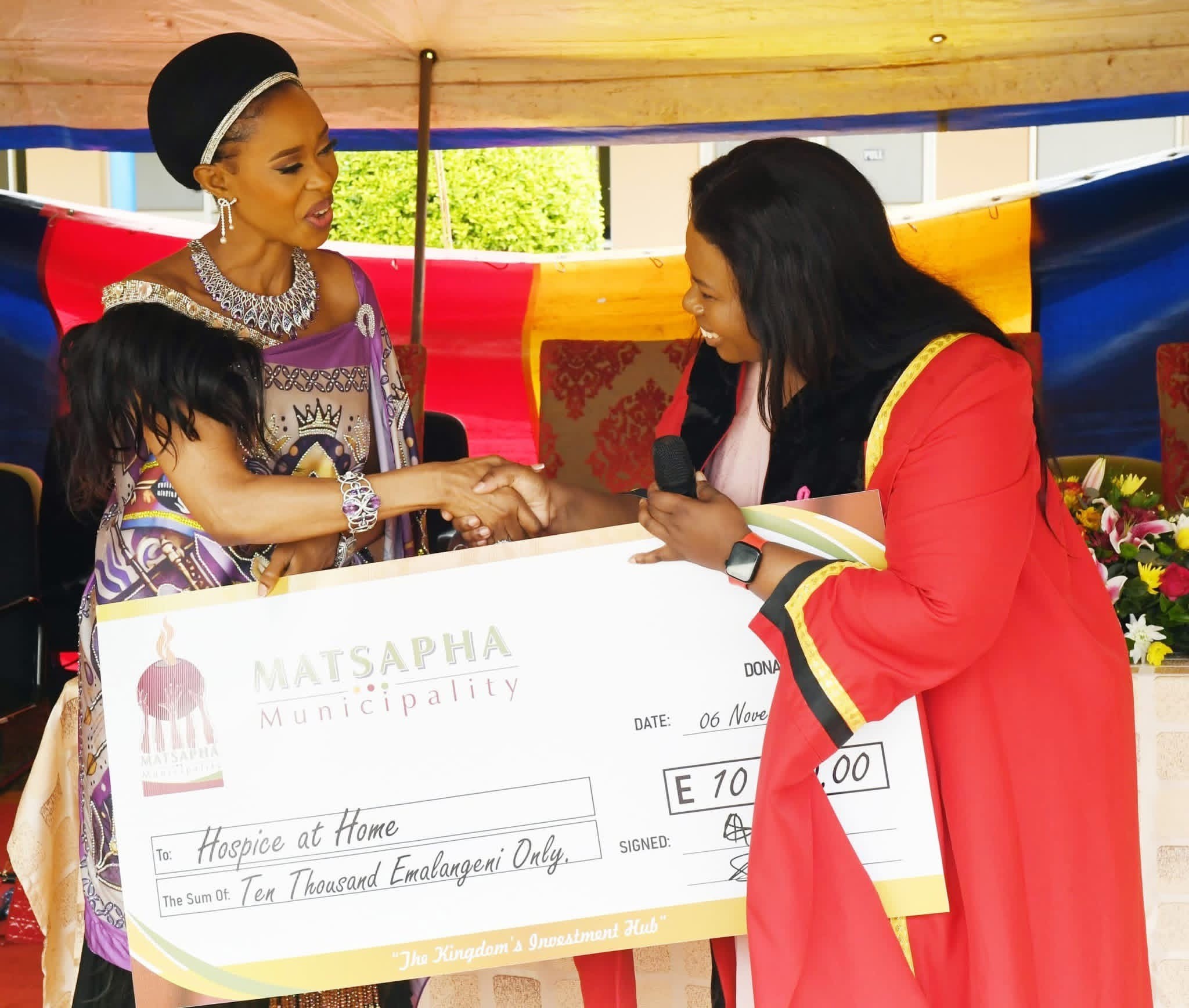
The growing demand for palliative care in Eswatini, driven by chronic diseases such as cancer, diabetes, and HIV, has prompted a powerful call for collective responsibility from Inkhosikati Make LaNgangaza.
Speaking at the commemoration of Hospice and Palliative Care Day, held under the global theme “Achieving the promise: universal access to palliative care,” Inkhosikati emphasised that palliative care must no longer be the burden of a single organisation but a shared societal commitment.
Inkhosikati Make LaNgangaza highlighted the urgent need to expand palliative care beyond the current scope managed primarily by the Eswatini Hospice at Home.
She described this year’s theme as a call to action, stressing that “Palliative and hospice care is not a privilege for the few, it is a right for all who face chronic, life-limiting, or terminal conditions.
” Her words underscore the fundamental human dignity that palliative care represents, ensuring that no one suffers unnecessarily and that every individual, regardless of age or circumstance, receives comfort, compassion, and respect.
The Inkhosikati articulated the essence of palliative care as “the assurance that no one should suffer needlessly, and that every person deserves dignity, comfort, and compassion.”
This perspective frames palliative care not merely as a medical service but as a core expression of humanity within healthcare systems.
As the prevalence of chronic illnesses continues to rise, the demand for palliative care in Eswatini is escalating sharply. Inkhosikati Make LaNgangaza pointed out that universal access to such care cannot be achieved by a single institution alone.
“It calls for collective responsibility because we all have a significant role to play,” she said, urging stakeholders across society to unite in addressing this critical healthcare need.
To ensure accessibility, Inkhosikati emphasised the importance of extending outreach to rural and underserved communities, where healthcare services are often limited.
She called for strengthened partnerships and capacity building, alongside investments in human resources such as nurses, caregivers, and volunteers who deliver care directly to patients’ homes.
This community-based approach is vital to reaching those most in need and ensuring equitable care distribution.
Affordability remains a cornerstone of effective palliative care delivery. Inkhosikati Make LaNgangaza stressed the necessity of innovative financing, fundraising, and resource mobilisation strategies to prevent the cost of care from becoming a barrier.
“By doing this, we will lay a strong foundation that values life, dignity, and empathy for the next generation,” she said. This vision aims to build a compassionate nation where future generations can look back and acknowledge the collective efforts made to care for the vulnerable.
In a significant announcement, the Inkhosikati revealed plans for a 35th anniversary fundraising dinner in honour of Eswatini Hospice at Home, scheduled for early 2026.
This event will serve as a platform for individuals, organisations, and corporate entities to contribute to the sustainability and growth of hospice and palliative care services in the country.
The fundraising initiative reflects the ongoing need for community engagement and financial support to maintain and expand these vital services.
The call by Inkhosikati Make LaNgangaza resonates deeply within the healthcare and social sectors, highlighting the intersection of medical care, human rights, and social responsibility.