





Mpumalanga Zwane’s journey from page to purpose
By Siphesihle Dlamini
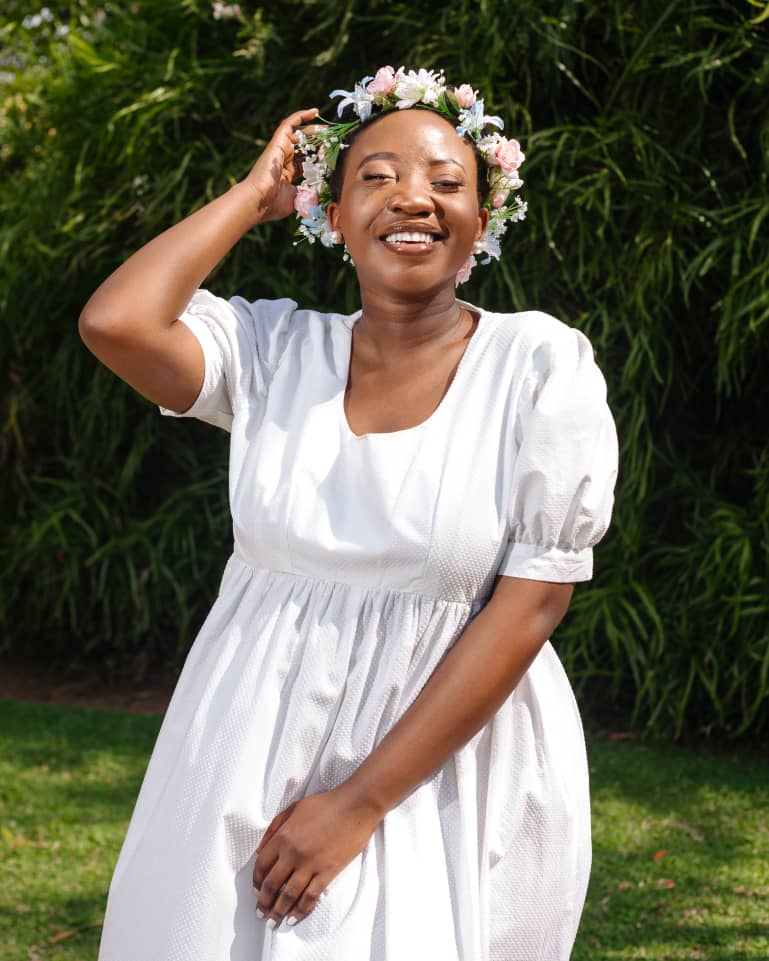
In the quiet intersection between art and social consciousness stands Mpumalanga Zwane, a poet whose words don’t merely rhyme; they reason. They question, provoke, and ultimately heal.
From an early fascination with the arts to her rise as one of Eswatini’s thoughtful poetic voices, Zwane’s journey both reflects and redefines how art can create meaning.
“I have always had an artistic side, and so have my siblings,” she shared. In conversation, Zwane’s words flow as rhythmically as her verses.
“My eldest sister is a poet and writer; the second born did dance, sculpting, drawing, scrapbooks, and blogging; my brother produces beats.” The Zwane household felt like a creative incubator, where cardboard became castles and scraps became stage sets.
She laughed gently at the memory. “We’d all make miniature houses out of cardboard and scraps around the house, put on shows for our parents, whether they liked it or not, and make up songs we’d sing together at the top of our lungs.”
Growing up, Zwane’s creativity found many outlets, drawing, writing, dancing, but poetry didn’t immediately capture her full attention.
“I wrote a few poems here and there,” she admitted, “but it wasn’t something I was into until my brother introduced me to a show called Russell Simmons Presents Def Jam Poetry.”
“It was so enthralling to see poetry being performed like that, the way the poets would make their pieces come alive through their voices and facial expressions. That was my first encounter with spoken word poetry, and I immediately fell in love,” she said.
The very next day, she wrote her first poem meaning not to be read silently, but performed, alive and breathing. “I started imagining how the emotions would progress, twist, and turn through the poem,” Zwane explained.
Initially, she wrote simply for the love of language, “beautiful poems that lacked meaning,” as she put it, but that soon changed when she realised the power her words carried in performance.
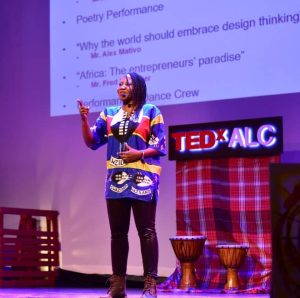
“When I performed, people would listen, and it began to concern me what type of messages I put out into the world.” If the arts shaped Zwane’s creative identity, displacement sharpened her perspective.
“Part of my turn towards more meaningful poetry,” she explained, “was because, in the middle of Grade 11, I had to move to South Africa to complete my education.”
Born and raised in Eswatini, Zwane was used to cultural dominance, “where we share one culture, language and history,” she said. But suddenly, she found herself in a racially charged environment.
“It was strange. Different yet eye-opening.” There were jokes about Eswatini, innocent on the surface but carrying undertones of ignorance.
“A few comments rubbed me the wrong way,” she recalled. One day, a friend made a joke about Ethiopia, and she laughed until it hit her.
“I realised how hypocritical it was of me to be offended at jokes about my country yet so readily join in about another,” she said. That moment of self-reflection marked a deep shift.
“It made me wonder what it was about my education as a human that made me think so lowly about other African countries I had never seen or known much about,” she continued.
“It inspired me to write pro-African poetry. It also influenced my choice to pursue a degree in Social Science at a pan-African institution and enter development work,” she explained.
“From my poetry, I got to interrogate some of the narratives around identity that shape us as Africans, as women, and as humans overall.”
For Zwane, poetry is more than performance; it’s a purpose.
“Poetry taught me how to think more critically about the world around me and gave me purpose,” she reflected. She believes her civic work and her poetry are intertwined.
“Every job and opportunity I have pursued was very intentional and contributes to the causes that are dear to my heart,” she said.
Through her art, Zwane channels her activism, taking the “words” from the stage and translating them into “work” in communities. “I can say poetry has inspired a lot of who I have become and given my life more meaning,” she said earnestly.
“I am inspired to shape a better tomorrow where things like where I am from, my gender, my skin colour will not be a barrier to me becoming my most full self and helping others do the same.”
Zwane’s artistic vocabulary is rich, drawn from both global and local voices. “It was more a collective of poets,” she explained. “Def Jam Poetry showcased a wide variety of both slam and spoken word poetry.
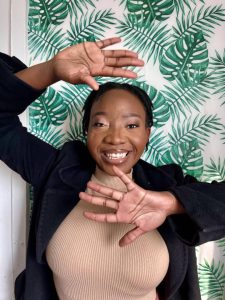
I watched a full six seasons in one day; I was so enamoured.” Locally, she draws inspiration from a growing wave of Eswatini poets. “I’m inspired by poets like Mocats, Qibho, Siya Dlamini and Christian Maz.
I love how they present themselves and turn their work into a full experience,” she said. Her admiration also extends to emerging voices. “I love Annazide’s work, dynamite in a small package! I look forward to seeing how she evolves.”
Her own work, however, gravitates toward specific themes,” Pan-African and feminist poetry,” she said plainly. These twin pillars, continental pride and gender consciousness, anchor much of her writing.
Describing her creative process, Zwane remarked, “Often, my poems are born from a series of contemplations, things I observe, read, conversations I have. A line or a thought might linger in my mind a while longer,” she said.
“It’s hard to describe. I’ll almost feel the poem, the way it will sound on stage, and just allow myself to write.”
Her approach is deeply intuitive. “As I look back and read the poem aloud, I edit, see what might make more sense, what feels better,” she explained.
“Other times, I write because I wonder what it would look like to write about a particular thing, but in a new way. I’ll play with that thought a bit, then just start writing.”
Though her roots are deeply Swazi, Zwane’s poetry is predominantly in English. “That is something I have not really done yet,” she admitted when asked about writing in SiSwati. “I find I think better in English, so my words flow more easily that way.
” Yet she acknowledges the potential of local languages in artistic expression, seeing in them a future she may one day explore. When asked about being a female poet in Eswatini, Zwane offered a nuanced reflection.
“It’s a bit of a paradox because I do not necessarily think of myself as a ‘woman writer,’ but a writer,” she said. “Yet I understand very intimately how being a woman has an impact on how I am experienced and some of the perspectives I, and others, may have around gender norms.”
She is optimistic about the local poetry scene. “As poetry evolves in the country, I’m seeing more bold, young voices come up and greater use of social media to spread our art,” she observed.
“The variety of poetry shows and open mics is growing, it’s a really interesting space.” Zwane praised several initiatives creating platforms for poets and creatives. “Artists in Eswatini have done well to start curating spaces for ourselves,” she said.
“I applaud the great work Yini Loku has been doing to carve out space for artists in the country.”
She also highlighted collaborations that have rejuvenated the local arts scene. “We also see how some came together to reclaim the Theatre Club and really promote the interests of artists,” she noted.
And in a nod to international partnerships, Zwane expressed gratitude for the American Embassy’s creative studio initiative. “It’s free, it’s got amazing equipment, and it’s available to all who want to produce high-quality work,” she said.
Zwane’s work has already crossed borders. “Internationally, that’s where knowing who one is and a great work ethic come into play,” she advised. “There is space for Eswatini art on a global stage, we just need to bet on ourselves.”
Her first international project came through digital collaboration. “Through following other writers online and engaging with their work, I produced my very first video production for my poem Blxck, which was produced by a team in Rwanda,” she shared proudly.
“We did all that remotely. It was a fun project that I am still proud of to this day.”
Among her many performances, one stands out. “I once performed my poem I Love My Hips,” she recounted. “There was a young woman in the audience who was bulimic. She later told me that the poem gave her the courage to love herself.
Whenever she had the urge to throw up, she would think of those words and talk herself off the ledge.”
“There have been quite a few moments like that, but this one stands out,” she said. When asked about her future, Zwane’s eyes sparkled with both confidence and curiosity.
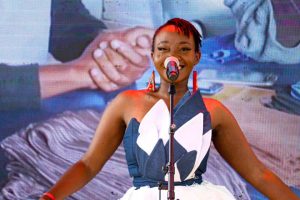
“In the next few years, I look to dig deeper into my own voice as an artist, literally and figuratively,” she said. She is also exploring a fusion of her two passions.
I am figuring out how to merge my love for abstract art and drawing, which was my first love, with my love for poetry.”
To Zwane, art is not mere entertainment, it is preservation. “Literary work and art play a vital role in elevating any culture,” she asserted. “It gives the culture dignity, form, and allows it to transcend time.
” She believes that every poem, story, and song carries within it a lesson, a memory, a value. “We pass down so much knowledge through art, in our stories, songs, and poems, they carry forward our values and ways of being as a people,” she said.
“The more artists differentiate themselves, the more we get to experience the full breadth of what it means to be Swazi.”
Her message to young women writers is both practical and profound. “Move beyond being inspired by a particular artist and discover your own voice,” she advised.
“It’s okay to imitate others, but only to a certain degree. It’s in discovering your own voice that you can truly find your own space in this growing industry.” She also urged them to explore different forms of poetry.
“Not all poetry is created to be performed,” she reminded. “There is a lot of opportunity in the written word as well, possibly even more profitable opportunities.”
As for what’s next, Zwane teased that there is more to come. “I’m still trying to figure out how to execute it,” she said with a smile, “but emaSwati can look forward to a bit more work from my side.”
Through her reflective tone and powerful storytelling, Mpumalanga Zwane reminds us that poetry is not just the art of words, it is the art of understanding.
She writes not to escape the world, but to reshape it, one poem at a time. In her own words, “I am inspired to shape a better tomorrow where things like where I am from, my gender, my skin colour will not be a barrier to me becoming my most full self.”