
















“Nawe Uliphoyisa” in National Anti-Crime effort
By Thokozani Mazibuko
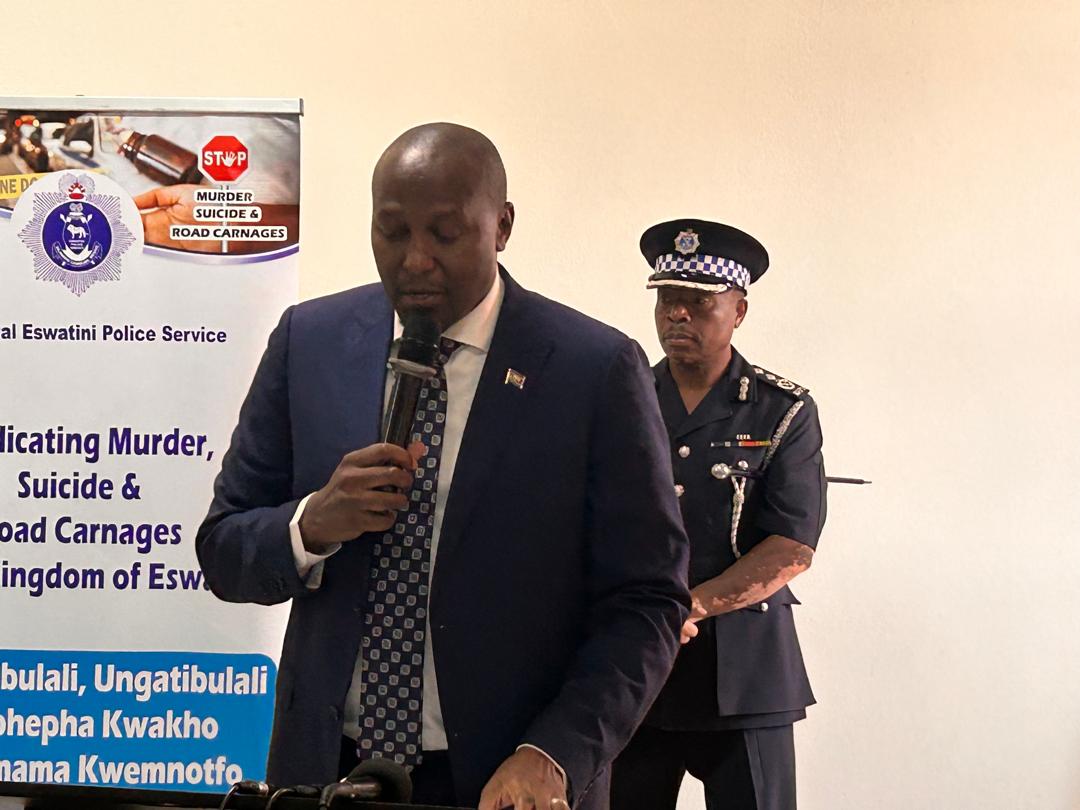
Prime Minister Russell Mmiso Dlamini has called for the revival of the once-popular community policing campaign “Nawe uliphoyisa” (You are also a police officer), stressing that the fight against crime in Eswatini must become a shared responsibility between citizens and law enforcement.
Speaking at The George Hotel on Monday during the opening of a workshop for the Prime Minister’s Office Parliamentary Portfolio Committee on the Police Regulations 2025,
Dlamini said the government was determined to restore trust between the public and the Royal Eswatini Police Service (REPS) by reviving civic cooperation in combating crime.
“The fight against crime cannot be left to police officers alone,” the Prime Minister said. “Every citizen has a role to play. The spirit of ‘Nawe uliphoyisa’ must live again because community vigilance and cooperation are powerful tools for peace and safety.”
Community as the first line of defense
Dlamini explained that the campaign, which gained traction in the early 2000s, helped strengthen partnerships between communities and the police.
It encouraged citizens to take an active role in reporting criminal activities, safeguarding neighborhoods, and assisting investigations.
He noted that while modern policing continues to evolve through legislation and training, grassroots engagement remains essential in ensuring security across the kingdom.
“A safe nation starts with vigilant communities,” he said. “When citizens see themselves as part of the solution, criminals lose their hiding places.”
The Prime Minister added that Eswatini’s demographic and technological changes require a new version of Nawe uliphoyisa one that embraces both traditional neighborhood watch systems and digital citizen reporting mechanisms.
Dlamini said the 2025 Police Regulations would not only define internal discipline and welfare within the service but also enhance transparency and public accountability.
He emphasized that a collaborative approach where police and the public work hand-in-hand was critical in achieving lasting security.
“The police must be seen as partners in development, not as enforcers in isolation,” he said.
“We must bridge the gap between officers and the communities they serve. The days of mistrust must give way to mutual respect and cooperation.”
The Prime Minister further urged Members of Parliament to lead by example in promoting civic responsibility and crime prevention initiatives in their constituencies.
“Leadership at community level is vital,” he said. “When MPs champion citizen involvement, it inspires unity and confidence in our policing system.”
Public Reaction and Broader Context
Security experts welcomed the Prime Minister’s remarks, noting that reviving Nawe uliphoyisa could help tackle rising incidents of theft, gender-based violence, and substance-related crimes that often go unreported.
Community policing initiatives have been credited worldwide for reducing crime rates through public trust and local intelligence. Dlamini’s call aligns with a growing continental trend emphasizing citizen-centered policing models across Africa.
The workshop, organized by the Prime Minister’s Office, aims to give parliamentarians an in-depth understanding of the Police Regulations 2025, which operationalize the Police Service Act of 2018.
As deliberations continue, the government’s message is clear: safety in Eswatini depends not only on the strength of its police force but also on the commitment of its people.
“Nawe uliphoyisa is not just a slogan,” Dlamini concluded. “It is a reminder that peace and security begin with each one of us.”