



DPM calls for enhanced disability inclusion

By Siphesihle Dlamini
Deputy Prime Minister Thulisile Dladla has called for strengthened efforts to advance disability inclusion, underscoring its vital role in driving Eswatini’s socio-economic progress.
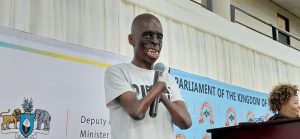
The DPM said this during the 2025 International Day of Persons with Disabilities commemoration at the Mavuso Trade Centre.
The Deputy Prime Minister underscored that the government’s commitment is not symbolic but concrete, aimed at opening doors, creating opportunities, and ensuring that every person with a disability can fully participate in mainstream development.
She highlighted the strides Eswatini has made in mainstreaming disability and inclusion across all sectors, emphasising that these efforts are foundational to the nation’s growth.
Quoting Neil Marcus, an actor and playwright influential in shaping disability culture, she reminded the audience that “Disability is not a brave struggle or ‘courage in the face of adversity.’ Disability is an art
. It’s an ingenious way to live.” Dladla stressed that persons with disabilities are not a separate or marginalised group but are integral members of society, mothers, fathers, siblings, entrepreneurs, thinkers, students, employees, and community leaders.
She asserted that removing barriers and opening opportunities does more than uphold justice; it unlocks the talents and energies essential to driving national development.
Reflecting on the government’s progress, she pointed to the enactment of the National Disability Act and the development of the National Disability Plan of Action as critical milestones.
However, she cautioned that laws and plans alone are insufficient without accompanying concrete steps, including adequate budgetary allocations, effective implementation, and accountability mechanisms.
To translate the theme of fostering disability inclusion into measurable socio-economic progress, Dladla outlined four interlinked priorities.
First, she emphasised inclusive education and skills development as fundamental, describing education as “the great equaliser.”
She called for ensuring that every child with a disability learns in an accessible environment equipped with assistive devices, trained teachers, and early-intervention services, while also expanding vocational and digital skills programs for adolescents and adults to access decent employment in a rapidly evolving economy.
Second, she highlighted employment and economic empowerment as essential for dignity and independence, pledging to strengthen incentives for the private sector to hire persons with disabilities, promote social enterprises and entrepreneurship, and open public procurement opportunities for disability-led businesses.
The government will collaborate with employers, unions, and training institutions to eliminate discriminatory hiring practices and provide reasonable accommodations on the job.
Dladla further addressed the critical need for accessible services, infrastructure, and information, noting that physical, communication, and digital barriers continue to prevent full participation.
She insisted that national infrastructure programs, from schools and clinics to transport and public buildings, must meet accessibility standards, and public services must be available in accessible formats supported by digital platforms.
“Accessibility is not optional; it is essential infrastructure for inclusion,” she affirmed.
Again, she spoke to social protection and targeted support, recognising the necessity to protect the most vulnerable while pursuing inclusion in education and employment.
Disability-sensitive social protection schemes must provide adequate, dignified support and link recipients to pathways for education, rehabilitation, and employment.
Caregivers and families should also be supported with respite, training, and financial assistance to help their loved ones thrive.
To achieve these priorities, the Deputy Prime Minister stressed the importance of mainstreaming disability across all national plans and budgets, ensuring that disability inclusion is visible in sector plans such as health, education, transport, and employment, and reflected in the national budget.
She emphasised that without budgetary allocations, progress cannot be sustained. Strengthening data and monitoring was another critical commitment, with the government pledging to invest heavily in disaggregated data collection, administrative systems, and community feedback mechanisms designed with the participation of persons with disabilities.
Furthermore, Dladla expressed that the principle of “Nothing for us without us,” insisting that organisations of persons with disabilities must be partners in decision-making at every level, from national policy to local implementation, as their lived experience provides the best guidance on what works.
Acknowledging the indispensable contributions of partners including UN agencies, civil society, faith-based organisations, families, and the private sector, Dladla assured that the government will be bold in policy, rigorous in implementation, and transparent in accountability.