By Delisa Magagula
For years, thousands of young Swazis have left university with degrees but no jobs to match them, many ending up in low-pay work, call centres, or leaving the country in search of better opportunities.
Now, the government says it is putting its money where its mouth is, launching a E1.2 billion National Human Resource Development Policy aimed at closing the gap between skills and jobs, and giving graduates a fair shot at a future in their own country. 
Eswatini has unveiled the E1.2 billion plan to tackle one of its biggest economic headaches, the mismatch between what young people are studying and the jobs available in the country.
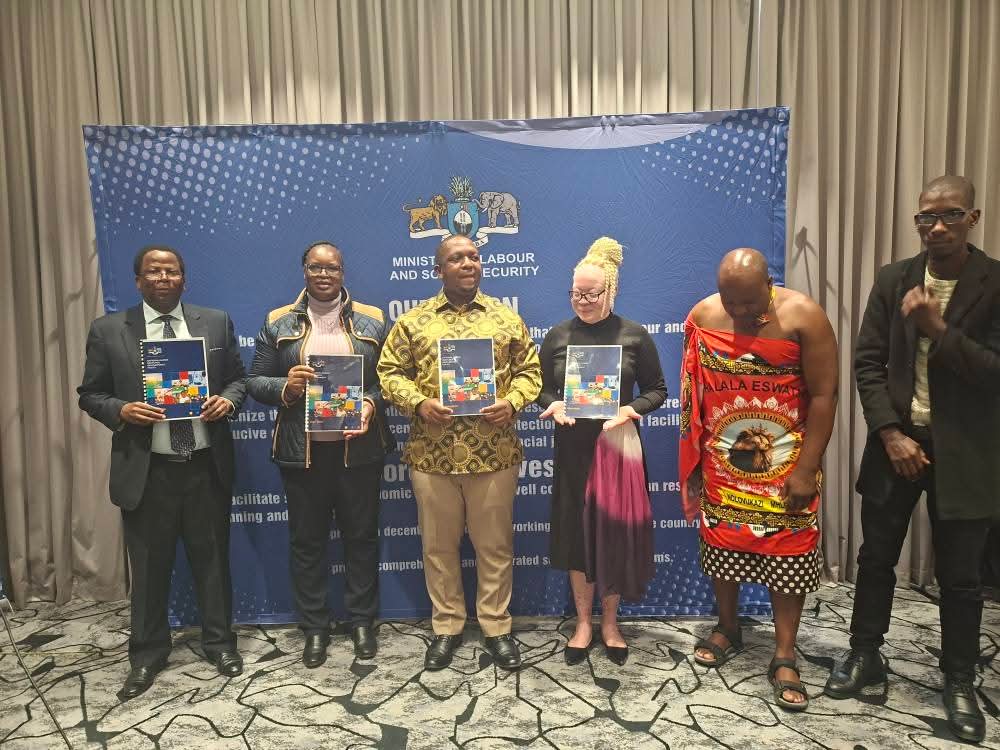
The National Human Resource Development Policy (NHRDP) 2024–2030, launched at the Hilton Garden Inn in Mbabane, aims to overhaul the way the country prepares its citizens for the job market.

It was developed by the Eswatini Economic Policy Analysis & Research Centre (ESEPARC) together with the Ministry of Labour and Social Security.
The idea is to channel funds into targeted skills development, ensuring the money is not just spent on education, but on the right kind of education training that directly meets the needs of the economy.
READ MORE: Eswatini looking to invest in Mozambique energy projects
Minister of Labour and Social Security Phila Buthelezi said the policy was the country’s answer to stubborn youth unemployment, underemployment, and a growing list of graduates who cannot find work in their fields.
“This is not a ministry policy but a national framework that requires collaboration from every corner of government ministries, the private sector, schools, civil society, and development partners. We cannot work in silos,” he said.
Buthelezi said E1.2 billion has been set aside for the policy’s rollout over the next six years, with the bulk of the funds going towards building industry-relevant skills, creating work-based learning opportunities, and supporting entrepreneurship.
The Minister called on the business community to play a hands-on role in shaping the country’s skills base.
“You are the ultimate beneficiaries of a skilled and productive workforce. We need your support, not only in hiring graduates, but in helping us design training programmes, offering internships, and showing us where the real opportunities are,” said the Minister.
He added that companies had long complained about graduates lacking practical skills. Buthelezi mentioned that the policy was their chance to fix it as they cannot do it without everyone’s participation.

The launch came against the backdrop of frustration from young people who have spent years studying, only to end up in jobs unrelated to their qualifications or unemployed altogether.
Many are working in call centres, textile factories, or behind shop tills. Others have left for better opportunities abroad, while some, as the Minister said, have been pushed into the wrong paths, even resorting to scams, because of desperation.
The E1.2 billion policy aims to reverse that trend by creating a tighter link between what students study and the jobs available.
A central part of the plan is the creation of a National Human Resource Development Council (NHRDC), a multi-sectoral body tasked with ensuring ministries, training institutions, and private companies work together.
The council will monitor progress, keep track of spending, and ensure training programmes match the real needs of the economy.
According to Buthelezi, the council will also have the power to convene dialogues with all stakeholders, align efforts, and demand accountability.
“With the NHRDC in place, Eswatini will be better positioned to respond to rapid global changes and proactively shape its development destiny,” he said.
Buthelezi made it clear that the youth were the main focus of the E1.2 billion investment.
“This policy is your inheritance. It is designed with you at its heart. We know the future of Eswatini belongs to you. It will open pathways not only for jobs, but also for entrepreneurship, innovation, and financial independence,” he said.
For many young people, that independence cannot come soon enough. Official figures show that youth unemployment remains high, with thousands of graduates entering a job market that simply cannot absorb them.
ESEPARC chief executive Dr. Thula Dlamini said the policy represented a shift in how Eswatini thinks about education and the economy.
“For years, we have been producing graduates without fully considering if the market can absorb them. This policy forces us to look at the numbers and invest where there is real demand. That means more money for technical skills, more money for entrepreneurship training, and more support for emerging industries,” he said.
Dlamini said the E1.2 billion budget was not simply about spending, it was about spending wisely. The E1.2 billion will be spread across several key areas:
- Skills development and training: funding new and upgraded vocational and technical programmes.
- Work-based learning: paid internships, apprenticeships, and on-the-job training to give graduates real work experience.
- Entrepreneurship support: start-up grants, business mentorship, and innovation hubs for young entrepreneurs.
- Research and data collection: mapping skills demand across sectors to guide training investments.
- Capacity building: equipping educators and trainers with modern teaching tools and industry knowledge.
Officials said the money would come from a mix of government funding, development partner support, and private sector investment.

Some business leaders welcomed the policy but warned that it would only work if bureaucracy was kept to a minimum. One manufacturing executive, speaking on the sidelines of the launch, said the money is there, the plans are there, but they have seen too many projects stuck in red tape.
Others raised concerns about transparency in spending, citing that they have seen large budgets before, but very little to show for them.
READ MORE: Govt creates over 2,000 jobs in 3 months, attracts E30 bln investments
Labour experts say Eswatini’s skills gap is not unique. Many countries in southern Africa face the same challenge: a growing youth population, expanding access to higher education, but not enough jobs in the formal economy.
However, what sets Eswatini’s policy apart, according to Buthelezi, is the commitment to work directly with the private sector from the start, rather than treating them as an afterthought.
The launch marked the start of a six-year implementation period. The first step will be setting up the NHRDC within the next few months. Training institutions will also be asked to review their curricula to ensure alignment with the new framework.
“This is where the hard work begins. A policy is only words on paper until we see the results of graduates in jobs, businesses growing, and young people creating their own opportunities,” Buthelezi said.
He added that the E1.2 billion investment would be wasted if it did not produce measurable change.
For many in the room, the real question was whether this policy could truly turn things around or if it would join a long list of government initiatives that were never fully delivered.
Buthelezi insisted the difference this time was the national buy-in. “This policy belongs to all of us. If we succeed, it will be because we worked together. If we fail, it will be because we did not,” he said.