














Last Day of Countering Disinformation and Promoting Digital Transparency workshop:International Frameworks and Practical Case Studies Shape Eswatini’s Cyber Response
by Ncaba Ntshakala
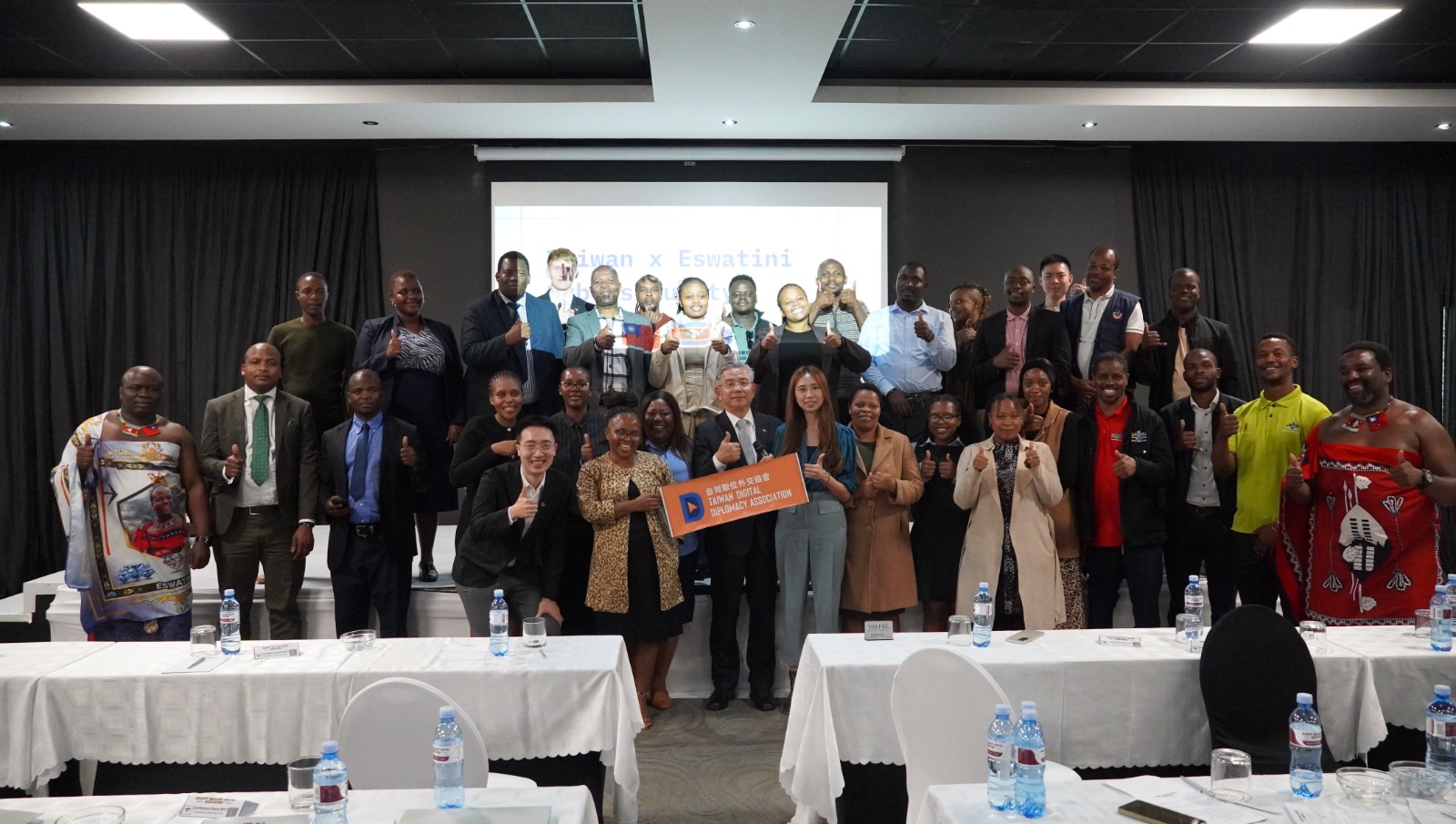
Day three of the three-day Countering Disinformation and Promoting Digital Transparency workshop had highlights on a presentation by Samuel Straw, Head of Research at the Taiwan Digital Diplomacy Association,
who mapped the international legal and policy architecture Eswatini can use to strengthen its cyber defences and counter malign information campaigns.
Speaking to a roomful of government officials, media practitioners and private-sector representatives, Straw framed his remarks around two core messages: international norms matter, and practical, community-centred solutions make those norms work on the ground.
He opened with an overview of United Nations mechanisms; the Group of Governmental Experts (GGE) and the Open-Ended Working Group (OEWG) describing the GGE as the engine of high-level consensus and the OEWG as the inclusive forum where countries like Eswatini can shape global norms on critical infrastructure protection, due diligence and mutual assistance during cyber incidents.
Straw stressed that existing international law already applies in cyberspace: sovereignty, non-interference and human rights protections continue to hold online.
He urged Eswatini to draw on widely recognised instruments such as the Budapest Convention on cybercrime even for states that are not signatories which is to harmonise offences, strengthen evidence collection and facilitate cross-border cooperation.
Technical and governance standards featured prominently. Straw recommended adoption of frameworks like NIST and ISO 27001 to structure national preparedness around the cycle of identify, detect, respond and recover.

He also highlighted the Global Forum on Cyber Expertise (GFCE) as a practical partner for training, toolkits and peer learning.
Again, he illustrated these frameworks with case studies. He cited a UN-led initiative in the Democratic Republic of Congo where trained youth and civil-society monitors detected inflammatory content, fed verified intelligence to authorities and led public corrections and media-literacy campaigns to restore calm.
He also pointed to the EU’s Digital Services Act which is a regulatory tool that compels large platforms to moderate harmful content, publish transparency reports and provide meaningful redress mechanisms.
On regional cooperation, Straw called attention to the AU Malabo Convention and SADC efforts to harmonise cyber laws and strengthen CERT (Computer Emergency Response Team) linkages.
He recommended that Eswatini leverage AfricaCERT and SADC networks for threat intelligence sharing, joint drills and early-warning systems.
In closing, he urged a two-track approach: align national law and policy with international norms, and build domestic capacities from technical teams to media literacy programmes so that detection, verification and public correction can be executed swiftly and transparently.
Participants responded positively, noting the presentation’s blend of legal clarity and practical steps, and reiterated the workshop’s value in building Eswatini’s digital resilience.