





Budget to the people consultations commence
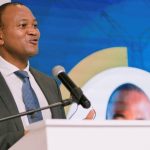
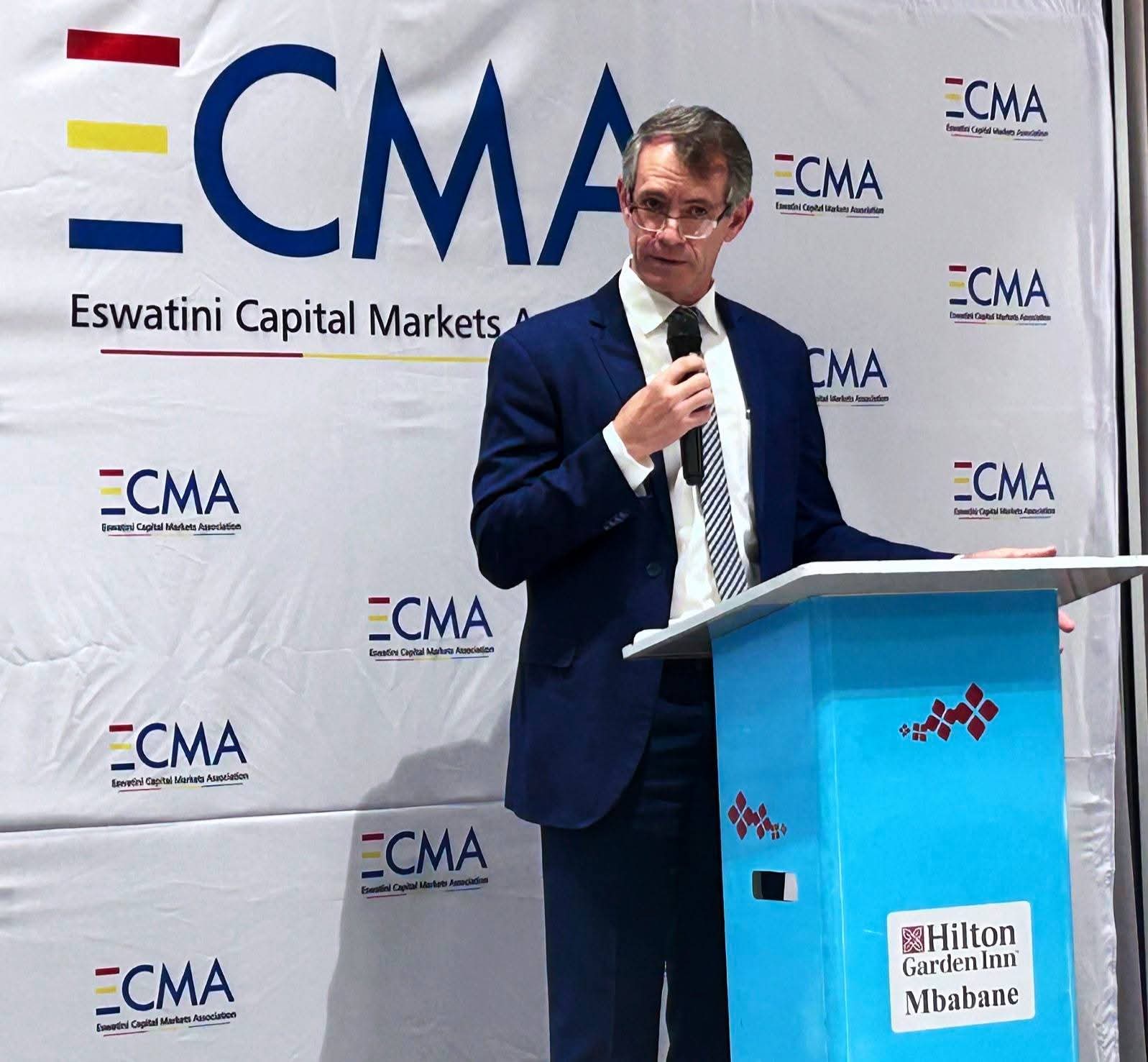 Minister of Finance Neal Rijkenberg
By Delisa Magagula
The Minister of Finance, Neal Rijkenberg, has announced the commencement of the Budget to the People consultation exercise, which is aimed at engaging and sensitizing Emaswati on the national budget process.
He also provided an update on the country’s ongoing anti-money laundering assessments and highlighted possible implications for Eswatini of recent international developments concerning South Africa.
Speaking during his weekly Finance in Focus update, Rijkenberg said the Ministry was beginning its annual budget process by taking consultations directly to the people, in line with promises made during Sibaya.
“As a Ministry of Finance, it’s the time of the year now where we take the budget to the people. It’s the beginning of the budget process in our country, which is a heck of a process to get finalized,” he said.
The Minister explained that last year the Ministry had conducted high-level meetings with stakeholders such as CENSTARs. This year, however, the consultations will go deeper by engaging directly with regional leaders and communities.
He said teams from the Ministry will travel to all four regions of the country, where they will meet with BoTopho, community development teams, and Tindvuna.
According to Rijkenberg, the first round of regional consultations is scheduled as follows:
Manzini Region – September 10
Shiselweni Region – September 11
Hhohho Region – September 12
Lubombo Region – September 17
“These meetings are heavily focused on sensitization. We want to make sure everybody has a deep understanding of how the budget is formulated before we start receiving inputs,” said the Minister.
He added that Emaswati are encouraged to share recommendations even outside of the meetings, either through the Ministry’s official email address (finance@gov.sz) or the website.
“If anybody wants to give input into next year’s budget, they are very welcome to send an email to us. We do take information, and this process is ongoing,” he said.
The Minister expressed confidence that as the consultations continue annually, the national budget will become increasingly reflective of the needs of the people.
Turning to international financial compliance, Rijkenberg said Eswatini was in the process of addressing deficiencies identified by the Eastern and Southern Africa Anti-Money Laundering Group (ESAAMLG), a regional body linked to the Financial Action Task Force (FATF).
He revealed that Eswatini had not performed well in a previous assessment, scoring only 14 out of the 40 required standards, where at least 20 are necessary to avoid being grey listed.
“Eswatini unfortunately only got 14, so we were actually in a bit of trouble and needed to make changes,” he said.
The Minister noted that significant progress has since been made, including the passing of new legislation with strong support from Parliament, Cabinet, and His Majesty the King. Following this, Eswatini requested a re-rating.
He explained that the Ministry had initially presented 15 recommendations for review, with the teams in Addis Ababa currently undergoing official evaluation sessions.
“It looks like at least 14 if not 15 of them will be qualified,” he said, adding that he would personally join the ministerial-level meeting in Addis Ababa later in the week for formal approval.
Rijkenberg urged the nation to remain optimistic, saying the reforms were steering Eswatini in the right direction.
The Minister also touched on developments in the United States, where a motion had been tabled in Congress to impose sanctions on South Africa.
He said the motion, if passed, could have potential spillover effects on Eswatini due to the close economic ties between the two countries.
“There’s been a motion in America to sanction South Africa for things that they’ve done which America feels aggrieved about, and obviously if South Africa gets sanctioned it can have quite big consequences on Eswatini,” he said.
However, Rijkenberg stressed that the proposal was still in its early stages and subject to multiple levels of approval within the U.S. legislature.
He said the current recommendations suggested targeted sanctions, likely aimed at specific individuals, rather than sweeping measures such as cutting South Africa off the global SWIFT financial system.
“That would be a very harsh sanction on South Africa and would have consequences on us as a country,” he said. “But I would say there’s still nothing to fear in Eswatini around this. We will handle it as it comes,”
Rijkenberg further explained that Eswatini’s economy has a counter-cyclical relationship with South Africa, meaning the two countries do not always follow the same growth patterns.
“Normally when South Africa’s growth is down, our growth is higher. When South Africa’s growth is higher, our growth is down,” he said.
He gave the example of the pre-1994 period, during which South Africa faced sanctions while Eswatini recorded its highest levels of economic growth.
Rijkenberg cautioned that while Eswatini hopes for South Africa’s prosperity due to trade and market ties, history shows that sanctions do not automatically spell “doom and gloom” for the Kingdom.
“As a country, if anything goes on there, we’ll see what we do as a country to take counter measures if needed. But ultimately, we just hope and pray that nothing happens to South Africa because they are our neighbours and we have a close relationship with them,” he said.
The Minister concluded by thanking the public and confirming that the Ministry would continue to provide weekly updates on finance matters through the Finance in Focus platform.