















Archaeologists Unearth Rare Roman Burial Chamber in Albania
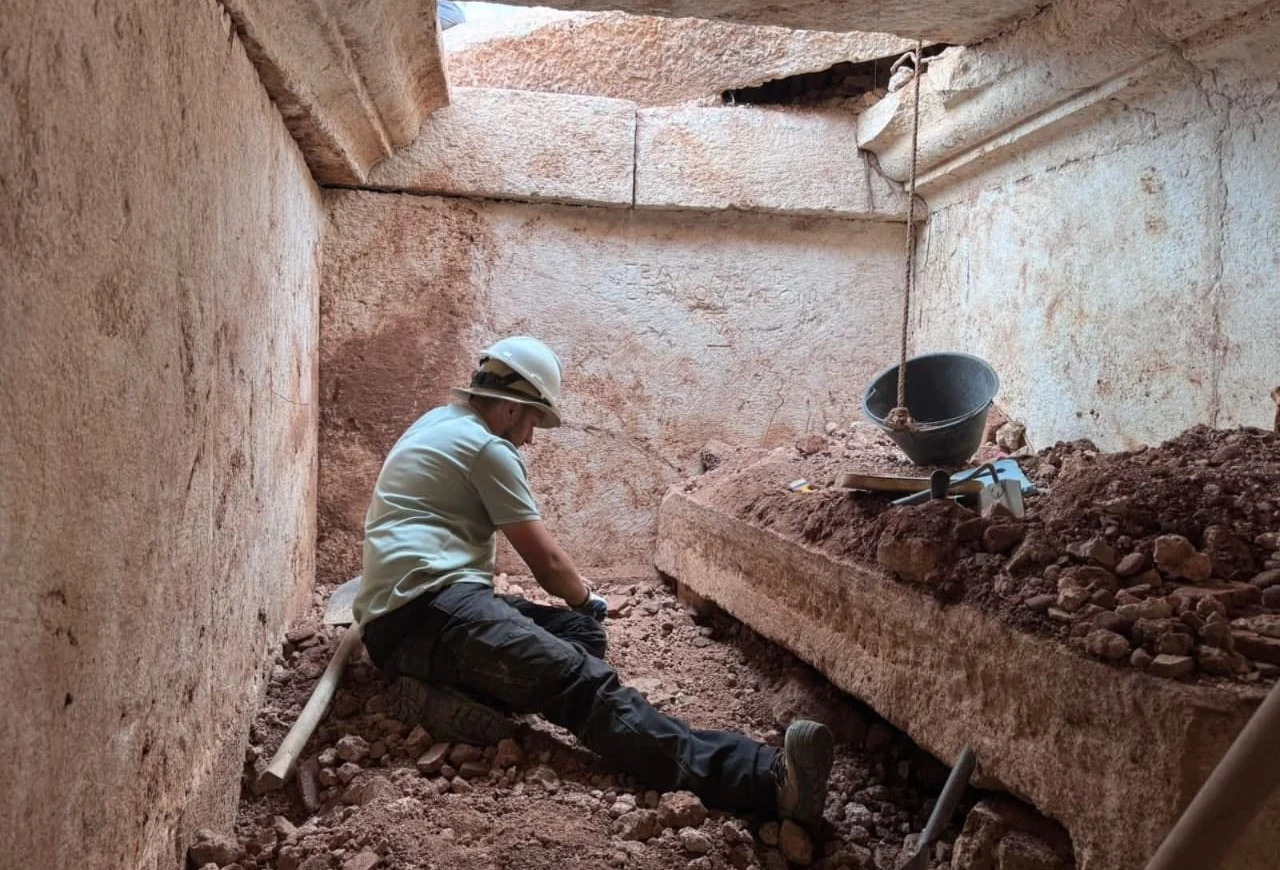
Archaeologists in Albania have uncovered a rare Roman burial chamber dating back to the third or fourth century AD, marking the first discovery of its kind in the Balkan nation once under Roman rule.
The chamber was found in early August on a plateau near the border with North Macedonia after locals alerted experts to unusual stone formations. Excavations by the Institute of Archaeology revealed an underground tomb constructed with massive limestone slabs bearing Greek inscriptions.
Lead archaeologist Erikson Nikolli said the inscriptions identify the tomb’s occupant as Gelliano, a name common during the Roman period. He described the find as significantly more elaborate than other regional burials, suggesting it belonged to a wealthy individual.
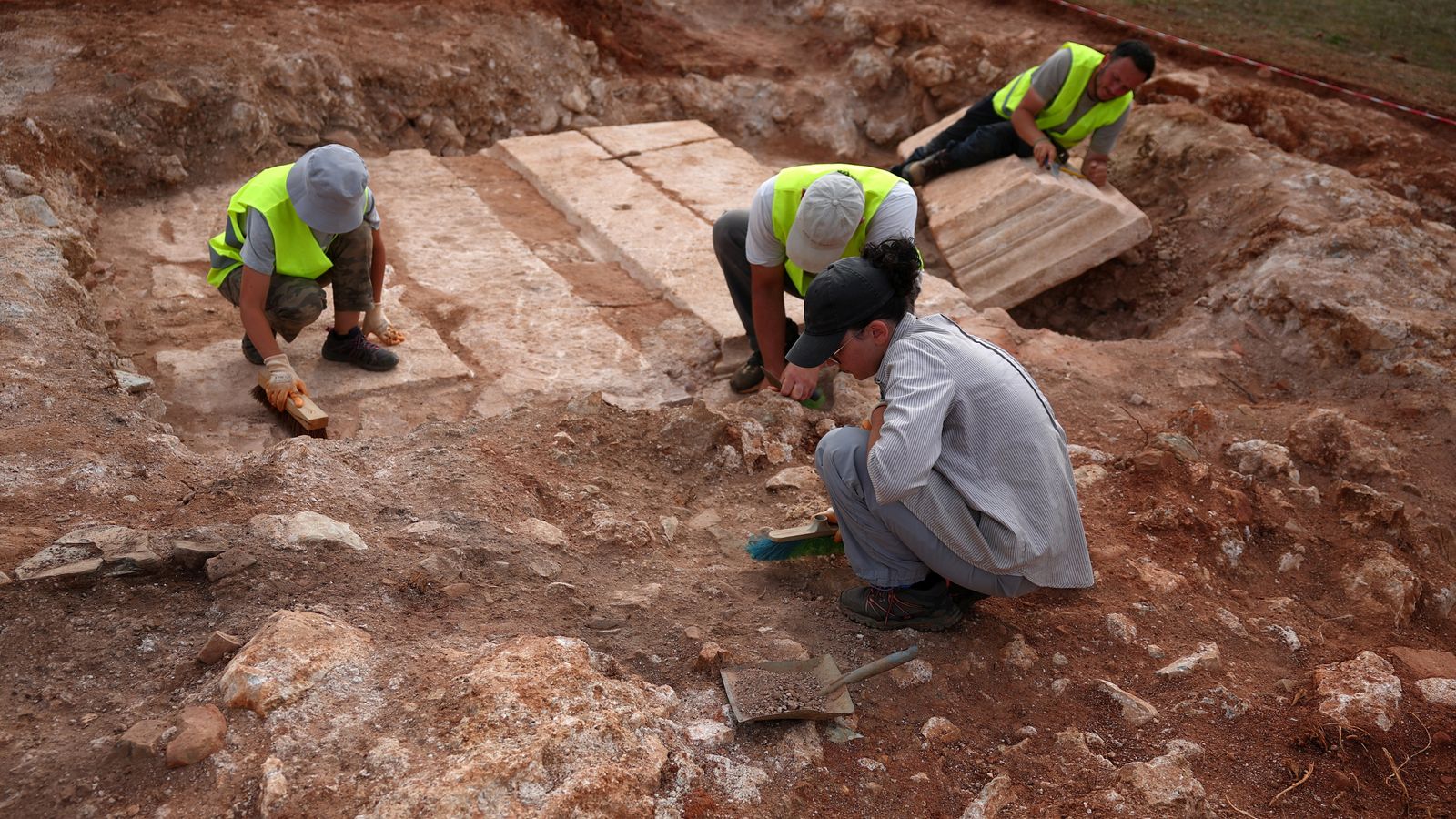
“We also uncovered a piece of fabric embroidered with gold thread, which confirms our belief that we are dealing with a member of the upper class,” Nikolli said. His team also found glass plates and knives inside the chamber.
The burial site appears to have been looted at least twice—once in antiquity and again in modern times, when heavy machinery was used to dislodge a massive stone slab covering the chamber.
One inscription dedicates the tomb to the Roman god Jupiter, while nearby stones bearing additional carvings are believed to be remnants of another monument, now situated among cornfields and a quarry.
Albanian authorities say plans are already underway to preserve and develop the site as a cultural heritage attraction.