














No World War II veterans left in Eswatini

By Thokozani Mazibuko
Eswatini on Sunday honoured the memory of its fallen World War II soldiers during the annual Umsizi Commemoration at Nokwane, amid revelations that the country no longer has any surviving ex-servicemen from the historic conflict.
Programme director Mathokoza Mtsetfwa told mourners that the last surviving World War II veteran in Eswatini passed away last year, marking the end of a generation of men who had fought under the British crown in the 1940s.
“This year’s ceremony is particularly solemn because, for the first time, there are no surviving ex-servicemen among us,” Mtsetfwa said. “Their bravery, however, continues to inspire the nation.”
Former Prime Minister and senator Dr Absalom Themba Dlamini represented His Majesty King Mswati III at the event, which brought together members of the Umbutfo Eswatini Defence Force (UEDF), His Majesty’s Correctional Services, and the Royal Eswatini Police Service.
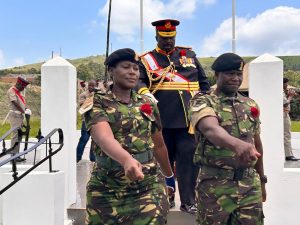
Dr Dlamini said the sacrifices made by Swazi soldiers during the Second World War would forever remain a cornerstone of the country’s history and identity.
“Our fathers fought far from home, not for personal gain but for the principles of peace and justice,” he said. “Their courage laid the moral foundation upon which our nation stands today.”
The Umsizi Commemoration, held annually around the same time as Remembrance Sunday observed by Commonwealth countries, pays tribute to Eswatini’s wartime contributions and the men who served in the British Allied Forces.
Wreaths were laid at the memorial as a military band played solemn tunes and flags were lowered to half-mast. Members of the armed forces and families of late servicemen observed a moment of silence in remembrance of those who never returned home.
Eswatini sent hundreds of soldiers to fight in World War II, many of whom served in logistics and engineering units across East and North Africa.
While few of them returned to tell their stories, their legacy lives on through annual national commemorations and war memorials erected in their honour.
“This is not just history it is the soul of our nation,” Mtsetfwa said. “We owe it to them to keep their stories alive, even when they themselves are no longer with us.”